


fix the sentence
Sentences from the passage with the capitals and punctuation removed — rewrite each one correctly.
Web preview · Open larger preview (opens in a new tab)
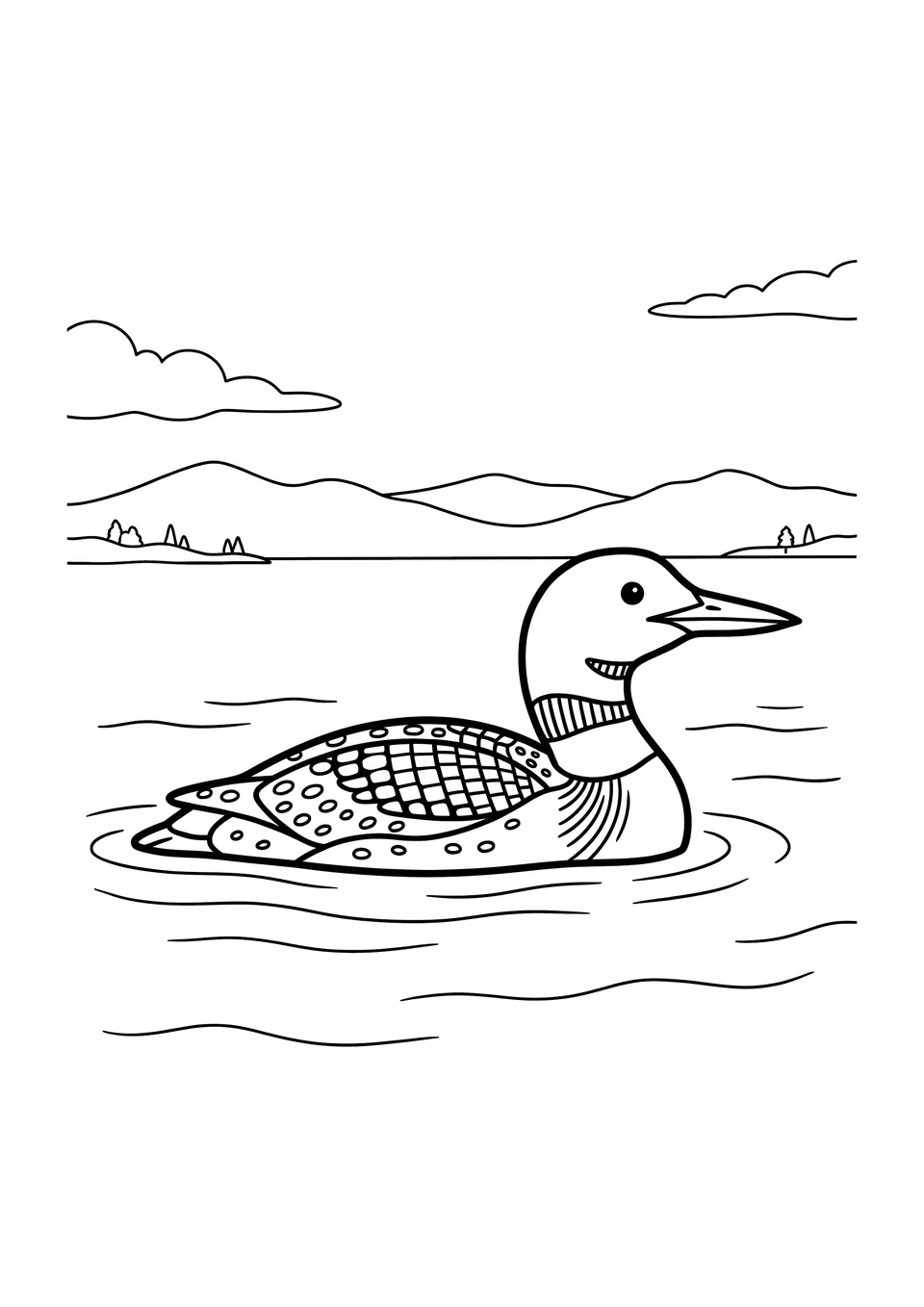
Color a common loon floating on Lake Champlain with mountains in the distance. Explore loons with an informative reading passage for young learners.
PDF · Your plan’s download limits apply
A bird floats low on Lake Champlain. Its name is the common loon. Far past the bird, a line of mountains rises along the shore.
In warm months, an adult loon has a black head and a black bill. Its back has white spots. The spots look like little checks on a dark coat.
A loon is at home on the water. Its large feet have webs between the toes. The webs help the bird push through the lake.
The loon can dive deep. It slips under the water to look for fish. After a dive, it comes up to breathe.
A loon may stay under for a minute or more. When it comes back up, it may be far from the spot where it went down. Watch the water for its head and long bill.
Loons also make sounds. One call is a long, sad-sounding cry. Another call sounds a bit like a laugh. Loons use calls to keep in touch and warn of danger.
In spring, loons build nests close to the water. A nest may be on an island or along a quiet shore. The nest holds one or two eggs.
When the chicks hatch, they can swim soon after. They may rest on a parent's back. The parent keeps them warm and brings them food.
People who watch loons need to give them space. A boat that comes too close can scare a loon away from its nest.
On Lake Champlain, a loon can swim, dive, and find food. Its dark shape stands out on the water, with the mountains in the distance.
What kind of bird is the passage mostly about?
Where does the loon float?
What do the white spots on an adult loon's back look like?
How do a loon's webbed feet help it?
Why does a loon dive under the water?
What does a loon do after a dive?
What does the word “shore” mean in the passage?
How do loons use their calls?
Where may a chick rest after it hatches?
What might happen if a boat comes too close to a loon's nest?
More ways to practice with this story — every sheet is built from the text itself, answer key included where it counts.
One PDF with a cover, a contents page and every answer key at the back — color the page in, then keep going on paper.
Sentences from the passage with the capitals and punctuation removed — rewrite each one correctly.
Match the passage words to their meanings, then fill the missing words back into real sentences.
Two writing tasks that build on the passage, with plenty of lines to write on.
This free coloring page features a common loon on Lake Champlain. Download the coloring page and print it for a simple animal activity at home or in the classroom.
Pair this printable coloring page with the reading passage, A Loon on Lake Champlain. Use the comprehension questions and glossary to help children explore how loons swim, dive, call, and care for their young.