


fix the sentence
Sentences from the passage with the capitals and punctuation removed — rewrite each one correctly.
Web preview · Open larger preview (opens in a new tab)
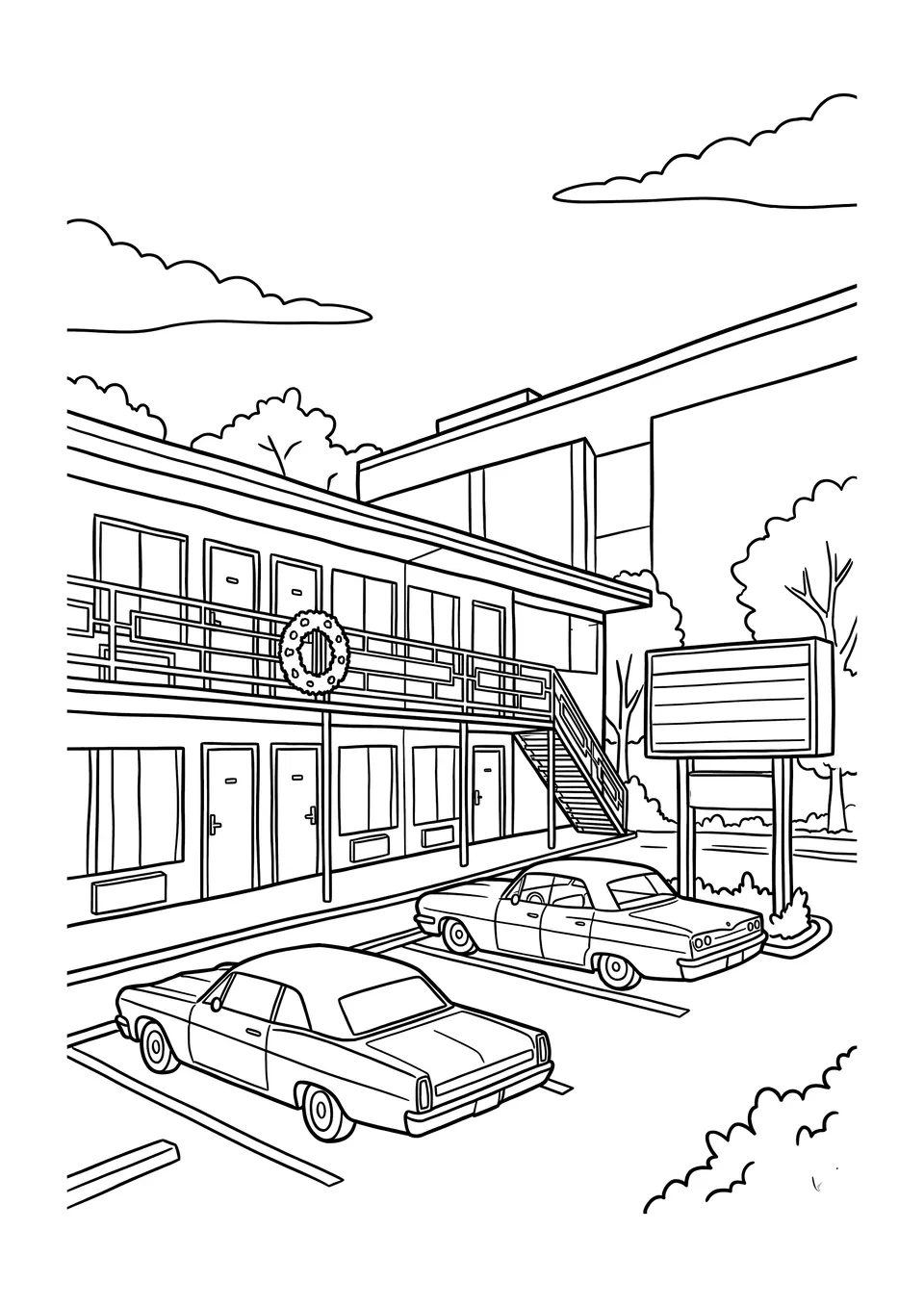
Explore the Lorraine Motel balcony with a coloring page and an informative reading passage about its place in civil rights history.
PDF · Your plan’s download limits apply
A row of doors opens onto a second-floor balcony at the Lorraine Motel in Memphis, Tennessee. Its pale exterior and simple railings may look like parts of an ordinary roadside motel. But this quiet building is an important landmark in the history of civil rights in the United States.
The Lorraine was a place where Black travelers could stay during segregation, when laws and customs kept Black and white people apart in many public places. At the time, many hotels refused to serve Black guests. The motel also welcomed musicians and other visitors who came to Memphis.
On April 4, 1968, civil rights leader Dr. Martin Luther King Jr. was staying at the Lorraine. He had come to Memphis to support striking sanitation workers, who were demanding better pay and safer working conditions. That evening, King was shot while standing on the motel’s balcony. He died later that day.
Today, the motel’s facade, or front exterior, and balcony are preserved as part of the National Civil Rights Museum. A wreath hangs near the balcony outside Room 306, where King stayed. The preserved building helps visitors connect a place they can see with events they may have read about.
Inside the museum, exhibits tell a broader story of the struggle for civil rights, including the efforts of many people who worked for fair treatment. The Lorraine Motel reminds us that history can be found not only in books, but also in familiar-looking buildings and the places around them.
What is the main idea of the passage?
Why was the Lorraine Motel important to Black travelers during segregation?
How did King's reason for visiting Memphis connect to the struggle for fair treatment?
What details show why the balcony is important in civil rights history?
Why might preserving the motel help visitors understand history?
How does the passage move from the motel's past to its present?
What broader story do the museum exhibits tell beyond what happened at the motel?
How does the motel's ordinary appearance compare with its historical importance?
What does the word 'landmark' mean as it is used in the first paragraph?
What does the passage suggest about where people can find history? Use a detail from the text.
More ways to practice with this story — every sheet is built from the text itself, answer key included where it counts.
One PDF with a cover, a contents page and every answer key at the back — color the page in, then keep going on paper.
Sentences from the passage with the capitals and punctuation removed — rewrite each one correctly.
Match the passage words to their meanings, then fill the missing words back into real sentences.
Two writing tasks that build on the passage, with plenty of lines to write on.
Download this free coloring page to introduce upper elementary students to the preserved Lorraine Motel facade and balcony in Memphis. The simple printable coloring page offers space to notice the building's doors, railings, and wreath.
Pair the coloring page with the reading passage, “The Balcony That Holds History,” to learn why this ordinary-looking building is an important landmark. Students can use comprehension questions and a glossary to discuss the passage and understand unfamiliar words.
Use this activity in the classroom or at home as a starting point for a thoughtful conversation about civil rights history.