


fix the sentence
Sentences from the passage with the capitals and punctuation removed — rewrite each one correctly.
Web preview · Open larger preview (opens in a new tab)
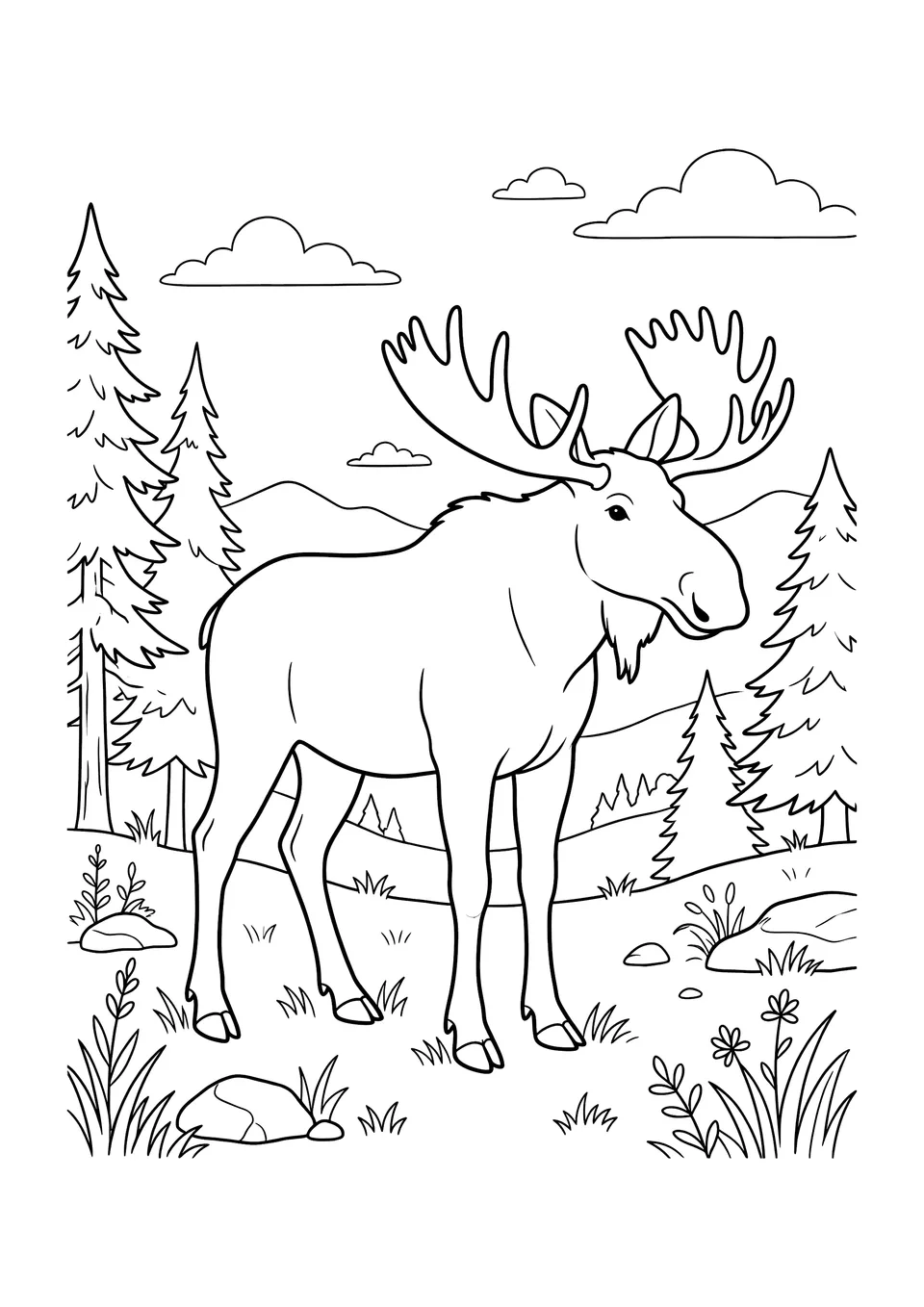
Color a moose in a Green Mountain forest clearing. Explore the accompanying reading passage to learn about moose and their habitat.
PDF · Your plan’s download limits apply
A huge moose stands in a patch of open land. Around it are the Green Mountains of Vermont. A few evergreen trees grow at the edge of the clearing.
The moose has long legs and a big body. Its brown fur helps keep it warm when the air is cold.
A moose can step over fallen logs and walk through deep snow. Its wide hooves help it move on soft ground, too.
The moose has a long face and a large nose. A flap of skin hangs under its throat. Its ears can turn toward sounds in the woods.
Some moose have antlers on their heads. Male moose grow new antlers each year. They shed them after the fall.
A moose eats plants, not meat. It can reach up to nibble leaves and twigs. It also eats water plants that grow in ponds.
The evergreen trees stay green through the winter. Their needles are thin, unlike the broad leaves on many other trees.
A moose may rest near trees or walk through an open spot. It can also swim across a pond to find food.
A baby moose is called a calf. A mother moose stays close to her calf and helps keep it safe.
Moose are wild animals. They need plenty of space, even when they seem calm. People should watch them from far away.
In the clearing, the moose can pause and listen. Then it may walk back among the trees in search of food.
Where does the moose stand at the beginning of the passage?
What helps the moose stay warm in cold air?
How do the moose's wide hooves help it?
What happens to a male moose's antlers after the fall?
What kinds of plants does the moose eat?
What does the word "nibble" mean in the passage?
How does a mother moose help her calf?
Why should people watch moose from far away?
What might the moose do after it pauses and listens in the clearing?
What is this passage mostly about?
More ways to practice with this story — every sheet is built from the text itself, answer key included where it counts.
One PDF with a cover, a contents page and every answer key at the back — color the page in, then keep going on paper.
Sentences from the passage with the capitals and punctuation removed — rewrite each one correctly.
Match the passage words to their meanings, then fill the missing words back into real sentences.
Two writing tasks that build on the passage, with plenty of lines to write on.
Download this free coloring page and print it for a nature-themed activity. The simple moose and evergreen forest scene offers plenty of space for young artists to color.
Pair the printable coloring page with the reading passage, A Moose in the Green Mountains, to explore what moose eat, how they move, and where they live. Comprehension questions and a glossary help children practice reading and learn new words.
Use this coloring page with a reading passage in the classroom or at home. It is a useful addition to a collection of free coloring pages for animal and nature lessons.