


fix the sentence
Sentences from the passage with the capitals and punctuation removed — rewrite each one correctly.
Web preview · Open larger preview (opens in a new tab)
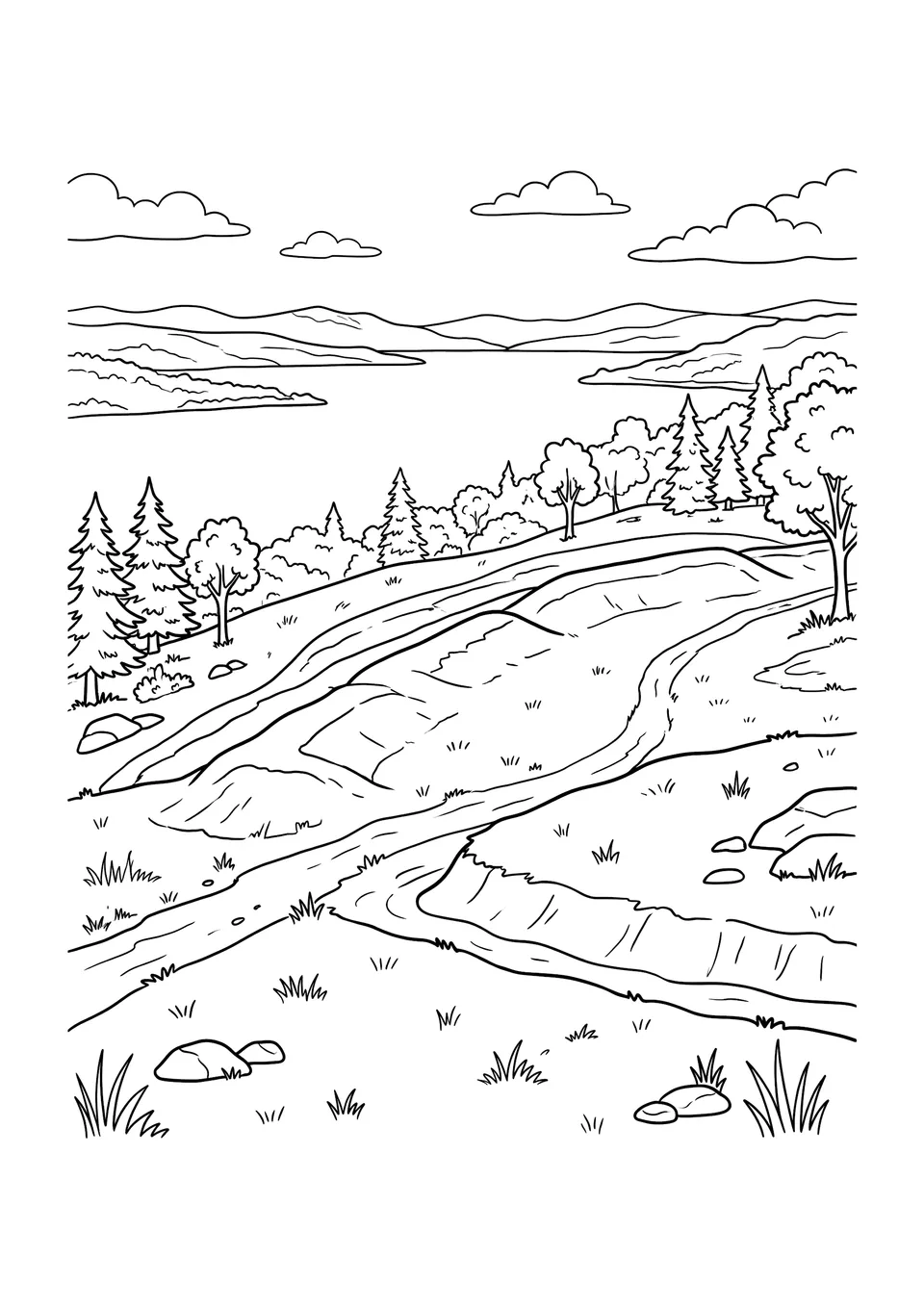
Explore the earthwork remains of Mount Independence above Lake Champlain. Color the landscape while learning about its role in the Revolutionary War.
PDF · Your plan’s download limits apply
At first glance, the grassy ridges above Lake Champlain might look like ordinary bumps in the land. Look more closely, and they reveal the remains of a Revolutionary War fort at Mount Independence in Vermont.
In 1776, American troops began building defenses on this high ground. Across the lake stood Fort Ticonderoga in New York. Together, the two positions helped the Americans guard an important route between Canada and the Hudson River valley. Whoever controlled that route could move troops and supplies more easily through the region.
Soldiers dug into the soil and piled up earth to create protective walls called earthworks. They also built batteries, or positions for cannons, and other defenses. Earth could absorb some of the impact of cannon fire, while the high ground offered a view of the lake and surrounding area. The fort was part of a much larger military site where soldiers needed places to sleep, cook, and care for the sick.
In 1777, British forces advanced toward the American positions. British troops placed cannons on high ground overlooking the defenses, making the American positions difficult to hold. The Americans withdrew from Mount Independence and Fort Ticonderoga in July rather than risk being trapped.
Most of the wooden structures are gone, but traces of the earthworks remain. Over time, grass and trees have grown around the old defenses, softening their edges. These low ridges and trenches are clues to the work soldiers once did to protect the route along Lake Champlain. Today, visitors can walk trails at the historic site and see how the shape of the land still holds pieces of the past.
What is the main idea of the passage, and which two details support it?
Why were Mount Independence and Fort Ticonderoga important to the Americans?
How did the high ground and the earthworks each help protect the fort?
What does the need for places to sleep, cook, and care for the sick suggest about the larger military site?
Why did the Americans withdraw from both positions in July 1777?
How were the American and British uses of high ground similar?
What does the word “traces” mean in the final paragraph?
How does the opening paragraph encourage readers to look differently at the grassy ridges?
Why does the author describe both the fort’s history and what visitors can see today?
Summarize how the fort changed from 1776 to the present.
More ways to practice with this story — every sheet is built from the text itself, answer key included where it counts.
One PDF with a cover, a contents page and every answer key at the back — color the page in, then keep going on paper.
Sentences from the passage with the capitals and punctuation removed — rewrite each one correctly.
Match the passage words to their meanings, then fill the missing words back into real sentences.
Two writing tasks that build on the passage, with plenty of lines to write on.
Download this coloring page and print it for a closer look at the grassy ridges and trenches left by a Revolutionary War fort. It is a simple way to connect history with the shape of the land.
Use the coloring page with the reading passage, The Fort in the Hillside, along with comprehension questions and a glossary to support learning. The activity is suited to upper elementary students in the classroom or at home.
Find more free coloring pages and printable coloring pages to pair art with reading and exploration.