


fix the sentence
Sentences from the passage with the capitals and punctuation removed — rewrite each one correctly.
Web preview · Open larger preview (opens in a new tab)
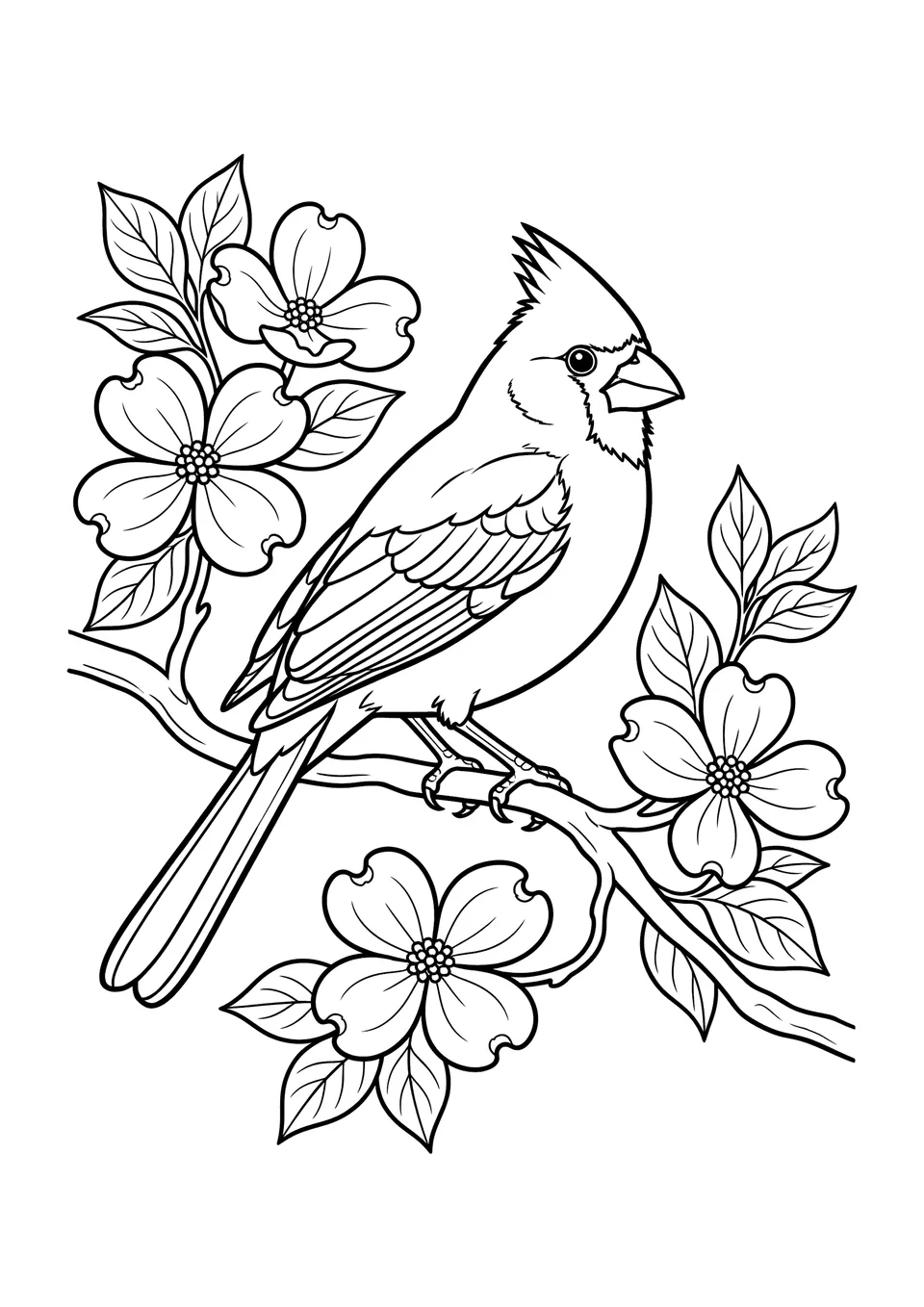
Color a northern cardinal perched among flowering dogwood blossoms. Explore North Carolina wildlife with an informative reading passage.
PDF · Your plan’s download limits apply
A flash of red rests among white blossoms: a northern cardinal perches on a flowering dogwood branch in North Carolina. Both the bird and the tree are familiar sights in the state. The northern cardinal is North Carolina’s state bird, and the flowering dogwood is its state flower.
The cardinal’s strong feet grip the branch. A pointed crest rises from its head, and a thick, cone-shaped bill helps it crack seeds. The bright red bird is a male. Female cardinals are mostly pale brown, with touches of red on their wings, tails, and crests. Both males and females sing, and pairs often communicate with clear whistles.
Cardinals stay in North Carolina all year rather than migrating south for winter. They eat seeds and fruits, as well as insects. During nesting season, adult cardinals also bring insects to their young. Thick shrubs and small trees provide places to hide and build nests.
The flowering dogwood offers food and shelter to wildlife, too. In spring, its small flowers form a cluster surrounded by four large white or sometimes pinkish structures. These structures look like petals, but they are actually modified leaves called bracts. Later in the year, the tree produces bright red fruits that birds can eat.
A cardinal on a dogwood branch brings together two parts of North Carolina’s natural world. The tree supplies a perch and, in season, fruit. The bird may carry seeds away after eating fruit, helping plants spread to new places.
What main idea connects the cardinal and the flowering dogwood in the passage?
How does a cardinal’s bill help it get food?
How are male and female cardinals alike and different?
What details show that cardinals can meet their needs in North Carolina throughout the year?
Why might thick shrubs and small trees be useful to nesting cardinals?
How do the dogwood’s bracts differ from what they appear to be?
How can a cardinal help plants spread after eating dogwood fruit?
Why does the author describe the cardinal before explaining the dogwood?
What does the word “perch” mean in the final paragraph?
Summarize two ways the dogwood and the cardinal can affect each other.
More ways to practice with this story — every sheet is built from the text itself, answer key included where it counts.
One PDF with a cover, a contents page and every answer key at the back — color the page in, then keep going on paper.
Sentences from the passage with the capitals and punctuation removed — rewrite each one correctly.
Match the passage words to their meanings, then fill the missing words back into real sentences.
Two writing tasks that build on the passage, with plenty of lines to write on.
Download this free coloring page to explore two North Carolina state symbols: the northern cardinal and the flowering dogwood. Like other printable coloring pages, it offers an inviting way to observe shapes and details while creating art.
This coloring page with a reading passage also includes comprehension questions and a glossary to support vocabulary and understanding. Use it in an upper elementary classroom or for a relaxed wildlife activity at home.