


fix the sentence
Sentences from the passage with the capitals and punctuation removed — rewrite each one correctly.
Web preview · Open larger preview (opens in a new tab)
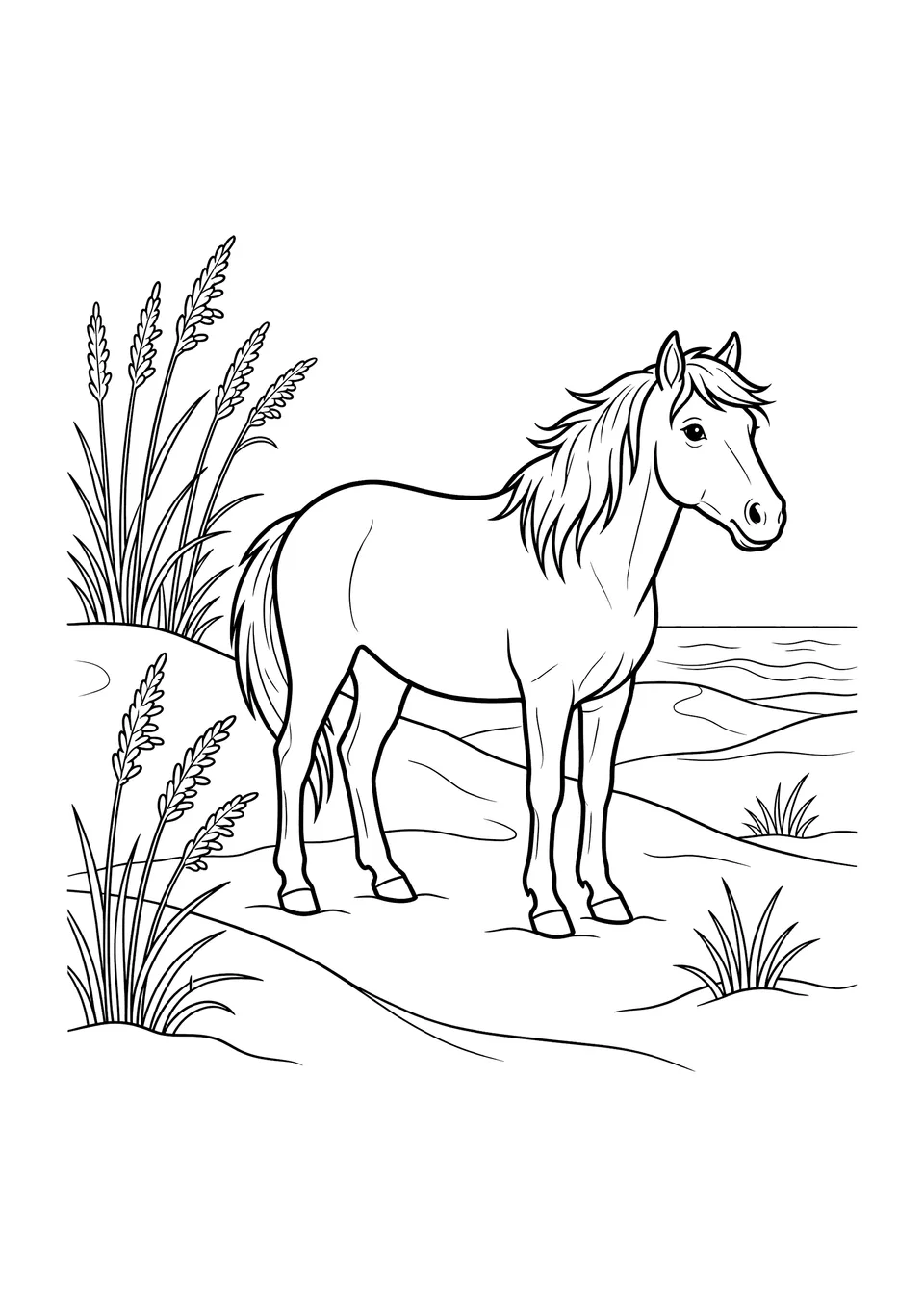
Color a Banker horse among the dunes and sea oats of North Carolina’s Outer Banks. Explore its coastal habitat with the informative reading passage, Wild Horses of the Outer Banks.
PDF · Your plan’s download limits apply
A horse stands among sandy dunes, its mane lifting in the ocean breeze. Around it, tall sea oats sway above the sand. This is a Banker horse, one of the wild horses that live on North Carolina’s Outer Banks.
The Outer Banks are a chain of barrier islands along the Atlantic coast. Barrier islands face strong winds, shifting sand, and salt spray. Banker horses are descendants of domestic horses, and many researchers believe their ancestors included Spanish horses brought to the Americas centuries ago. Exactly how those horses reached the Outer Banks remains uncertain.
Life on the islands requires the horses to find food and fresh water in a changing environment. They graze on grasses and other plants, and they can dig shallow holes to reach fresh water beneath the sand. Even so, storms and droughts can make survival difficult.
The dunes help protect the islands from wind and waves. Plants such as sea oats help hold the sand in place with their roots. The horses share this fragile landscape with birds, turtles, and other wildlife.
People can help protect both the horses and their habitat. Visitors should watch horses from a distance and never feed them. Food meant for people can make horses sick, and even a calm-looking wild horse may kick or bite. Walking on designated paths also helps protect dune plants from being trampled.
Today, different groups manage wild horse herds in parts of the Outer Banks. Their work helps these animals continue to live in a place shaped by sand, wind, and sea.
What is the main idea of the passage, and which two details support it?
How do Banker horses find food and fresh water on the islands?
Why can storms and droughts make life difficult for the horses?
How do sea oats help protect the Outer Banks?
Why does the author describe the landscape as fragile? Use a detail from the passage.
What does the passage suggest about how Banker horses reached the Outer Banks?
Why should visitors stay away from wild horses even when the horses look calm?
How does walking on designated paths help the islands?
How does the passage move from describing the horses' environment to explaining how people can help?
Compare the ways natural conditions and visitors can affect the horses and their habitat.
More ways to practice with this story — every sheet is built from the text itself, answer key included where it counts.
One PDF with a cover, a contents page and every answer key at the back — color the page in, then keep going on paper.
Sentences from the passage with the capitals and punctuation removed — rewrite each one correctly.
Match the passage words to their meanings, then fill the missing words back into real sentences.
Two writing tasks that build on the passage, with plenty of lines to write on.
Download this free coloring page and print it for a closer look at a Banker horse and its barrier island habitat. The bold outlines and open spaces make it a welcoming activity for upper elementary students.
Pair the printable coloring page with the reading passage, Wild Horses of the Outer Banks, to learn how horses find food and water and why dunes need protection. Use comprehension questions and a glossary to support discussion and vocabulary practice.
This coloring page with a reading passage works well for classroom lessons on animals and habitats or for a quiet learning activity at home.