


fix the sentence
Sentences from the passage with the capitals and punctuation removed — rewrite each one correctly.
Web preview · Open larger preview (opens in a new tab)
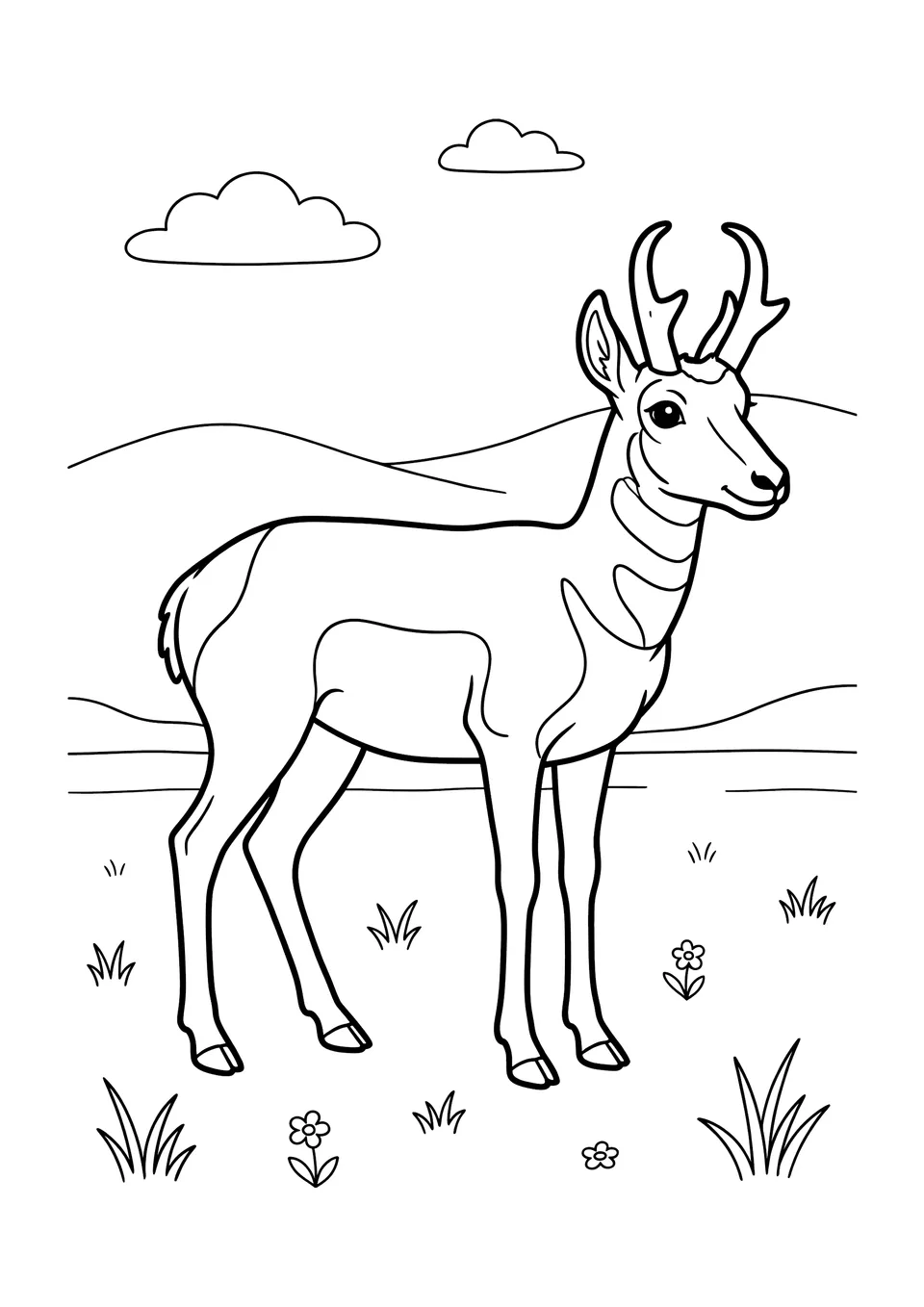
Meet a pronghorn on the Wyoming prairie with this coloring page and informative reading passage. Explore how this fast animal lives in open grasslands.
PDF · Your plan’s download limits apply
What is that animal standing in the tall grass? It is a pronghorn on a Wyoming prairie.
The land is wide and open. A few grasses grow near the pronghorn. Hills rise far away.
The pronghorn has long, thin legs. Its back is tan, and its belly is white. It has a white patch on its rump, too.
A pronghorn has big eyes on the sides of its head. They help it see across the open land. It can spot danger from far away.
Both male and female pronghorns have horns. The horns of males are usually much larger. A male’s horns have a short point that sticks out in front.
Pronghorns eat plants. They may eat grasses, but they also eat leaves and other parts of low plants. They move from place to place to find food.
The prairie can be a hard place to live. In summer, the sun can make the land hot and dry. In winter, cold winds blow across it.
Pronghorns have thick coats that help keep them warm in winter. Their hair can trap air close to their skin. This helps keep the cold out.
A pronghorn can run very fast. If it sees danger, it may race away on its long legs. It can keep running for a long time, too.
For now, the pronghorn stands still. It looks out over the grass and the wide Wyoming land.
What animal is the passage mostly about?
Where is the pronghorn standing?
What colors are the pronghorn’s back and belly?
How do the pronghorn’s big eyes help it?
How are a male pronghorn’s horns usually different from a female’s horns?
Why do pronghorns move from place to place?
What does the word “spot” mean in the sentence about danger?
How does a thick coat help a pronghorn in winter?
What may a pronghorn do after it sees danger?
What might a pronghorn eat if it finds a low plant?
More ways to practice with this story — every sheet is built from the text itself, answer key included where it counts.
One PDF with a cover, a contents page and every answer key at the back — color the page in, then keep going on paper.
Sentences from the passage with the capitals and punctuation removed — rewrite each one correctly.
Match the passage words to their meanings, then fill the missing words back into real sentences.
Two writing tasks that build on the passage, with plenty of lines to write on.
Download this free pronghorn coloring page for a simple activity featuring Wyoming prairie wildlife. Like other printable coloring pages, it offers open spaces for young learners to make their own color choices.
Pair the coloring page with the reading passage to learn about pronghorns and their habitat. Use the comprehension questions and glossary to practice understanding new facts and words.
This free coloring page is useful in the classroom or at home as part of an animal or prairie habitat lesson.