


fix the sentence
Sentences from the passage with the capitals and punctuation removed — rewrite each one correctly.
Web preview · Open larger preview (opens in a new tab)
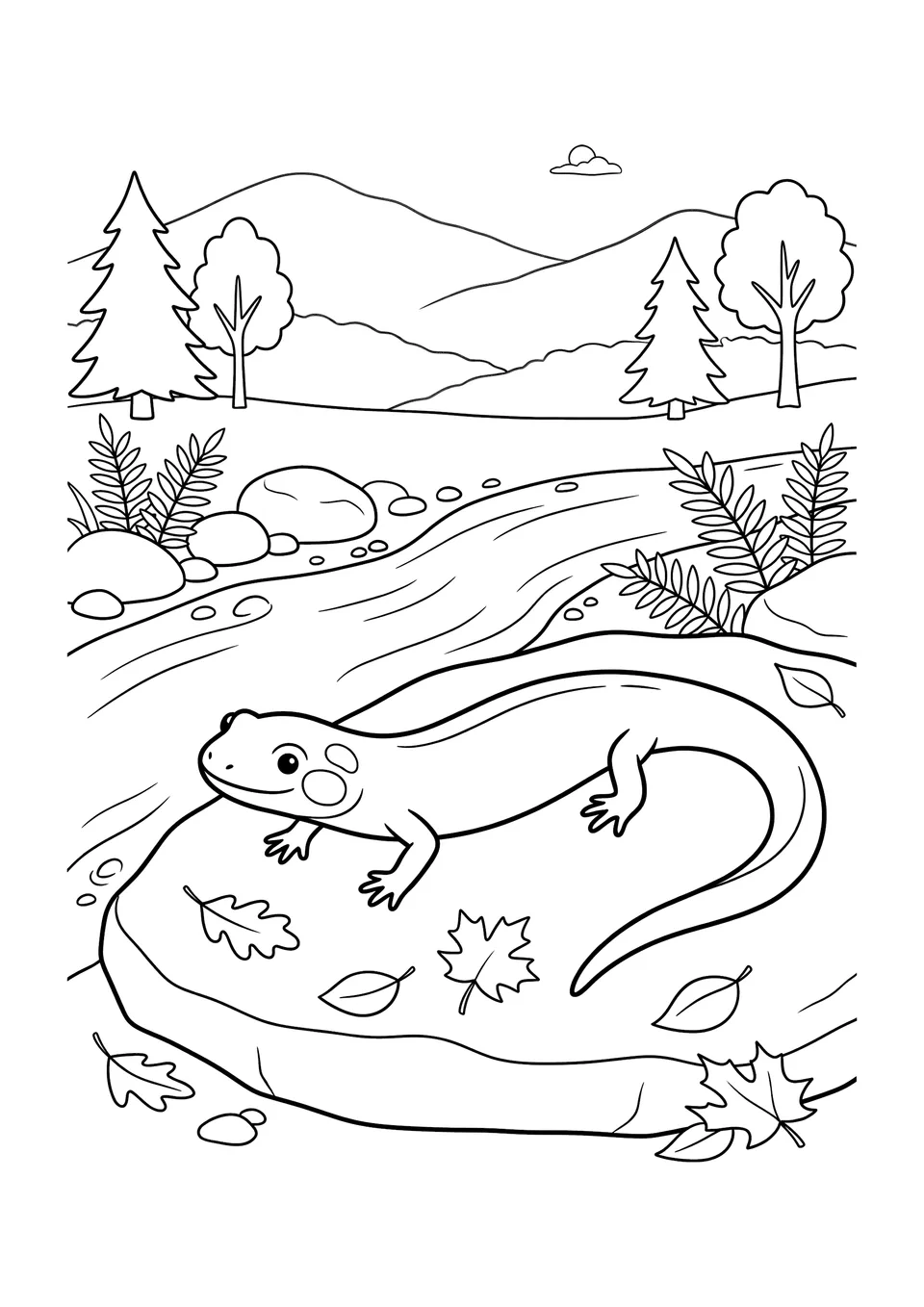
Color a red-cheeked salamander resting beside a Smoky Mountain stream. Read about how this small animal lives in damp woods.
PDF · Your plan’s download limits apply
A tiny animal rests on a flat rock by a stream. Red marks shine on its cheeks.
This is a red-cheeked salamander. It lives in the Great Smoky Mountains.
The salamander has a long body and a long tail. It has four short legs and dark skin.
A few leaves lie on the rock beside it. The stream flows past the rock, and trees shade the ground.
Red-cheeked salamanders live on land. They can be found in damp woods near streams.
A salamander may hide under a rock or among wet leaves. These spots help keep its skin moist.
Its skin is very important. This salamander has no lungs. It takes in air through its skin and the lining of its mouth.
The salamander looks for tiny animals to eat. Its meals can include small bugs and other tiny creatures.
A red-cheeked salamander lays eggs on land. The eggs are often hidden in a damp place, such as under a log.
When the young hatch, they look like tiny salamanders. They do not need to grow up in the stream.
The damp woods give these small animals places to hide and find food. Rocks, logs, and leaves can all be useful homes.
If you see a salamander, look without touching it. Its skin is delicate, and things on our hands can harm it.
Soon, the little salamander may slip off the flat rock. It can find shelter among the cool, damp leaves.
What kind of animal is the passage about?
Where do red-cheeked salamanders live?
What does the salamander look like?
Why might a salamander hide under wet leaves?
How does this salamander take in air?
What are two things the salamander can eat?
Where are the salamander's eggs often hidden?
What do the young look like when they hatch?
What does the word “delicate” tell you about the salamander's skin?
If the salamander leaves the rock, where might it find shelter?
More ways to practice with this story — every sheet is built from the text itself, answer key included where it counts.
One PDF with a cover, a contents page and every answer key at the back — color the page in, then keep going on paper.
Sentences from the passage with the capitals and punctuation removed — rewrite each one correctly.
Match the passage words to their meanings, then fill the missing words back into real sentences.
Two writing tasks that build on the passage, with plenty of lines to write on.
Download this free coloring page to explore a salamander's woodland habitat. The simple scene is a helpful addition to printable coloring pages for an animal or nature lesson.
Pair the coloring page with the reading passage, A Salamander by the Stream, to learn how salamanders stay moist and find shelter. Use comprehension questions and a glossary to support understanding of the text.
Print a copy for classroom learning or at-home coloring, and invite children to notice the salamander's long tail, four legs, and cheek markings.