


fix the sentence
Sentences from the passage with the capitals and punctuation removed — rewrite each one correctly.
Web preview · Open larger preview (opens in a new tab)
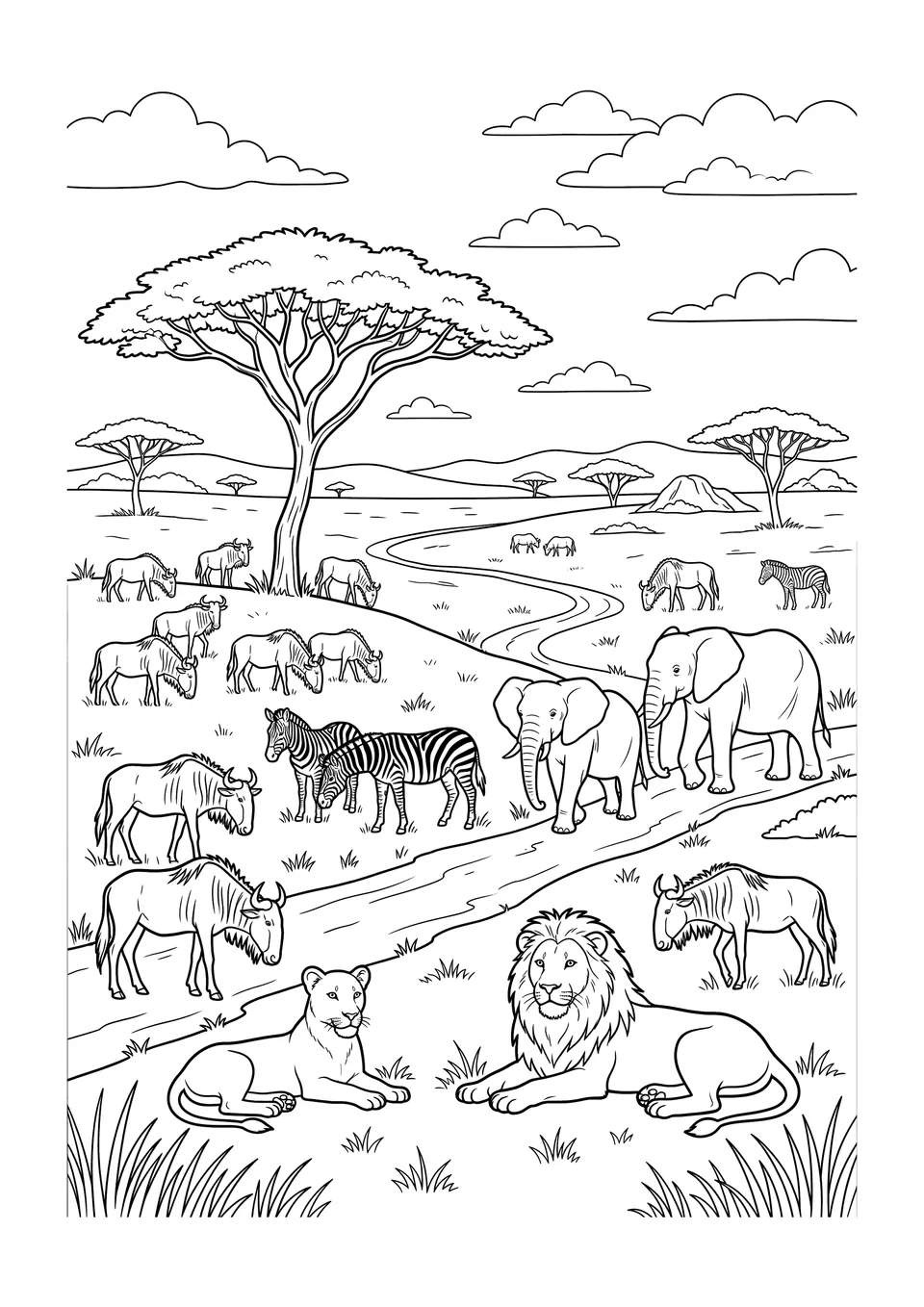
Explore the majestic African savanna and the critical need to protect its biodiversity with this educational coloring activity. Designed for middle schoolers, this page combines creative fun with an insightful reading passage about global wildlife conservation.
PDF · Your plan’s download limits apply
Spanning across northern Tanzania and extending into southwestern Kenya, the Serengeti ecosystem represents one of the most vibrant and biologically diverse biomes on Earth. Renowned globally for hosting the Great Migration—an annual journey during which over two million wildebeest, zebras, and gazelles traverse vast grasslands in search of fresh pasture—this region is a cornerstone of global natural heritage. However, despite its ecological significance, the Serengeti faces unprecedented threats that jeopardize its delicate balance, making dedicated wildlife conservation efforts more urgent than ever before.
Human expansion and economic development pose significant challenges to the survival of the Serengeti's flora and fauna. As human populations grow near the borders of protected areas, agricultural lands encroach upon historic wildlife corridors. This habitat fragmentation disrupts migratory routes, forcing animals into smaller, isolated pockets where resources are scarce. Furthermore, illegal poaching continues to threaten endangered species, such as the black rhinoceros and the African elephant, driven by global demand for animal products. Proposed infrastructure projects, such as highways cutting through critical migration paths, further endanger the long-term stability of the ecosystem.
Protecting the Serengeti is not merely a matter of preserving magnificent animals; it is essential for maintaining global biodiversity and supporting local economies. The intricate web of life within the savanna relies on every species, from top predators like lions to humble decomposers. Preserving these habitats ensures ecological resilience against climate change. Moreover, sustainable ecotourism provides vital revenue and employment opportunities for local communities, proving that wildlife protection and human prosperity can coexist. When local residents directly benefit from conservation, they become the strongest guardians of their natural environment.
Ultimately, safeguarding the Serengeti requires international cooperation, rigorous anti-poaching enforcement, and community-centered conservation policies. Neglecting this iconic landscape would mean losing an irreplaceable natural wonder and causing irreversible damage to global biodiversity. By prioritizing sustainable management and protecting vital migratory corridors today, humanity can ensure that the Serengeti continues to thrive for generations to come.
Which two countries does the Serengeti ecosystem span across?
What is the Great Migration, and which main animal species participate in it?
How does agricultural expansion near protected areas harm Serengeti wildlife?
Which two endangered species are specifically mentioned as targets of illegal poaching?
What specific type of infrastructure project threatens the Serengeti's migration paths?
How does preserving habitat balance help the Serengeti face climate change?
In what ways does sustainable ecotourism assist local human communities?
Why are local residents essential for the success of long-term conservation?
What three key actions are needed to safeguard the Serengeti ecosystem?
What are the major global consequences of neglecting the Serengeti?
More ways to practice with this story — every sheet is built from the text itself, answer key included where it counts.
One PDF with a cover, a contents page and every answer key at the back — color the page in, then keep going on paper.
Sentences from the passage with the capitals and punctuation removed — rewrite each one correctly.
Match the passage words to their meanings, then fill the missing words back into real sentences.
Two writing tasks that build on the passage, with plenty of lines to write on.
Bring environmental science and social studies lessons to life with this free printable coloring page featuring the rich biodiversity of the Serengeti ecosystem. Perfect for middle school students, this resource offers a creative entry point into complex topics like habitat fragmentation, human impact, and global conservation efforts.
Designed for both classroom and at-home use, this download coloring page comes paired with an argumentative reading passage, vocabulary glossary, and thought-provoking comprehension questions. Students can color the detailed savanna wildlife scene while building critical literacy skills and learning why protecting global biomes matters.