


fix the sentence
Sentences from the passage with the capitals and punctuation removed — rewrite each one correctly.
Web preview · Open larger preview (opens in a new tab)
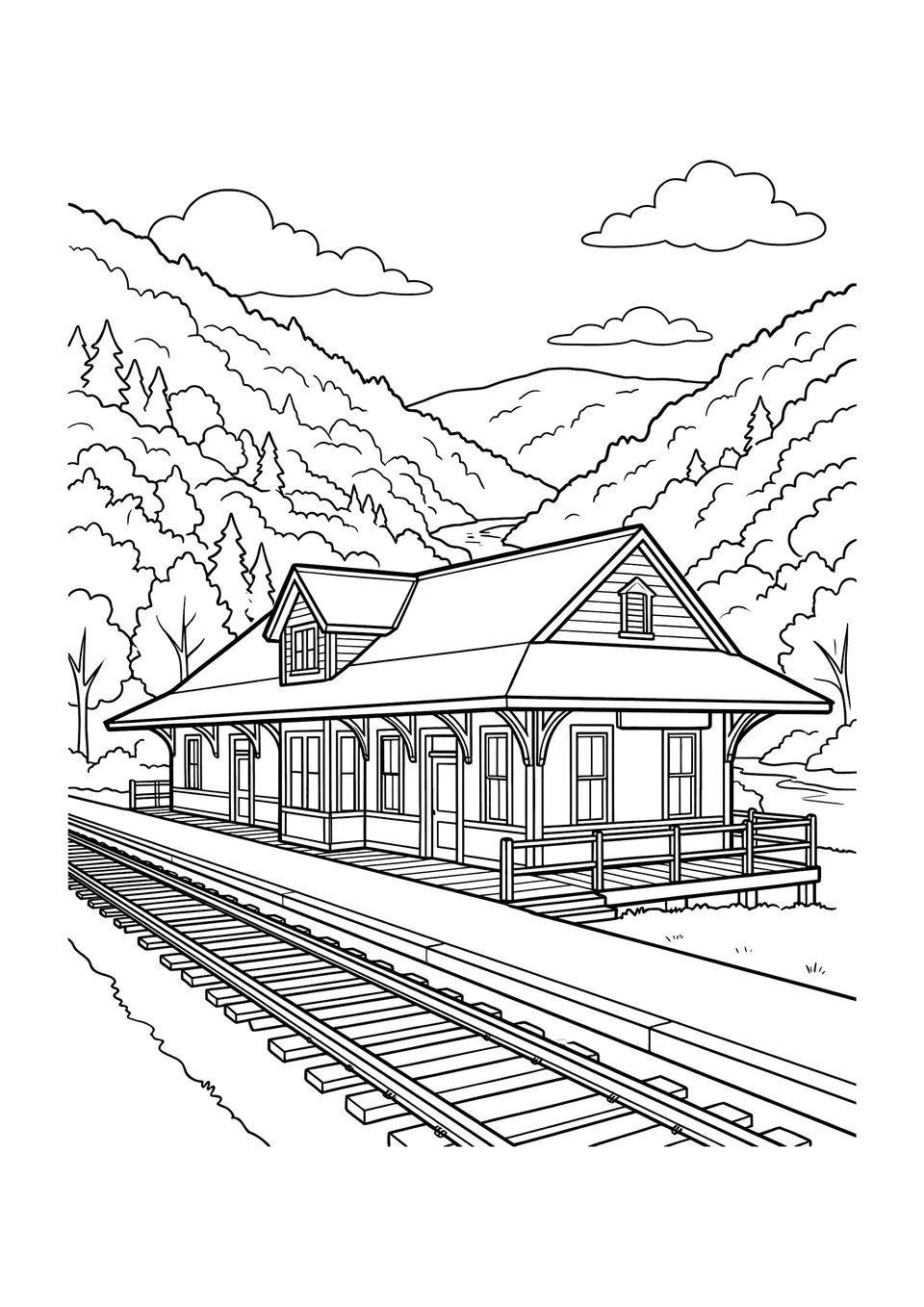
Color the historic Thurmond depot nestled in a West Virginia mountain valley. Explore its railroad history with the reading passage “The Depot in the Mountain Valley.”
PDF · Your plan’s download limits apply
In a narrow West Virginia valley, railroad tracks run between wooded mountains and the New River. Beside a short stretch of those tracks stands the historic Thurmond depot, a reminder of a time when trains were at the center of life in the valley.
The depot opened in 1904. It served as a place where passengers could wait for trains and where railroad workers could conduct business. Today, the restored building is part of New River Gorge National Park and Preserve. Its long platform still faces the tracks, much as it did when the railroad was busy carrying people and goods through the mountains.
Coal helped make Thurmond an important railroad town. Coal mined in the surrounding region was loaded onto trains and shipped to other places. Railroads also brought supplies and passengers into the area. With steep mountains surrounding the river, trains offered an important way to move heavy loads through the valley.
Thurmond grew into a bustling town with hotels, stores, and other businesses. But as transportation and the coal industry changed, fewer trains and people passed through. Many businesses closed, and the town became much quieter.
The tracks beside the depot are still active, so visitors must stay off them and use care near the railroad. From a safe place, they can look at the depot, the rails, and the wooded slopes rising beyond them. Together, these landmarks show how a small mountain town became connected to places far beyond its valley.
What is the main idea of the passage, and which detail supports it?
Why were trains especially useful for moving heavy loads through the valley?
How did coal help Thurmond become an important railroad town?
How did the railroad serve both people and businesses in Thurmond?
What changes helped make Thurmond quieter?
How does the passage compare the depot's past use with its present role?
What does the word “bustling” suggest about Thurmond when it was a growing town?
Why does the author describe the depot and tracks as they are today after explaining their history?
Which details show that Thurmond was connected to places beyond the valley?
Why must visitors be careful when looking at the depot and its surroundings?
More ways to practice with this story — every sheet is built from the text itself, answer key included where it counts.
One PDF with a cover, a contents page and every answer key at the back — color the page in, then keep going on paper.
Sentences from the passage with the capitals and punctuation removed — rewrite each one correctly.
Match the passage words to their meanings, then fill the missing words back into real sentences.
Two writing tasks that build on the passage, with plenty of lines to write on.
This free coloring page shows the historic Thurmond depot beside a short stretch of track. Download the coloring page to explore a West Virginia landmark and the mountain valley around it.
Pair the printable coloring page with the reading passage “The Depot in the Mountain Valley” to learn how railroads connected Thurmond to other places. Comprehension questions and a glossary support reading and vocabulary practice.
Use this activity alongside other printable coloring pages in the classroom or at home. Remind children that the real tracks are active and visitors must stay off them.