


fix the sentence
Sentences from the passage with the capitals and punctuation removed — rewrite each one correctly.
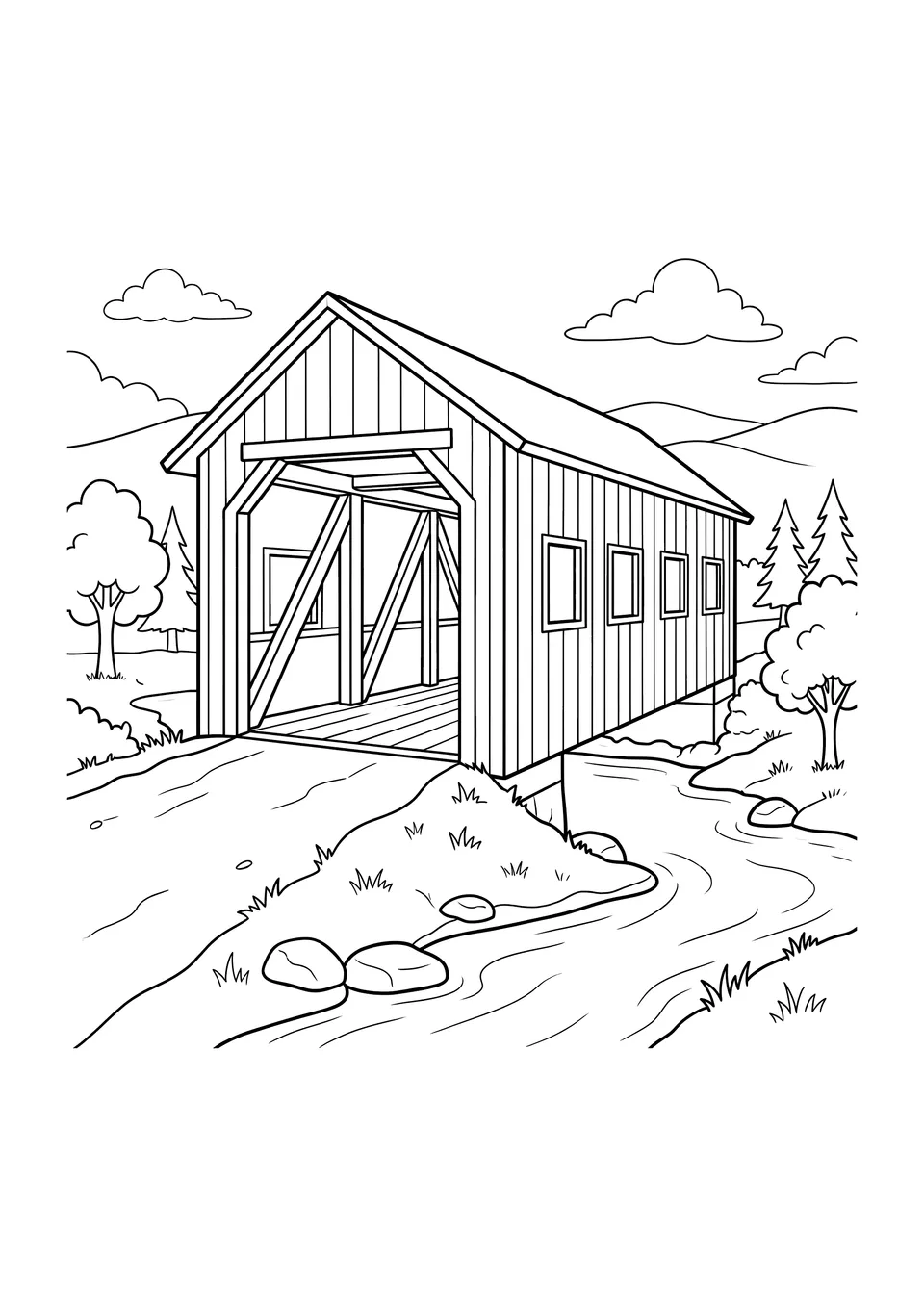
Web preview · Open larger preview (opens in a new tab)
Explore a wooden covered bridge in Vermont with this coloring page. Pair it with the reading passage “A Bridge with a Roof” to learn how covered bridges work.
PDF · Your plan’s download limits apply
A bridge with a roof can look like a small house over a stream. In Vermont, some old bridges look just like that.
A covered bridge has a roof and walls. The bridge carries people across the water. Its roof and walls help keep rain and snow off much of the wood.
Wood can rot when it stays wet. A roof helps the wooden parts last longer. But the bridge still needs care and repairs.
Look inside a wooden covered bridge. You may see long, thick pieces of wood called beams. Some beams stretch across the top. Others slant along the sides.
The beams fit together to help hold up the bridge. They help carry the weight of people and vehicles that cross it. The floor of the bridge is made of wood, too.
A small, clear stream may flow below. You might see stones through the water. Trees can grow along the banks, with branches reaching toward the bridge.
In fall, some Vermont trees turn red, orange, and yellow. In winter, snow may rest on the bridge roof. The stream may look different as the seasons change.
Long ago, people used covered bridges to cross streams and rivers. Some traveled on foot. Others rode in wagons pulled by horses.
Many covered bridges are still standing today. Some carry cars, while others are open only to people on foot. Each one offers a way to cross the water beneath it.
What is this passage mostly about?
What do the roof and walls help keep off the wood?
Why does a roof help a wooden bridge last longer?
What do the beams help the bridge do?
What does the word “slant” tell you about some beams?
What colors do some Vermont trees turn in fall?
How did some people cross covered bridges long ago?
How are some covered bridges used today?
What care does a covered bridge still need?
If snow falls in winter, where might it rest on a covered bridge?
More ways to practice with this story — every sheet is built from the text itself, answer key included where it counts.
One PDF with a cover, a contents page and every answer key at the back — color the page in, then keep going on paper.
Sentences from the passage with the capitals and punctuation removed — rewrite each one correctly.
Match the passage words to their meanings, then fill the missing words back into real sentences.
Two writing tasks that build on the passage, with plenty of lines to write on.
Download this free coloring page and print it for a closer look at a Vermont covered bridge. Young learners can color the roof, wooden beams, trees, and stream.
This printable coloring page with a reading passage helps children explore why covered bridges have roofs and how beams support them. Use the comprehension questions and glossary to review what they learned.
Add it to a classroom lesson about structures and places, or enjoy it as an at-home reading and coloring activity.