


fix the sentence
Sentences from the passage with the capitals and punctuation removed — rewrite each one correctly.
Web preview · Open larger preview (opens in a new tab)
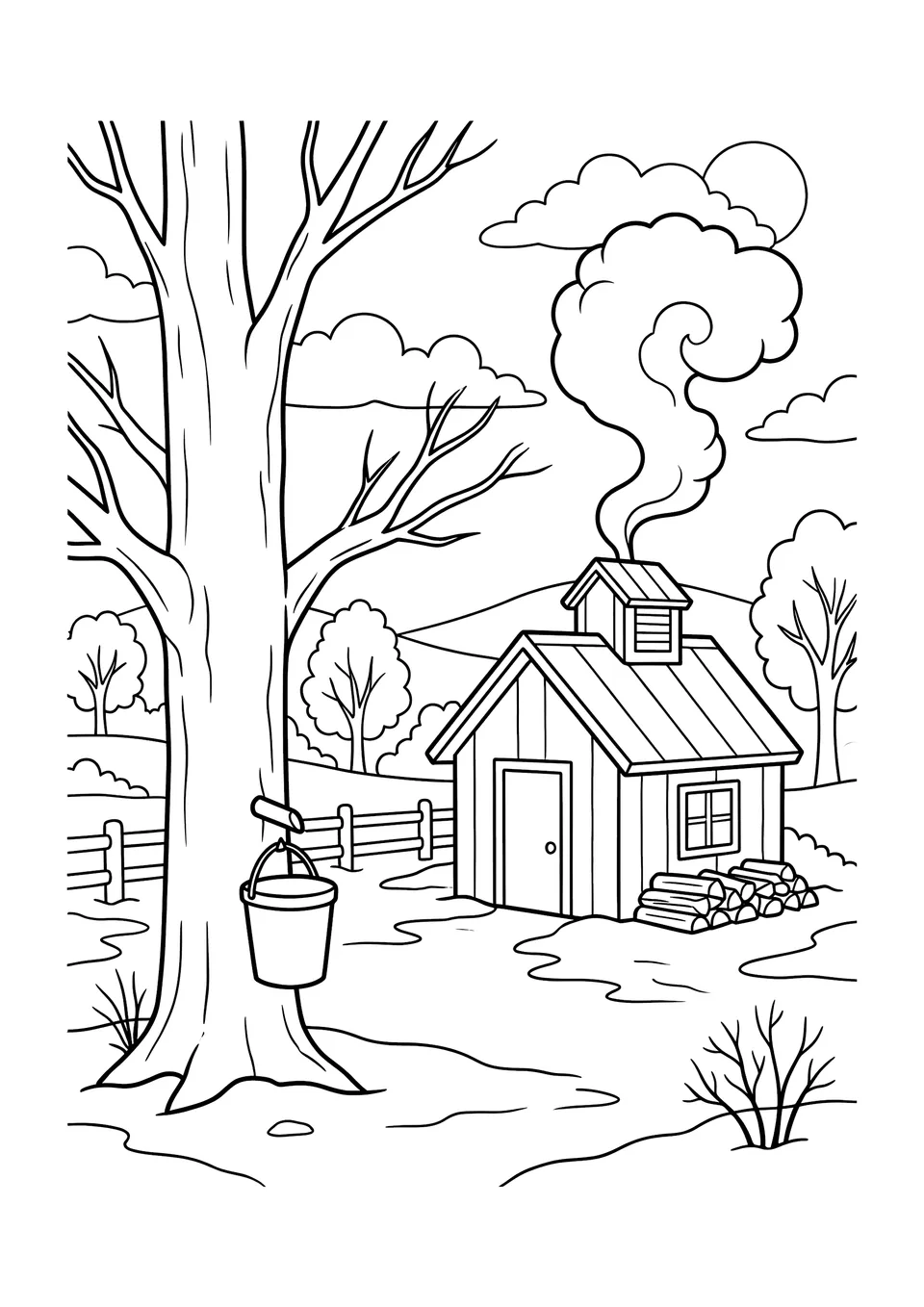
Explore how maple sap becomes syrup with a sugarhouse coloring page and an informative reading passage. Print it for a fun learning activity at school or home.
PDF · Your plan’s download limits apply
A white cloud curls up from a small shed in Vermont. Is the shed on fire? No! The cloud is steam from a maple sugarhouse.
A sugarhouse is a place where people make maple syrup. The syrup starts as sap inside maple trees.
In late winter and early spring, days can be warm and nights can be cold. At this time of year, sap can flow from the trees.
A maple tree has a small hole in its trunk. A short spout fits in the hole. Drop by drop, clear sap runs through the spout into a bucket.
Sap looks like water. It has a little sugar in it, but it is not thick like syrup.
Some people use buckets to catch sap. Others use tubes that carry sap from tree to tree. The sap is taken to the sugarhouse.
Inside, the sap goes into a wide pan. A hot fire heats the pan. Soon, the sap starts to boil.
As it boils, water leaves the sap as steam. The steam rises up and out of the sugarhouse. It curls into the cool air.
The sap left in the pan gets sweeter and thicker. When it is ready, it is maple syrup. It takes a lot of sap to make a little syrup.
People can pour the syrup on pancakes or waffles. The maple trees stay in the woods, ready to grow through another spring.
What is the passage mostly about?
Where do people make maple syrup?
When can sap flow from maple trees?
How does sap get from a tree into a bucket?
What happens to the sap after it is taken to the sugarhouse?
Why does steam rise from the sugarhouse?
How does the sap change as it boils?
What does the word “trunk” mean in the passage?
Why might someone use tubes instead of buckets to collect sap?
What can people pour maple syrup on?
More ways to practice with this story — every sheet is built from the text itself, answer key included where it counts.
One PDF with a cover, a contents page and every answer key at the back — color the page in, then keep going on paper.
Sentences from the passage with the capitals and punctuation removed — rewrite each one correctly.
Match the passage words to their meanings, then fill the missing words back into real sentences.
Two writing tasks that build on the passage, with plenty of lines to write on.
Download this free coloring page and print the Vermont sugarhouse scene. Children can color the curling steam, maple tree, and sap bucket while exploring how syrup is made.
Pair the coloring page with the reading passage, From Maple Sap to Syrup, to follow sap from the tree to the sugarhouse. Use the comprehension questions and glossary to review the process and build vocabulary.
This printable coloring page works well for lower elementary classroom lessons or learning at home, alongside other free coloring pages about places and nature.