


fix the sentence
Sentences from the passage with the capitals and punctuation removed — rewrite each one correctly.
Web preview · Open larger preview (opens in a new tab)
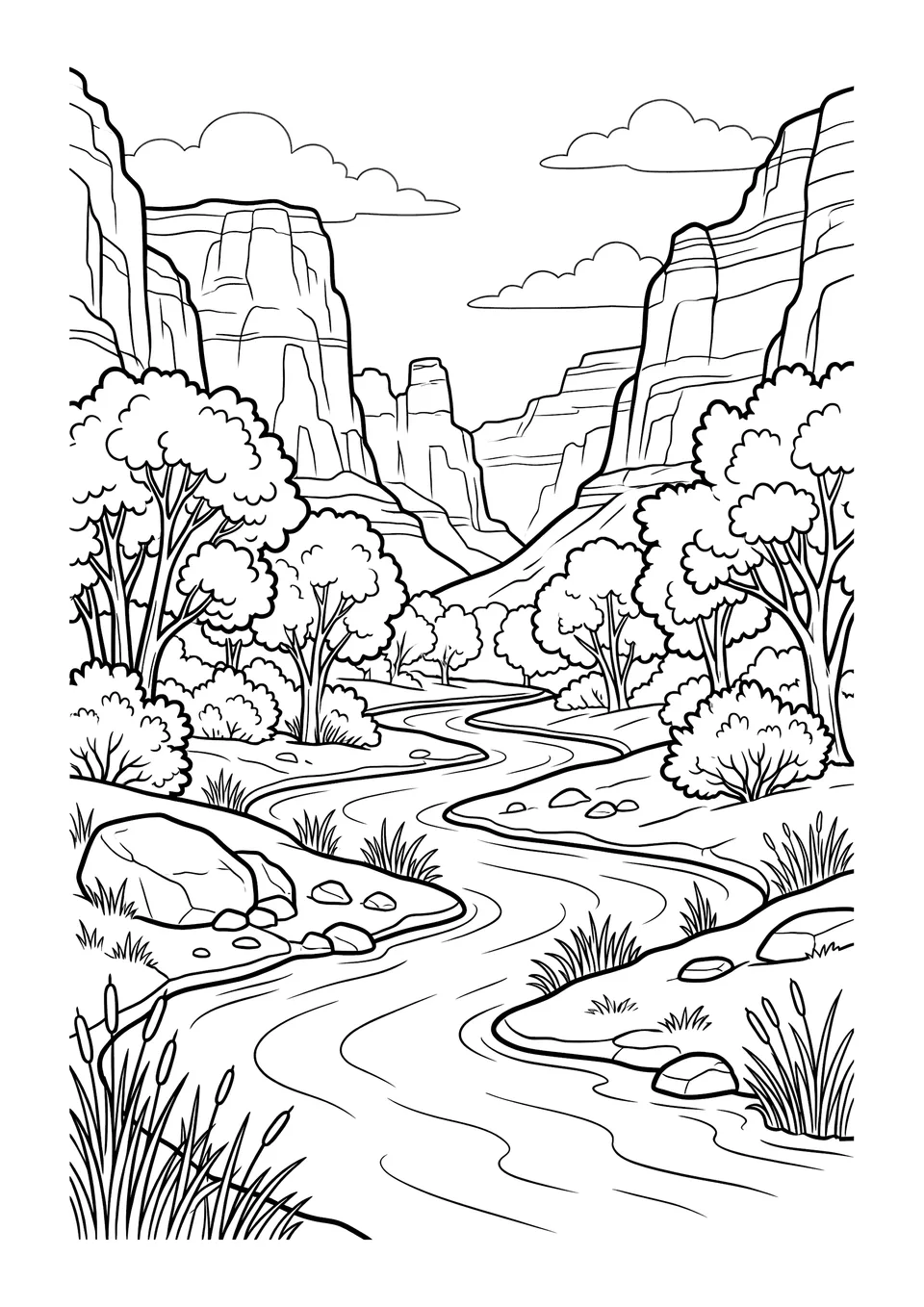
Color the Virgin River as it winds between the towering walls of Zion Canyon. Explore how rivers shape landscapes with the accompanying reading passage.
PDF · Your plan’s download limits apply
From the floor of Zion Canyon, the cliffs seem to climb toward the sky. Far below their red and cream-colored walls, the Virgin River winds past trees and rocks in Zion National Park, Utah. This river is small compared with the towering canyon, but its moving water has played a huge role in shaping the landscape.
Millions of years ago, layers of sand formed sandstone, the rock that makes up many of Zion’s cliffs. Later, the land rose, giving streams steeper paths to follow. Over a very long time, the Virgin River and its branches cut down through the rock. Sand and stones carried by the water scraped the riverbed, wearing it away. As the river cut deeper, the canyon grew deeper too.
Water also shapes the canyon in sudden bursts. After heavy rain, a flash flood can send a powerful rush of water through narrow spaces. Floodwaters can carry mud, rocks, and fallen trees downstream. Even when the sky overhead is clear, rain far away can cause water levels to rise quickly.
Along the riverbanks, cottonwood trees spread their branches above the water. Their roots can reach moisture that is scarce on the dry slopes nearby. Willows also grow near the river, providing shelter for birds and other animals. In fall, cottonwood leaves turn yellow against the colorful cliffs.
The river continues to change Zion Canyon today, carrying bits of rock downstream and nourishing plants along its banks. Its winding path connects the towering cliffs, the green trees, and the living things that depend on its water.
What is the main idea of the passage, and what two details support it?
How did the rising land help streams cut into the rock?
How did sand and stones help the Virgin River deepen the canyon?
How is a flash flood different from the river's slow work of cutting the canyon?
Why can river water rise quickly even when the sky overhead is clear?
Why can cottonwood trees grow along the river when nearby slopes are dry?
What does the word “scarce” mean as it is used in the passage?
How do the willows help animals living near the river?
How does the passage show that the river still changes the canyon today?
Why does the author describe both the cliffs and the plants along the river?
More ways to practice with this story — every sheet is built from the text itself, answer key included where it counts.
One PDF with a cover, a contents page and every answer key at the back — color the page in, then keep going on paper.
Sentences from the passage with the capitals and punctuation removed — rewrite each one correctly.
Match the passage words to their meanings, then fill the missing words back into real sentences.
Two writing tasks that build on the passage, with plenty of lines to write on.
Download this free coloring page to explore the Virgin River, canyon walls, and riverside trees. Like other printable coloring pages, it is easy to use for a nature lesson or a quiet creative activity.
Pair the coloring page with the reading passage, “A River Through Zion Canyon,” to learn how moving water shapes rock and supports plants. Use comprehension questions and a glossary to review ideas and vocabulary from the passage.
This activity is suited to upper elementary learners in the classroom or at home. Print a copy for a lesson on rivers, erosion, or national park landscapes.