


fix the sentence
Sentences from the passage with the capitals and punctuation removed — rewrite each one correctly.
Web preview · Open larger preview (opens in a new tab)
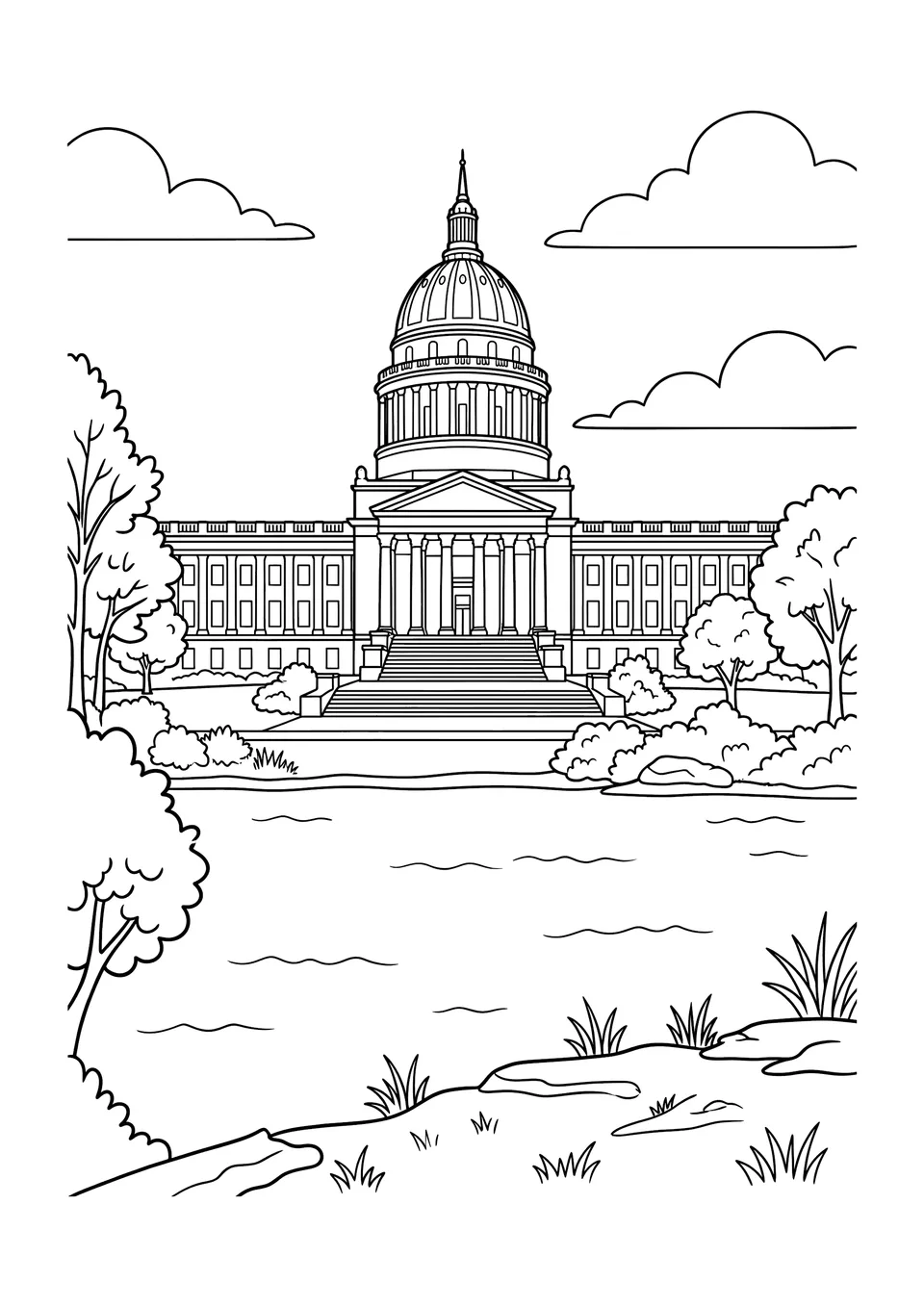
Color the West Virginia State Capitol beside the Kanawha River. Explore its famous dome and learn how the building serves state government.
PDF · Your plan’s download limits apply
A golden dome rises above the trees along the Kanawha River in Charleston, West Virginia. It crowns the West Virginia State Capitol, where important decisions about the state are made.
The Capitol is home to the West Virginia Legislature, the group that makes state laws. The legislature has two parts: the Senate and the House of Delegates. Elected members meet in the building to discuss and vote on proposed laws. The governor, who leads the state government, also has an office in the Capitol.
The building’s dome is one of its most striking features. Its surface is covered with gold leaf, an extremely thin layer of real gold. The dome rises about 293 feet above the ground, making it taller than the dome of the United States Capitol in Washington, D.C. Sunlight can make the gold shine against the sky.
Architect Cass Gilbert designed the Capitol. Construction took place in stages, and the building was completed in 1932. Its pale limestone walls, tall columns, and broad steps give it a formal appearance. Inside, visitors can look up into the dome and see an enormous chandelier hanging overhead.
The Capitol stands on landscaped grounds beside the river. A few trees frame views of the building, while paths and lawns give people places to walk. From across the water, the gold dome stands out above the building’s long wings.
The Capitol is more than a landmark to admire. It is also a working place where elected officials gather to make choices that affect people throughout West Virginia.
What is the main idea of the passage, and which two details support it?
How do the Senate and the House of Delegates help make state laws?
What details show that the Capitol is a working government building?
Why might the dome be easy to notice from across the river?
How does the passage compare the Capitol’s dome with the dome of the United States Capitol?
What does the word “striking” suggest about the dome?
How do the building’s walls, columns, and steps contribute to its appearance?
Why does the author describe both the inside and outside of the Capitol?
How are the Capitol’s grounds useful to visitors?
How does the final paragraph connect the Capitol’s appearance with its purpose?
More ways to practice with this story — every sheet is built from the text itself, answer key included where it counts.
One PDF with a cover, a contents page and every answer key at the back — color the page in, then keep going on paper.
Sentences from the passage with the capitals and punctuation removed — rewrite each one correctly.
Match the passage words to their meanings, then fill the missing words back into real sentences.
Two writing tasks that build on the passage, with plenty of lines to write on.
Download this free coloring page to explore a Charleston landmark with a towering gold-leaf dome. Like other printable coloring pages, it offers open spaces for students to add their own colors.
Pair the coloring page with the reading passage, A Gold Dome Above the Kanawha, to learn about the Capitol and West Virginia’s state government. Use the comprehension questions and glossary to support discussion and vocabulary practice.
This activity works well in the classroom or at home, whether students are studying state government, architecture, or notable places.