


fix the sentence
Sentences from the passage with the capitals and punctuation removed — rewrite each one correctly.
Web preview · Open larger preview (opens in a new tab)
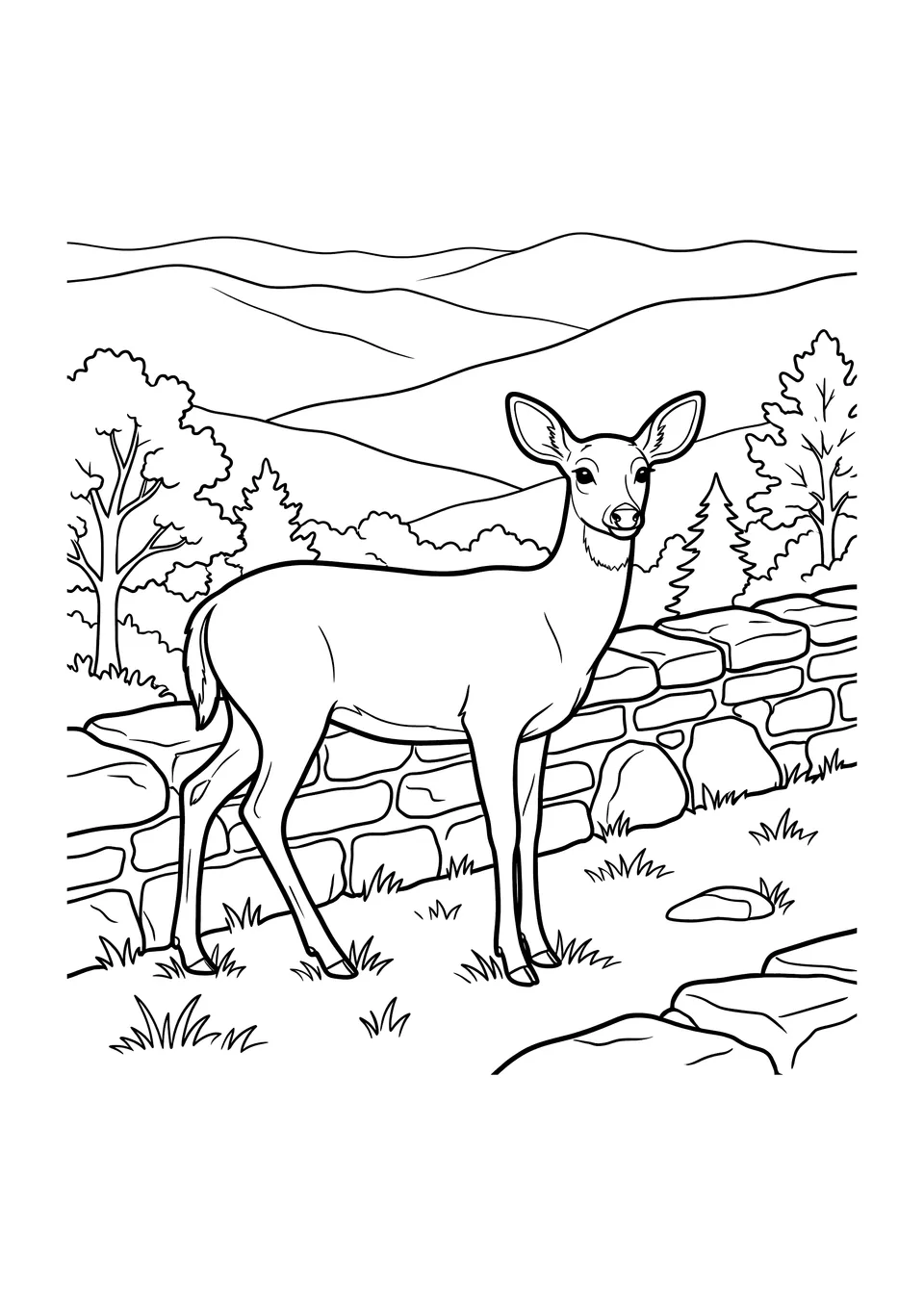
Color a white-tailed deer overlooking the mountains of Shenandoah National Park. Read the passage to learn about deer and their habitat.
PDF · Your plan’s download limits apply
A white-tailed deer stands near a mountain view. Behind it, the hills look like layers of blue and gray.
This view is in Shenandoah National Park in Virginia. A road called Skyline Drive runs through the park.
Along the road are places to stop and look. From an overlook, people can see ridges stretch into the distance.
The far ridges may look pale and blue. Haze in the air can make distant hills look less clear than nearby ones.
A deer may come near the edge of the woods by an overlook. Its brown coat helps it blend in with the trees and dry leaves.
The deer has long legs and large ears. Its ears can turn to pick up sounds from different directions.
A white-tailed deer gets its name from its tail. When it is scared, it may lift the tail and show the white fur underneath.
Deer eat plants. They nibble on leaves, twigs, grass, and other plant parts. In the fall, they may eat acorns that have dropped from oak trees.
A young deer is called a fawn. A fawn has white spots that help it blend in with light and shade on the forest floor.
People who spot a deer should stay far away. Deer are wild animals, even when they seem calm.
People should not feed them, either. Wild deer can find their own food in the park.
From a safe spot, visitors can watch the deer and enjoy the wide mountain view.
What animal is the passage mostly about?
Where is the mountain view?
What can people see from an overlook?
Why do faraway hills sometimes look less clear?
How does the deer's brown coat help it?
What may a deer show when it lifts its tail?
What might a deer eat in the fall?
What does the word “nibble” mean in the passage?
What should visitors do after they spot a deer?
If a deer hears a sound behind it, how might its ears help?
More ways to practice with this story — every sheet is built from the text itself, answer key included where it counts.
One PDF with a cover, a contents page and every answer key at the back — color the page in, then keep going on paper.
Sentences from the passage with the capitals and punctuation removed — rewrite each one correctly.
Match the passage words to their meanings, then fill the missing words back into real sentences.
Two writing tasks that build on the passage, with plenty of lines to write on.
Download this free coloring page to bring a white-tailed deer and the layered mountains of Shenandoah National Park to life. The simple outlines make it a fun choice for lower elementary learners.
Pair the coloring page with the reading passage, comprehension questions, and glossary to explore deer features, habitats, and safe wildlife viewing. Use these printable coloring pages for a classroom nature lesson or an at-home reading activity.