


fix the sentence
Sentences from the passage with the capitals and punctuation removed — rewrite each one correctly.
Web preview · Open larger preview (opens in a new tab)
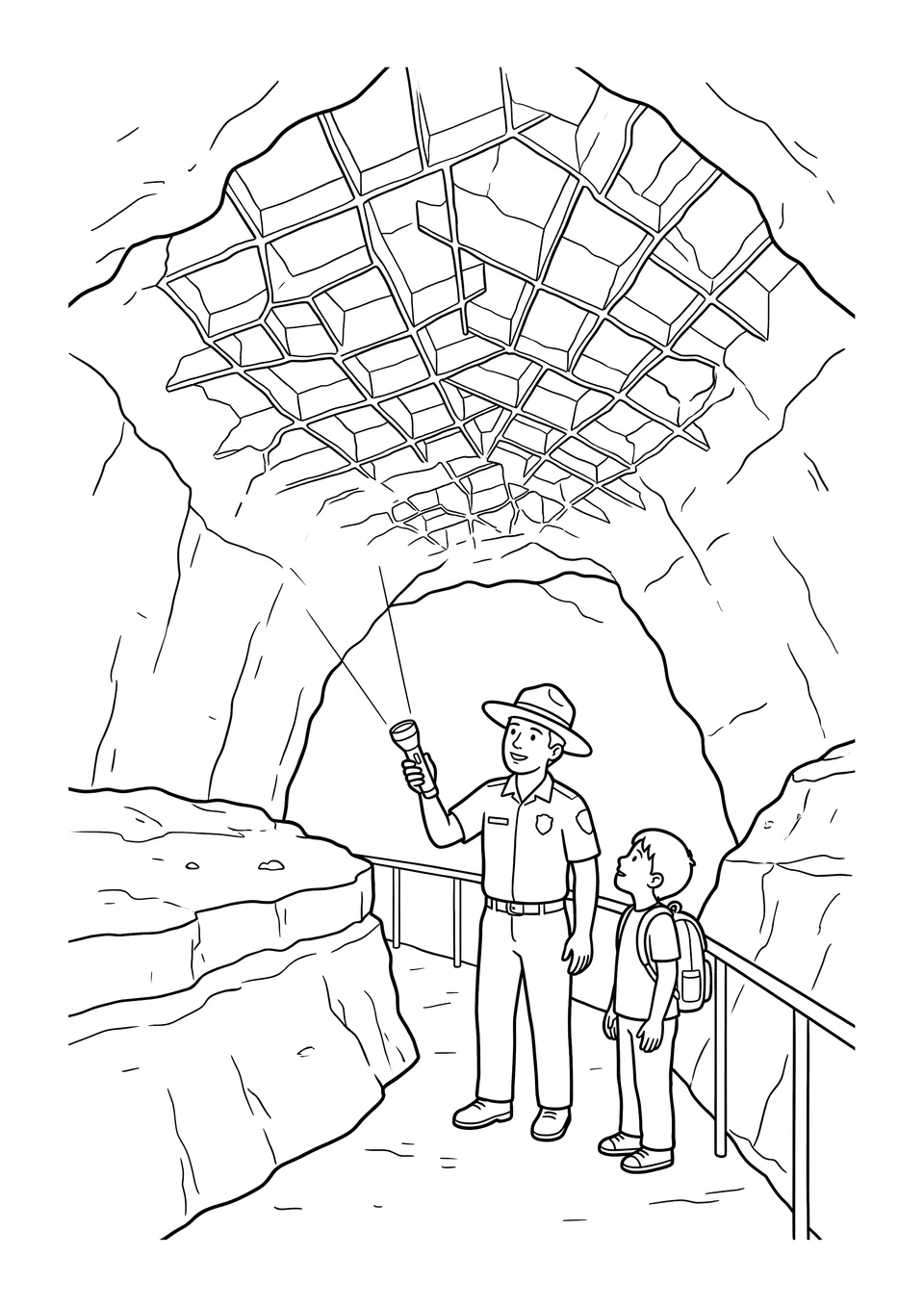
Explore Wind Cave’s delicate boxwork with a ranger and visitor. Color the scene while learning how these mineral patterns formed.
PDF · Your plan’s download limits apply
A park ranger shines a light on the ceiling of Wind Cave in South Dakota. A visitor looks up and sees a web of thin, stone blades. They cross one another, forming small spaces that resemble the compartments in a honeycomb. This unusual formation is called boxwork.
Boxwork is made mostly of calcite, a mineral also found in limestone. Its story began before the cave passages existed. Long ago, cracks formed in the limestone underground. Water carrying dissolved minerals moved through the cracks, and calcite gradually filled them.
Much later, water helped dissolve the limestone around the calcite. As openings grew into cave passages, the thin sheets of calcite remained. They stuck out from the walls and ceilings, forming the delicate patterns visitors see today.
Unlike stalactites, which hang like icicles and grow as mineral-rich water drips, boxwork did not form by dripping water inside an open cave. The calcite filled cracks in solid rock first. Only after some of the surrounding rock dissolved could the boxwork be seen.
Wind Cave contains an unusually large amount of boxwork. On a guided tour, a ranger can point out places where light and shadow make its shapes easier to see. The visitor can look closely without touching: the thin mineral blades can break, and damage may last for generations.
The patterns on the ceiling are more than decorations. They are clues to the long history of rock, water, and change beneath the South Dakota prairie.
What is the main idea of the passage, and which two details support it?
How did calcite first get into the cracks in the limestone?
Why could the boxwork be seen only after some of the limestone dissolved?
How is the formation of boxwork different from the formation of stalactites?
What does the comparison to a honeycomb help you imagine about boxwork?
Why does the author describe events that happened before cave passages existed?
What does the word “delicate” suggest about the thin mineral blades?
Which details explain why visitors should look at boxwork without touching it?
How can a ranger help visitors see the shapes of boxwork more clearly?
Why does the author call the patterns clues rather than just decorations?
More ways to practice with this story — every sheet is built from the text itself, answer key included where it counts.
One PDF with a cover, a contents page and every answer key at the back — color the page in, then keep going on paper.
Sentences from the passage with the capitals and punctuation removed — rewrite each one correctly.
Match the passage words to their meanings, then fill the missing words back into real sentences.
Two writing tasks that build on the passage, with plenty of lines to write on.
Download this free coloring page and print it for a closer look at Wind Cave’s remarkable boxwork. The cave scene offers generous spaces to color and a chance to notice the intersecting mineral blades.
Pair the printable coloring page with the reading passage, “The Delicate Patterns of Wind Cave,” to learn how calcite filled cracks in limestone before the surrounding rock dissolved. Comprehension questions and a glossary support understanding of the passage.
Use this coloring page with reading passage in the classroom or at home as part of a lesson about caves, minerals, and protecting delicate natural formations.