


fix the sentence
Sentences from the passage with the capitals and punctuation removed — rewrite each one correctly.
Web preview · Open larger preview (opens in a new tab)
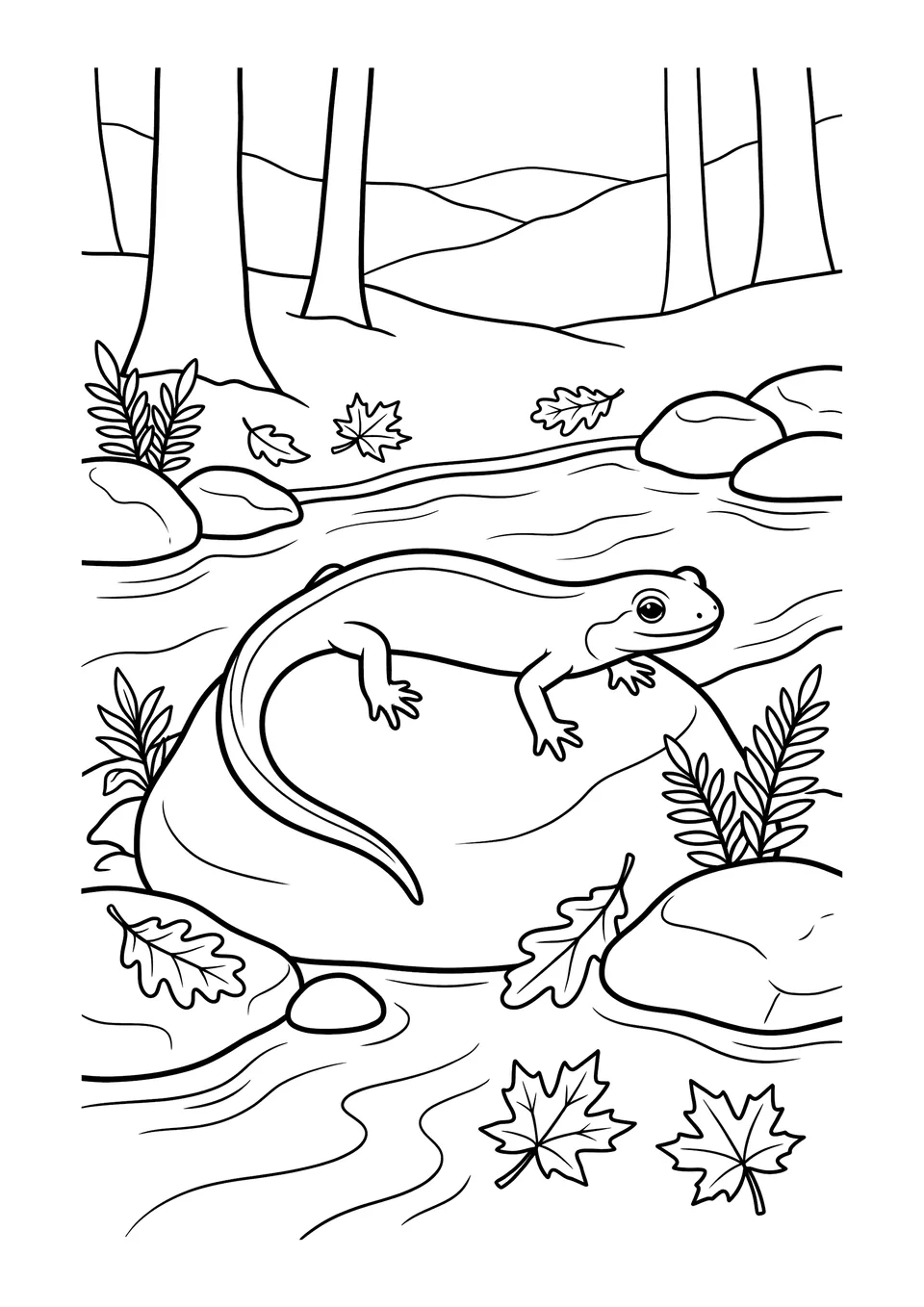
Meet a woodland salamander beside a mountain stream. Print the coloring page and explore its habitat with the reading passage.
PDF · Your plan’s download limits apply
A small salamander rests on a stone. Clear water rushes past it.
The stream runs down a mountain in West Virginia. Trees shade the banks, and damp leaves cover the ground.
The salamander has a long body and a long tail. It has four short legs and smooth, moist skin.
A salamander is not a lizard. It is an animal called an amphibian. Frogs are amphibians, too.
Moist skin is important to a salamander. It can take in some air through its skin. A damp place helps keep its skin from drying out.
The salamander may hide under a wet rock or a log. There, it can stay cool and damp. A hiding spot can help keep it safe from animals that might eat it.
When it is time to hunt, the salamander looks for small creatures. It may eat tiny bugs, worms, and other small animals. Its prey can be found in the wet leaves and soil near the stream.
The stream is a busy place. Small bugs live in and near the water. Birds come to drink, and plants grow along the banks.
Rain fills the stream and wets the ground. After rain, the woods can be a good place for a salamander to move about.
A person who spots one can watch it without picking it up. Hands can harm its delicate skin. Rocks and logs make good homes, so it is best to leave them in place.
The little salamander is one part of this mountain woodland. Its damp home gives it places to hide and food to eat.
Where does the stream run?
What does the salamander's skin feel like?
Why does a salamander need a damp place?
Where might the salamander hide?
What small animals might the salamander eat?
What happens to the ground when it rains?
What can a person do after spotting a salamander?
Why should people leave rocks and logs in place?
What does “prey” mean in the passage?
What might a salamander do after rain, when the woods are wet?
More ways to practice with this story — every sheet is built from the text itself, answer key included where it counts.
One PDF with a cover, a contents page and every answer key at the back — color the page in, then keep going on paper.
Sentences from the passage with the capitals and punctuation removed — rewrite each one correctly.
Match the passage words to their meanings, then fill the missing words back into real sentences.
Two writing tasks that build on the passage, with plenty of lines to write on.
Download the coloring page and print it for a nature lesson or a quiet coloring activity. The simple scene gives children room to add their own colors to a salamander and its stream habitat.
Pair the coloring page with the reading passage, “A Salamander by the Stream,” to learn why salamanders need damp places. Use comprehension questions and a glossary to support understanding of the passage.
This free coloring page is suitable for classroom or at-home use. Add it to a collection of printable coloring pages about animals and their habitats.