


fix the sentence
Sentences from the passage with the capitals and punctuation removed — rewrite each one correctly.
Web preview · Open larger preview (opens in a new tab)
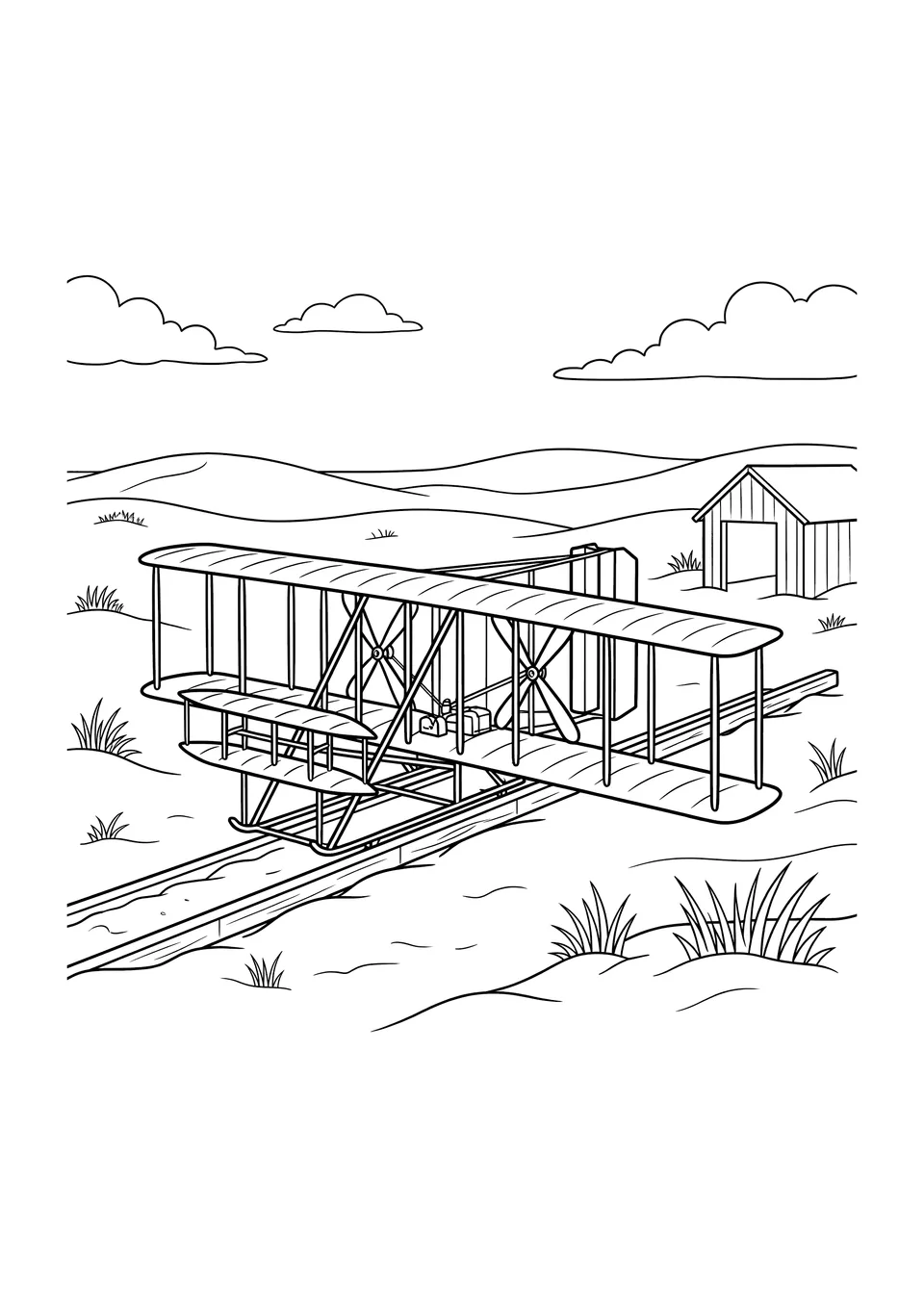
Explore early aviation with a Wright Flyer coloring page set on the dunes of Kill Devil Hills. Pair coloring with an informative reading passage about the first powered flights.
PDF · Your plan’s download limits apply
On a cold, windy morning in 1903, an unusual aircraft rested on a wooden rail among the sandy dunes of Kill Devil Hills, North Carolina. Its wings stretched wide, but it looked very different from a modern airplane. This was the Wright Flyer, built by brothers Orville and Wilbur Wright.
The Flyer was a biplane, an aircraft with two wings stacked one above the other. Its frame was made mostly of wood, and fabric covered its wings. A small gasoline engine powered two propellers, which spun behind the wings and pushed the aircraft forward. Instead of sitting in a cockpit, the pilot lay flat on the lower wing.
The brothers chose the area partly because its steady winds could help lift their aircraft. They had tested gliders there before building the powered Flyer. They also developed controls that let the pilot change the aircraft’s direction and balance while in the air.
On December 17, Orville took the controls for the first flight. The Flyer moved down the rail and lifted off the ground. It stayed in the air for only 12 seconds and traveled 120 feet, but the flight was a major achievement: the aircraft had carried a person through the air under its own power and control.
The brothers made four flights that day, taking turns as pilot. On the last flight, Wilbur traveled 852 feet in 59 seconds. The Flyer was damaged by a strong gust afterward and never flew again. Its brief trips over the sand helped open a new chapter in the history of flight.
What is the main idea of the passage, and which detail supports it?
Why did the Wright brothers choose the area around Kill Devil Hills for their aircraft?
How did the brothers prepare before building the powered Flyer?
How did the Flyer’s engine and propellers work together to move the aircraft?
Why was the first flight a major achievement even though it lasted only 12 seconds?
How did the first and last flights on December 17 compare?
What does the passage suggest about the importance of controls during flight?
What does the word “gust” mean in the final paragraph, and what clue helps you understand it?
Why does the author describe the Flyer before discussing its flights?
Summarize what happened to the Flyer on December 17, including what happened after its last flight.
More ways to practice with this story — every sheet is built from the text itself, answer key included where it counts.
One PDF with a cover, a contents page and every answer key at the back — color the page in, then keep going on paper.
Sentences from the passage with the capitals and punctuation removed — rewrite each one correctly.
Match the passage words to their meanings, then fill the missing words back into real sentences.
Two writing tasks that build on the passage, with plenty of lines to write on.
Download this free coloring page and explore the aircraft that took flight at Kill Devil Hills in 1903. Its stacked wings and sandy setting make it a fun addition to printable coloring pages about history and places.
Use the coloring page with the reading passage to learn how the Wright brothers built and flew their aircraft. Comprehension questions and a glossary help students review the story and explore new vocabulary.
This activity is suited to upper elementary lessons in the classroom or at home, whether students are studying early aviation or practicing nonfiction reading skills.