
writing prompts
Two writing tasks that build on the passage, with plenty of lines to write on.
Web preview · Open larger preview (opens in a new tab)
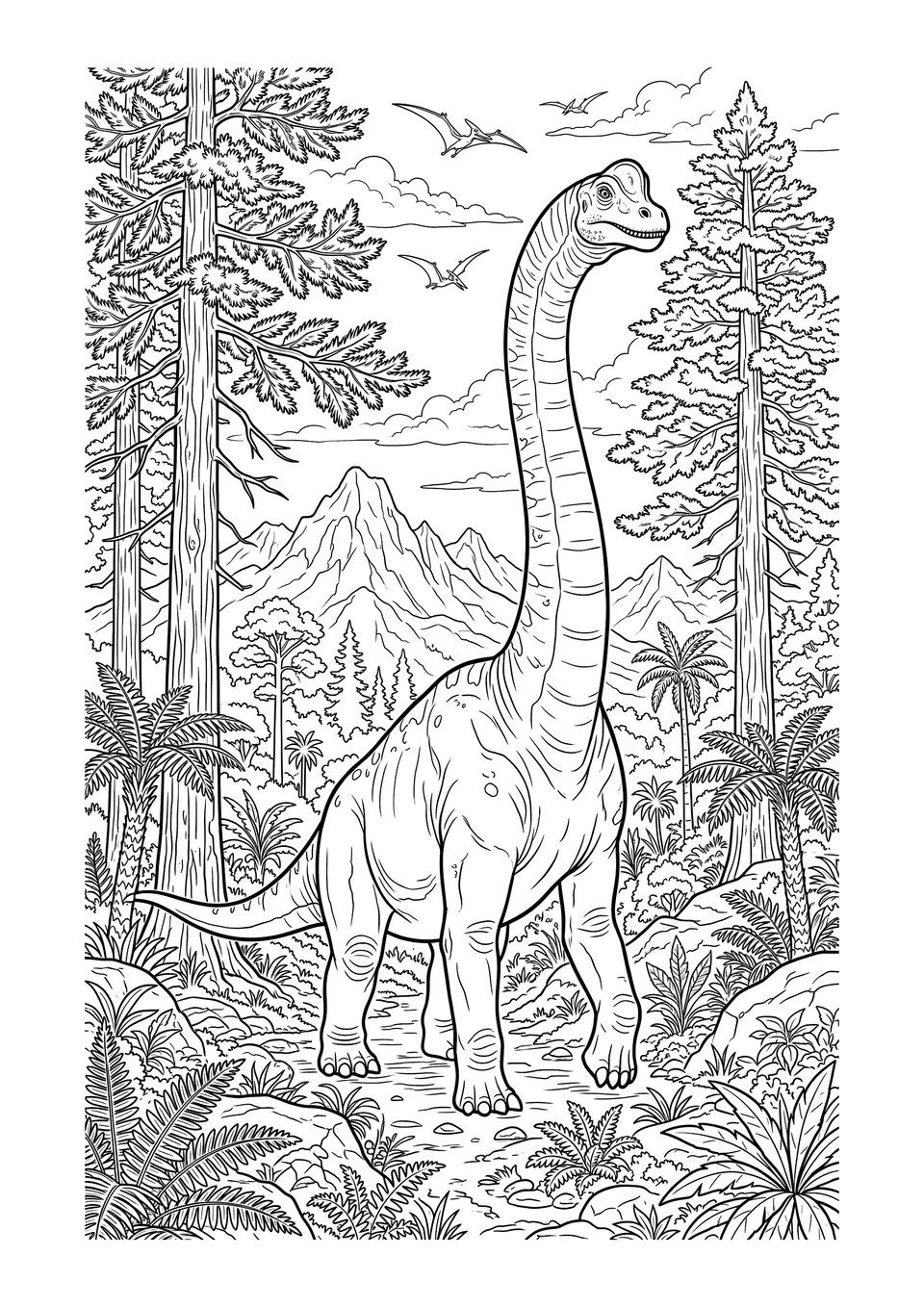
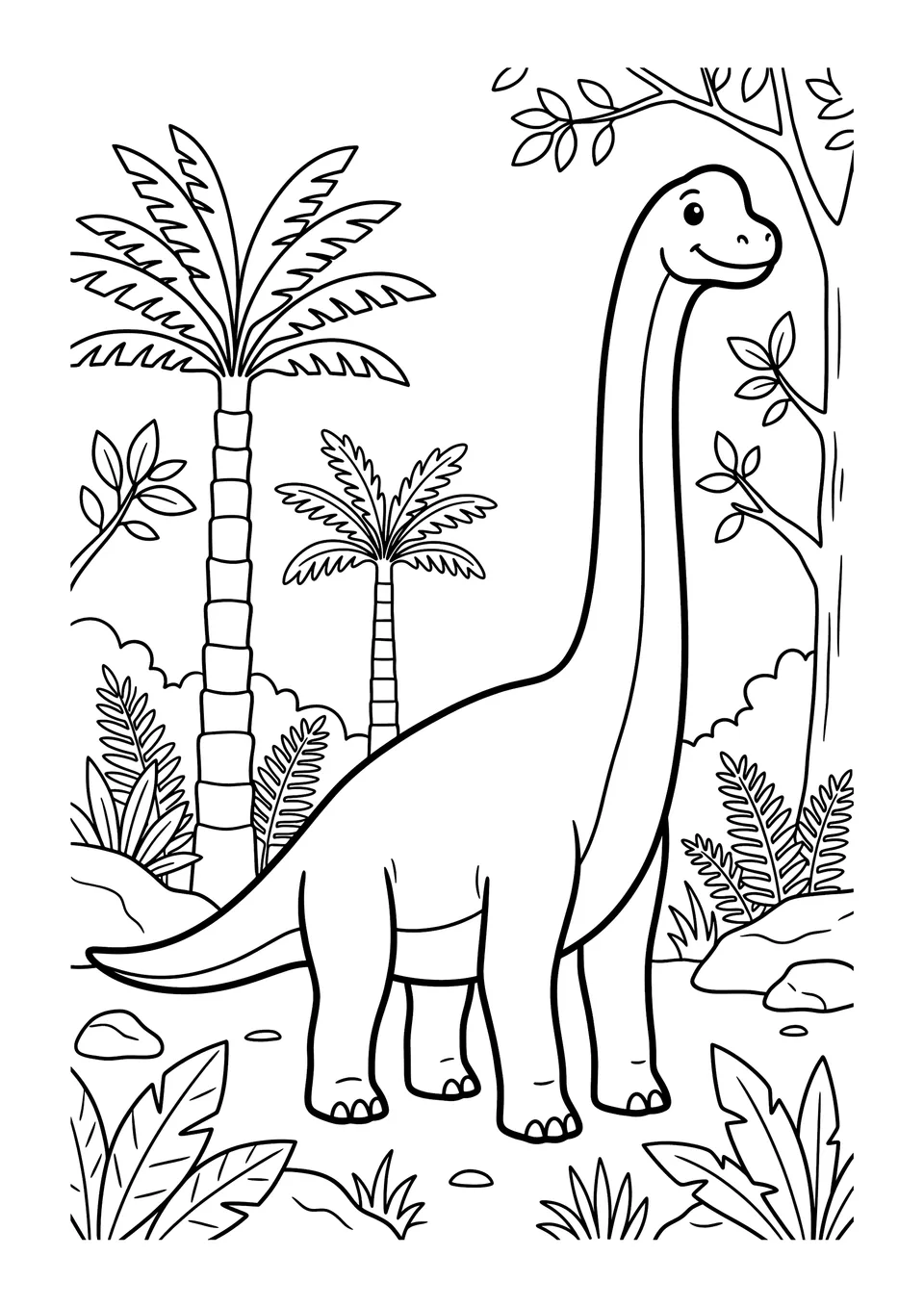
Bring the Late Jurassic period to life with this detailed Brachiosaurus coloring page. This printable activity is perfect for students who want to learn about the 'arm lizard' while they color.
PDF · Your plan’s download limits apply
Imagine walking through a forest 150 million years ago and seeing a head peeking over the tops of the tallest trees. This was the daily life of the Brachiosaurus, a massive dinosaur that lived during the Late Jurassic period. Known for its incredible height and gentle nature, the Brachiosaurus remains one of the most fascinating creatures to ever walk the Earth.
The name Brachiosaurus means "arm lizard." Scientists gave it this name because of its unusual body shape. Unlike most dinosaurs, its front legs were significantly longer than its back legs. This gave the Brachiosaurus a sloping back and a posture very similar to a modern-day giraffe. Because of its long front limbs and an even longer neck, this dinosaur could reach branches that were 30 to 40 feet off the ground, accessing food that other herbivores could not reach.
Being a herbivore, or plant-eater, the Brachiosaurus needed a lot of fuel to power its colossal body. It is estimated that an adult could weigh as much as 60 tons—about the same as twelve African elephants! To maintain its weight, it spent most of its day munching on the needles of conifer trees, gingkos, and ferns. Its teeth were shaped like spoons or pegs, which were perfect for stripping leaves off branches but not for chewing. Instead, the dinosaur swallowed its food whole and let its massive stomach do the hard work of digestion.
For a long time, people thought the Brachiosaurus lived in the water to help support its heavy weight. However, paleontologists now know it was a land-dweller. Its bones were actually filled with air sacs, which made its skeleton lighter and stronger, allowing it to walk on solid ground. Discoveries in North America have helped us understand how these giants moved across the ancient plains. Even though they have been extinct for millions of years, the Brachiosaurus continues to tower over our imaginations today.
During which geological period did the Brachiosaurus live?
What does the name Brachiosaurus literally mean?
How did the length of the Brachiosaurus's front legs compare to its back legs?
What modern-day animal has a posture similar to the Brachiosaurus?
Approximately how many feet off the ground could a Brachiosaurus reach for food?
How many African elephants would it take to equal the weight of one adult Brachiosaurus?
What specific types of plants made up the Brachiosaurus's diet?
Why wasn't the Brachiosaurus able to chew its food?
What internal feature helped make the Brachiosaurus's heavy skeleton lighter?
In which continent have discoveries been made that help scientists understand how these dinosaurs moved?
More ways to practice with this story — every sheet is built from the text itself, answer key included where it counts.
One PDF with a cover, a contents page and every answer key at the back — color the page in, then keep going on paper.
Two writing tasks that build on the passage, with plenty of lines to write on.
Download our free Brachiosaurus coloring page, designed specifically for upper elementary students. This resource combines a high-quality line art illustration with an informative reading passage titled 'The Towering Brachiosaurus.' It is an excellent tool for combining science, reading comprehension, and art in one easy-to-use worksheet.
This printable coloring page is perfect for classroom use or at-home learning. The clear black outlines and balanced details provide a fun challenge for older kids, while the accompanying text teaches them about herbivore diets, unique dinosaur anatomy, and paleontological discoveries. It is a great way to reinforce vocabulary terms like 'herbivore' and 'Late Jurassic.'
Our educational coloring sheets are simple to download and print. By pairing artistic expression with factual content, students stay engaged and retain information longer. Use this Brachiosaurus activity as part of a larger unit on prehistoric life or as a stand-alone reading comprehension exercise.