
fix the sentence
Sentences from the passage with the capitals and punctuation removed — rewrite each one correctly.
Web preview · Open larger preview (opens in a new tab)
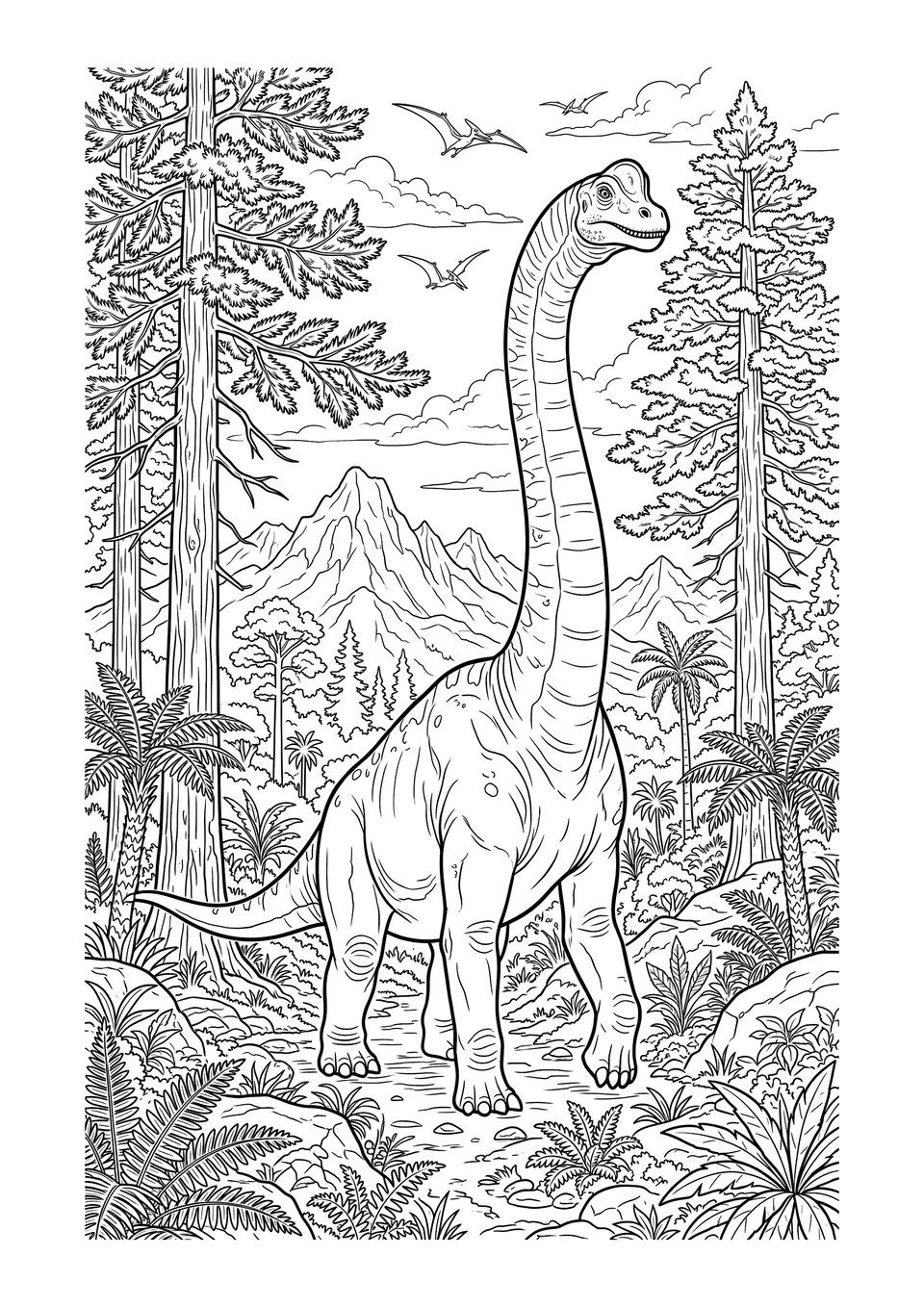
Travel back 150 million years with this detailed Brachiosaurus coloring page, featuring the towering giant of the Jurassic period.
PDF · Your plan’s download limits apply
Imagine standing next to a building that is four stories tall. Now, imagine that building is actually a living, breathing animal. This was the reality of the Brachiosaurus, one of the most famous and massive dinosaurs to ever walk the Earth. Living about 150 million years ago during the Late Jurassic period, this "arm lizard" was a true giant among giants.
What made the Brachiosaurus stand out from other long-necked dinosaurs, like the Apatosaurus, was its unusual body shape. Most sauropods had back legs that were longer than their front legs. However, the Brachiosaurus was the opposite. Its front legs were much longer, giving it a slanted back that looked a bit like a modern-day giraffe. This unique build allowed its neck to point almost straight up, reaching heights that other dinosaurs could only dream of.
Because it could reach so high, the Brachiosaurus had a special advantage when it came to finding food. While other herbivores grazed on low bushes or mid-level branches, the Brachiosaurus could feast on the very tops of coniferous trees. Scientists believe these massive animals had to eat hundreds of pounds of plants every single day just to keep their giant bodies moving. Their peg-like teeth were perfect for stripping leaves off branches. Rather than chewing, they likely swallowed their food in large chunks, using their powerful stomachs to do the rest of the work.
Paleontologists first discovered the fossils of this incredible creature in North America in the early 1900s. Since then, similar fossils have also been found in Africa, suggesting these dinosaurs were widespread across different environments. Even though they were enormous and powerful, they are often described as gentle giants because they were peaceful plant-eaters. Today, the Brachiosaurus remains a symbol of the prehistoric world’s amazing scale and diversity.
What is the literal meaning of the name Brachiosaurus?
Approximately how long ago did the Brachiosaurus live?
In what way were the legs of the Brachiosaurus different from most other sauropods?
Which modern-day animal is the Brachiosaurus compared to because of its body shape?
How high could the Brachiosaurus reach compared to a modern building?
What specific type of trees did the Brachiosaurus likely feed on?
How many pounds of plants did these dinosaurs need to consume each day?
What was the specific function of the Brachiosaurus's peg-like teeth?
In which two continents have Brachiosaurus or similar fossils been discovered?
Why is the Brachiosaurus often referred to as a 'gentle giant'?
More ways to practice with this story — every sheet is built from the text itself, answer key included where it counts.
One PDF with a cover, a contents page and every answer key at the back — color the page in, then keep going on paper.
Sentences from the passage with the capitals and punctuation removed — rewrite each one correctly.
Two writing tasks that build on the passage, with plenty of lines to write on.
Our Brachiosaurus coloring page is designed to challenge and inspire older children. This complex line art scene allows students to explore the unique anatomy of the 'arm lizard,' including its distinctively long front legs and giraffe-like posture. Pair this printable with our informative reading passage, 'The Towering Brachiosaurus,' to create a complete educational experience that combines art with science and literacy.
This free download is ideal for classroom use or as an engaging at-home activity. Along with the detailed illustration, the included reading passage provides context about the dinosaur's diet, physical traits, and discovery. Educators can use these resources to support lessons on prehistoric life, paleontology, and environmental adaptations while encouraging creativity and fine motor skill development.
Whether you are looking for a supplemental science activity or a fun way to practice reading comprehension, this dinosaur coloring page provides a high-quality, educational resource for upper elementary grades. Simply download, print, and start your journey into the world of the most massive animals to ever walk the Earth.