
fix the sentence
Sentences from the passage with the capitals and punctuation removed — rewrite each one correctly.
Web preview · Open larger preview (opens in a new tab)
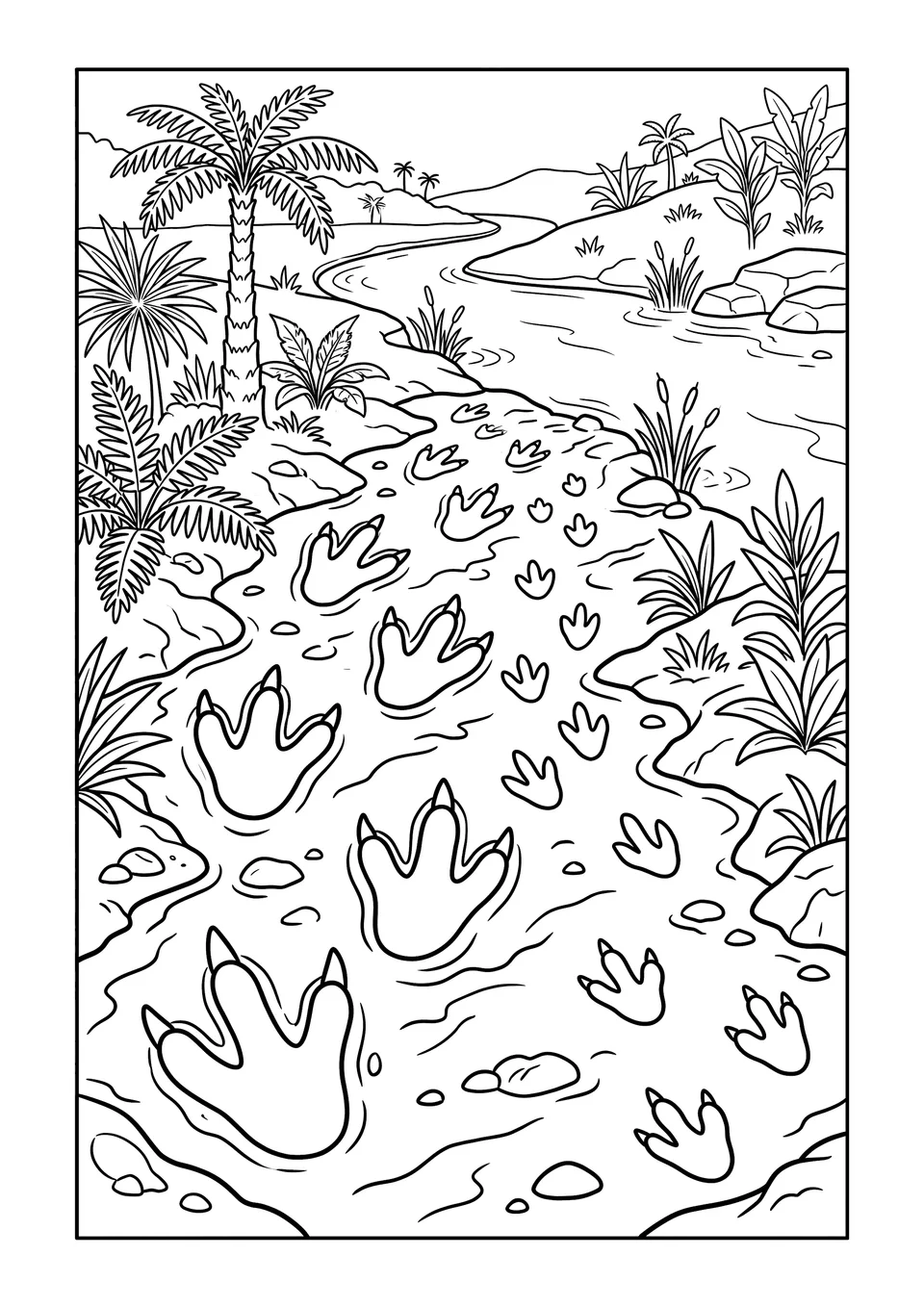
Discover the ancient tracks of giants with this dinosaur footprints coloring page. This activity combines creativity with a fun reading passage about how fossils are made.
PDF · Your plan’s download limits apply
Long ago, dinosaurs walked on the Earth. They moved on their big, strong legs.
Sometimes, a dinosaur walked in soft, wet mud. The mud was near a lake or a river.
Each step left a deep mark in the wet ground. These marks are called footprints.
The hot sun started to shine on the mud. The mud became dry and very hard.
More sand and dirt blew over the tracks. This kept the footprints safe for a very long time.
After many years, the mud turned into solid stone. Now, scientists find these stone footprints in the ground.
They use tools to dig the tracks out. They study them to learn about the past.
A very large footprint tells us a giant was there. A tiny footprint shows a baby dinosaur walked by.
Some footprints have sharp claws at the ends. Other footprints are round and flat like a big plate.
We can see how many toes the dinosaur had. Many dinosaurs had three toes just like a bird.
The space between tracks tells us a story too. Close tracks mean the dinosaur was walking slowly.
Far apart tracks mean the dinosaur was running fast. It might have been chasing something to eat!
We also see if many dinosaurs walked together. They may have lived in a family or a big herd.
Scientists find tracks all over the world today. They find them in deserts and on high mountains.
Each track is a clue about a world from long ago. It is fun to imagine the giant animals that made them.
Where did dinosaurs walk to leave their marks in the ground?
What kind of weather helped make the mud hard?
What covered the footprints to keep them safe for a long time?
What does the mud turn into after many years pass?
What do scientists use to get the footprints out of the ground?
What does a very large footprint tell us about the dinosaur?
How many toes did many dinosaurs have?
What does it mean if the footprints are close together?
Why would a dinosaur be running fast with tracks far apart?
Where can scientists find these tracks today?
More ways to practice with this story — every sheet is built from the text itself, answer key included where it counts.
One PDF with a cover, a contents page and every answer key at the back — color the page in, then keep going on paper.
Sentences from the passage with the capitals and punctuation removed — rewrite each one correctly.
Match the passage words to their meanings, then fill the missing words back into real sentences.
Two writing tasks that build on the passage, with plenty of lines to write on.
This free printable dinosaur footprints coloring page is a fantastic resource for lower elementary students. By combining coloring with an informative reading passage, children can visualize how ancient tracks turned into stone over millions of years. It is an ideal activity for classroom science lessons or a fun educational moment at home.
Each download includes a clear line-art illustration and a simple story titled 'Big Tracks from Long Ago.' This passage helps children understand how scientists study footprints to learn about dinosaur speed, size, and social behavior. Teachers can use the text to build reading comprehension skills while exploring the world of paleontology.
Our coloring pages are designed with bold outlines and open spaces, making them perfect for young artists. Use this printable to supplement a unit on prehistoric life or to spark a child's imagination about the massive creatures that walked the Earth millions of years ago.