
fix the sentence
Sentences from the passage with the capitals and punctuation removed — rewrite each one correctly.
Web preview · Open larger preview (opens in a new tab)
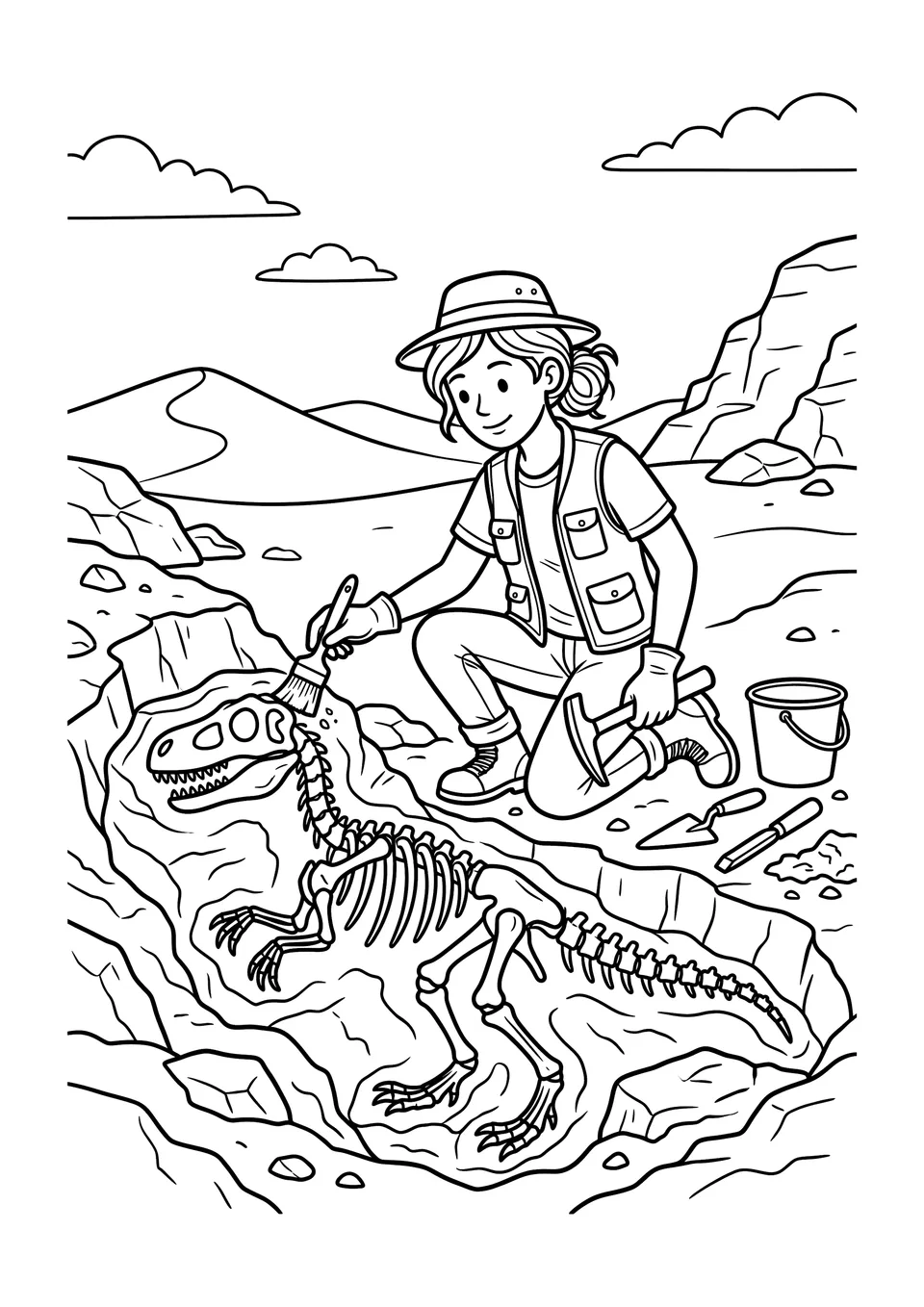
Discover the secrets of the ancient past with this paleontologist coloring page and educational reading passage. It is perfect for young scientists exploring the world of fossils and dinosaurs!
PDF · Your plan’s download limits apply
Imagine stepping into a time machine that takes you back millions of years. Since we do not have actual time machines, we rely on paleontologists to help us see the past. These scientists are like detectives who solve mysteries about ancient life. They search for fossils, which are the preserved remains or traces of animals, plants, and other organisms from the remote past. By studying these clues, they help us understand what Earth was like long before humans existed.
Finding a fossil isn't just about luck. Paleontologists start by studying geological maps and looking for sedimentary rock. This type of rock is formed by layers of mud and sand that build up over time, often trapping dead plants and animals. They look for areas where wind and rain have worn away the top layers of soil, exposing bits of bone or shell on the surface. This natural wearing away is called erosion. Once a small piece of a fossil is spotted, the team prepares for a long and careful process.
The work of digging up a fossil is called excavation. It requires an incredible amount of patience. While you might imagine paleontologists using giant bulldozers, they actually spend most of their time using very small tools. They use rock hammers to break away large chunks of stone, but as they get closer to the fossil, they switch to tiny brushes and even dental picks. These delicate tools allow them to remove dust and dirt without scratching or breaking the fragile specimen.
Once a fossil is finally uncovered, it must be protected before it can be moved. Millions of years in the ground can make bones very brittle. Paleontologists often wrap the fossil in layers of wet paper and burlap strips soaked in plaster. This creates a hard "jacket" that protects the fossil during its journey to a museum or a laboratory. There, experts can finish cleaning it and begin the exciting work of piecing together the story of an ancient world.
How does the author describe the role of paleontologists in the first paragraph?
What are fossils, and what do they help us understand?
Why is sedimentary rock important for finding fossils?
What role does erosion play in the discovery of fossils?
Why must paleontologists have a lot of patience during an excavation?
What tools do paleontologists use when they get very close to a fossil?
What is the definition of excavation according to the passage?
Why are fossils often described as brittle when they are found?
How do paleontologists create a 'jacket' for a fossil?
Where is a fossil usually taken after it has been protected in a jacket?
More ways to practice with this story — every sheet is built from the text itself, answer key included where it counts.
One PDF with a cover, a contents page and every answer key at the back — color the page in, then keep going on paper.
Sentences from the passage with the capitals and punctuation removed — rewrite each one correctly.
Match the passage words to their meanings, then fill the missing words back into real sentences.
Two writing tasks that build on the passage, with plenty of lines to write on.
This free printable coloring page is a perfect addition to your science curriculum or at-home learning activities. Students can color a detailed scene of an excavation site while learning about the tools and techniques paleontologists use to discover prehistoric life. It is designed specifically for upper elementary students to bridge the gap between art and science.
Our coloring pages come with a high-quality informative reading passage titled "Uncovering Secrets of the Deep Past." This combination of art and literacy helps students build reading comprehension skills and expand their vocabulary with terms like erosion and excavation. It is an ideal resource for teachers looking for engaging classroom materials or parents wanting to support STEM learning.
Download this educational activity to explore the world of dinosaurs and fossils. It provides both a creative outlet and a solid foundation in earth science, making it a great tool for homeschooling or supplemental classroom work. Each page is designed to be easy to print and fun to color while providing meaningful academic content.