
fix the sentence
Sentences from the passage with the capitals and punctuation removed — rewrite each one correctly.
Web preview · Open larger preview (opens in a new tab)
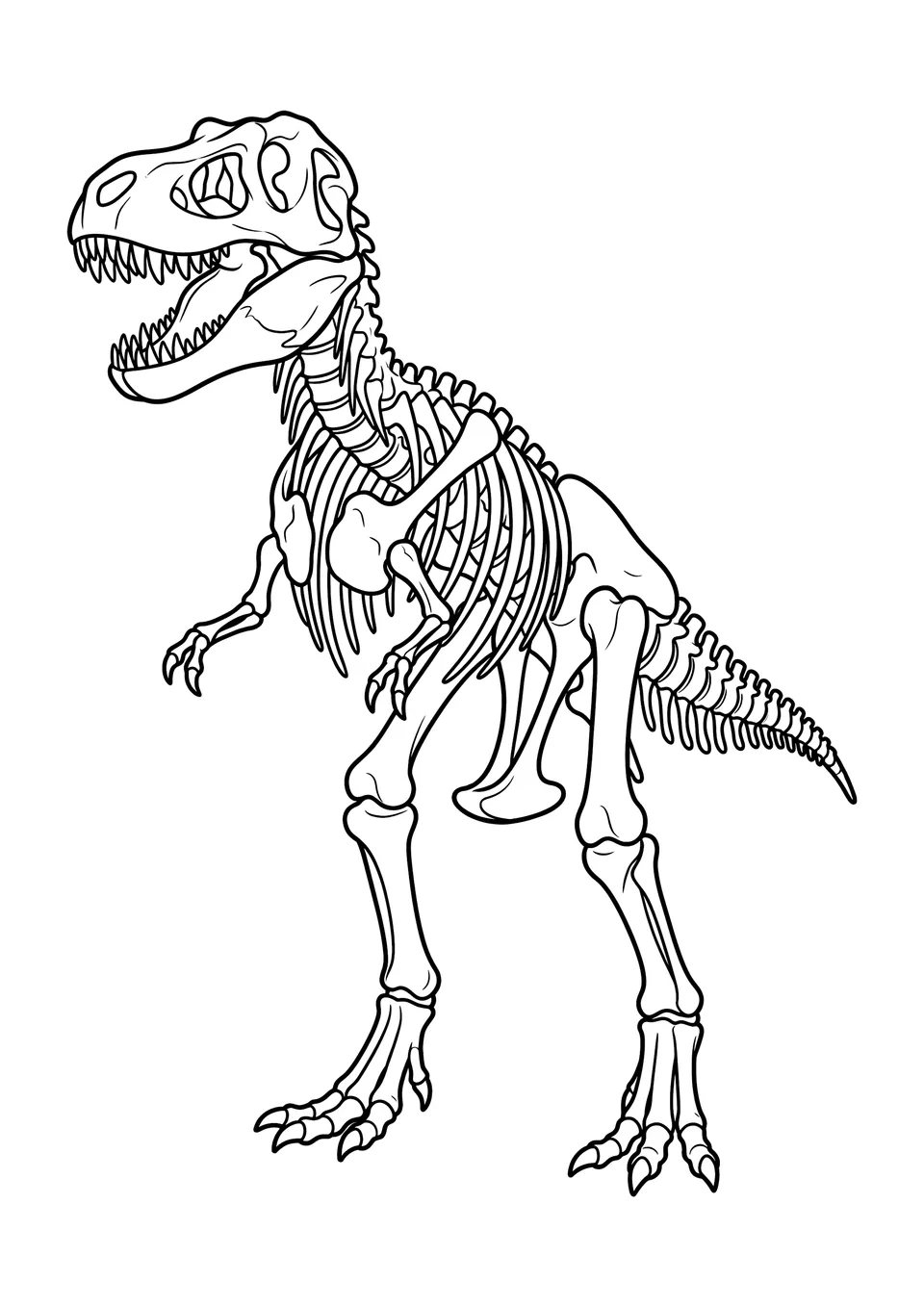
Discover the anatomy of the King of the Dinosaurs with this printable T. rex skeleton coloring page and educational reading passage.
PDF · Your plan’s download limits apply
The Tyrannosaurus rex, often called the "King of the Dinosaurs," lived about 66 million years ago. While we cannot see a living T. rex today, paleontologists have learned an incredible amount about this predator by studying its skeleton. These massive bones act like a prehistoric puzzle, offering clues about how the dinosaur moved, ate, and lived.
Finding a complete T. rex skeleton is extremely rare. Most of the time, scientists find only a few teeth or a single leg bone. However, a few famous discoveries have changed everything. One of the most complete skeletons ever found is named "Sue." Discovered in South Dakota in 1990, Sue is about 90 percent complete. By looking at Sue’s 40-foot-long frame, scientists can see that the T. rex had a heavy tail to help balance its enormous head.
The skull of a T. rex is one of the most interesting parts of its skeleton. It was nearly five feet long and filled with over 50 thick, serrated teeth. Some of these teeth were as large as bananas! By studying the shape of the jaw and the strength of the bone, experts believe the T. rex had one of the strongest bites of any land animal that ever existed. This strength allowed it to crush the bones of its prey with ease.
Skeletons also tell us about how the T. rex moved. Its powerful back legs suggest it was a formidable walker, though scientists still debate how fast it could actually run. Interestingly, its tiny two-fingered arms look almost small compared to the rest of its massive body. Even though they were short, the bones show that the arms were very muscular and strong, possibly used to help the dinosaur push itself up off the ground after a nap.
Every time a new T. rex bone is pulled from the earth, we learn a little more about this ancient giant. From the tips of its sharp teeth to the end of its heavy tail, the skeleton is a window into a world that disappeared millions of years ago.
According to the passage, what do the massive bones of a T. rex act like for paleontologists?
Approximately how many million years ago did the T. rex live?
Why is the discovery of the skeleton named 'Sue' so significant to scientists?
What specific purpose did the T. rex's heavy tail serve?
How long was the skull of a T. rex, according to the text?
The passage compares the size of T. rex teeth to what type of fruit?
What was the T. rex's jaw strength capable of doing to its prey?
What is the main thing scientists still debate regarding T. rex movement?
What is one possible way the T. rex used its tiny, muscular arms?
What do scientists usually find instead of a complete skeleton?
More ways to practice with this story — every sheet is built from the text itself, answer key included where it counts.
One PDF with a cover, a contents page and every answer key at the back — color the page in, then keep going on paper.
Sentences from the passage with the capitals and punctuation removed — rewrite each one correctly.
Match the passage words to their meanings, then fill the missing words back into real sentences.
Two writing tasks that build on the passage, with plenty of lines to write on.
This free printable coloring page is a perfect resource for teachers and parents looking to combine science and art. By focusing on the skeletal structure of the Tyrannosaurus rex, children can get a hands-on look at dinosaur anatomy as they follow along with the reading passage, "Secrets of the T. rex Skeleton." This activity is specifically designed for upper elementary students to enhance their understanding of paleontology and fossil discovery.
Our download coloring page offers a clear, high-quality outline that makes it easy to use in the classroom or at home. Using this sheet alongside the provided informative text helps students practice reading comprehension while visualizing key details like the T. rex's serrated teeth and massive skull. It is an excellent way to introduce complex scientific concepts through a creative medium.
Whether you are building a lesson plan on prehistoric life or looking for a fun weekend activity, this printable coloring page with a reading passage and glossary provides a comprehensive learning experience. Simply print the portrait-sized image and watch as young paleontologists bring the ancient past to life through color.