
fix the sentence
Sentences from the passage with the capitals and punctuation removed — rewrite each one correctly.
Web preview · Open larger preview (opens in a new tab)
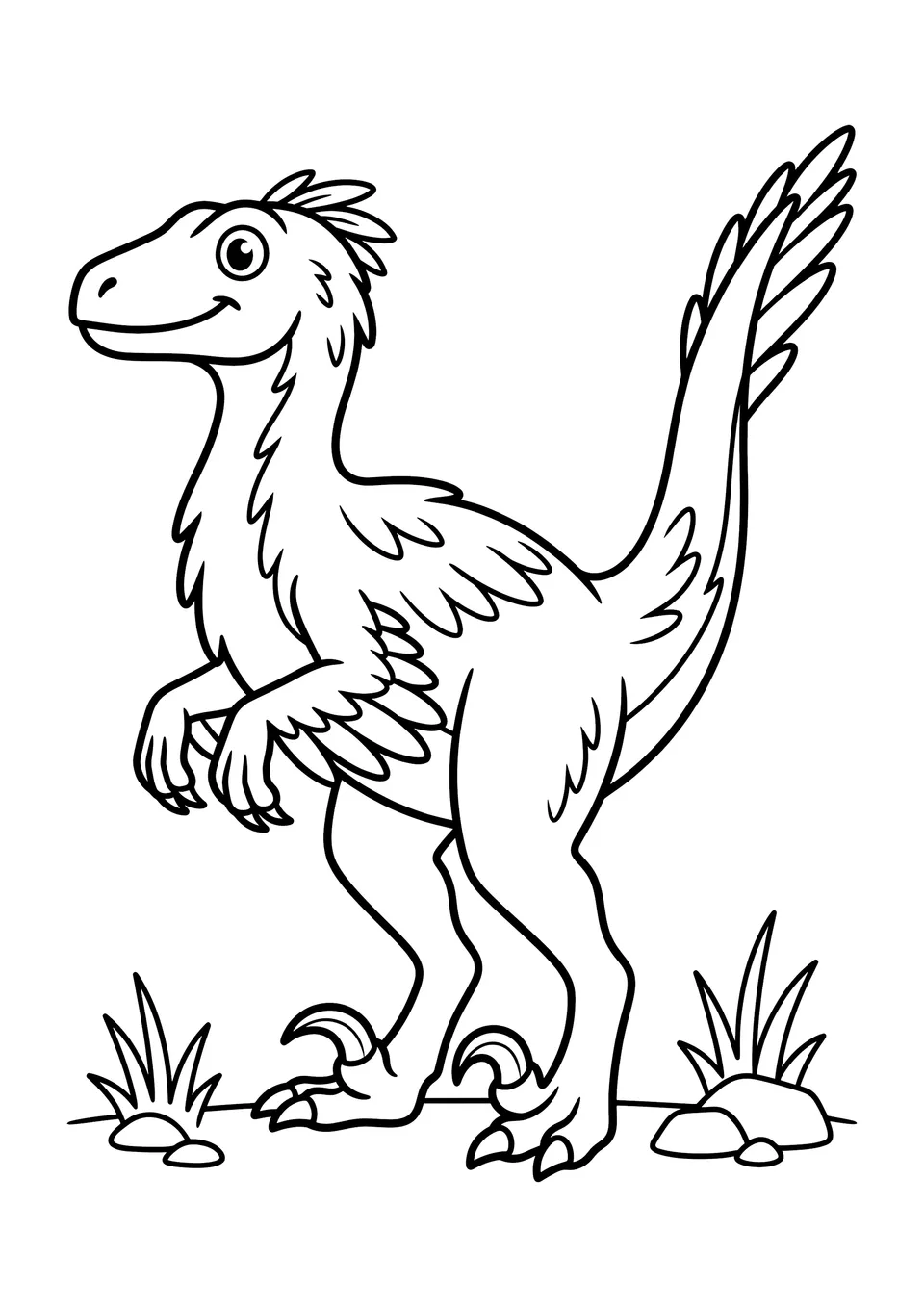
Discover the fascinating truth about the feathered Velociraptor with this printable coloring page and educational reading activity.
PDF · Your plan’s download limits apply
Imagine a creature about the size of a large turkey, covered in soft feathers, and possessing a sharp, curved claw on each foot. This isn't a bird from a fairy tale; it is the Velociraptor, one of the most famous dinosaurs to ever walk the Earth. While many people recognize the name from popular movies, the real Velociraptors were quite different from their Hollywood versions.
Velociraptors lived about 75 to 71 million years ago during the Late Cretaceous Period. They were much smaller than most people think, standing only about two feet tall and weighing roughly 30 pounds. However, what they lacked in size, they made up for in agility and specialized weapons. Their most famous feature was a sickle-shaped claw on the second toe of each foot. Scientists believe they used these sharp claws to grip and pin down their prey while they hunted.
One of the biggest discoveries in recent years is that Velociraptors had feathers. Fossils found in Mongolia show "quill knobs" on their arm bones, which are the same spots where modern birds have feathers attached. Even though they had feathers, they could not fly. Instead, these feathers likely helped them regulate their body temperature or provide balance while they ran at high speeds. These features suggest that dinosaurs and modern birds are closely related.
These dinosaurs were also very intelligent compared to others of their time. They had large brains for their body size and excellent vision, which helped them hunt in a dry, sandy environment. This area is now part of the Gobi Desert in Central Asia. One famous fossil discovery even shows a Velociraptor and a plant-eating Protoceratops locked in a battle, frozen in time by a sudden sandstorm. This rare find proves how these predators interacted with other animals in their prehistoric world.
Today, we continue to learn more about these fascinating "speedy thieves." By studying their bones and the clues left behind in the Earth, paleontologists help us paint a more accurate picture of a feathered predator that was as deadly as it was unique.
What modern animal is similar in size to a real Velociraptor?
During which specific time period did the Velociraptor live?
Describe the unique physical feature found on the second toe of each foot.
What specific evidence did scientists find on arm bones that suggests Velociraptors had feathers?
Since they could not fly, what are two ways feathers likely helped Velociraptors?
In which modern-day desert region were many of these fossils discovered?
How does the size of a Velociraptor's brain relate to its intelligence?
What does a famous fossil discovery show happening between a Velociraptor and a Protoceratops?
What does the name 'Velociraptor' mean based on the passage?
How did a sudden sandstorm help modern scientists understand these dinosaurs?
More ways to practice with this story — every sheet is built from the text itself, answer key included where it counts.
One PDF with a cover, a contents page and every answer key at the back — color the page in, then keep going on paper.
Sentences from the passage with the capitals and punctuation removed — rewrite each one correctly.
Match the passage words to their meanings, then fill the missing words back into real sentences.
Two writing tasks that build on the passage, with plenty of lines to write on.
This free Velociraptor coloring page is a perfect blend of art and science for upper elementary students. It comes paired with an informative passage that explains how real Velociraptors were different from the versions seen in movies, focusing on their feathers, size, and unique sickle-shaped claws. This resource is ideal for classroom use, homeschooling, or as an engaging weekend activity for young dinosaur enthusiasts.
By combining a simple coloring sheet with a reading comprehension passage, children can develop their fine motor skills while learning important facts about the Late Cretaceous Period.
This printable set is designed for easy download and use, providing a complete educational experience that covers history, biology, and vocabulary. Whether you are a teacher looking for a quiet classroom activity or a parent seeking educational content, this Velociraptor resource is an excellent addition to your teaching toolkit.