
How to Avoid Homeschool Burnout and Make the Week Sustainable
Burnout often grows from too many moving parts, not one bad lesson. Audit the week, simplify the hidden workload, and protect the parent's attention as a limited resource.
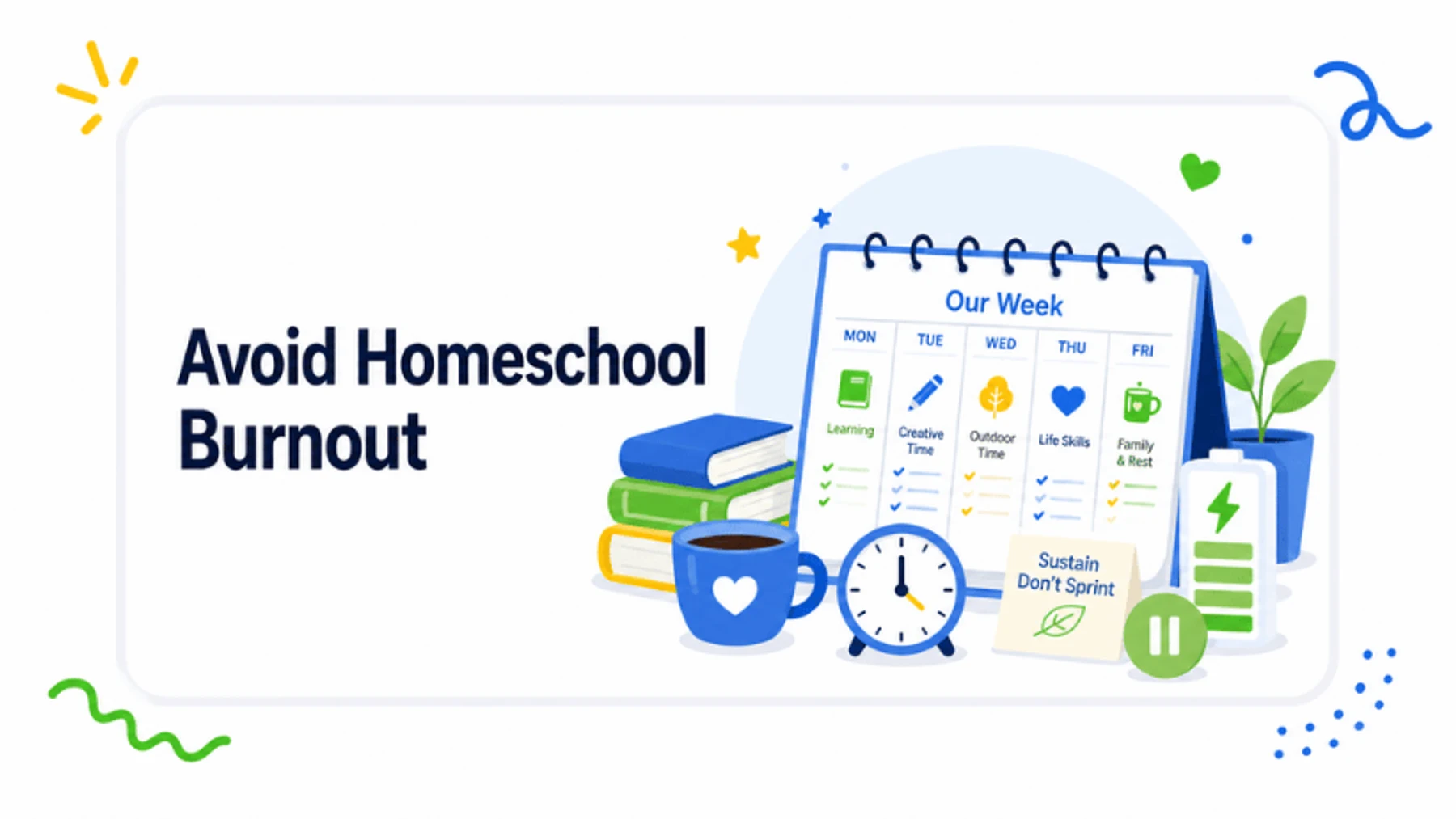
Homeschool burnout often does not begin with one terrible lesson.
It builds from the invisible total: choosing curriculum, finding materials, teaching, checking work, managing siblings, cleaning up, planning tomorrow, worrying about progress, and carrying the feeling that you should always be doing a little more.
The first response to burnout should not automatically be a better planner.
Start by reducing the number of things that depend on you.
Use this audit:
Teach → Supervise → Outsource → Automate → Drop
For the broader homeschool system around schedules, independence, multiple ages, curriculum choices, and flexible learning, start with Homeschool Without the Overwhelm.
Find the Invisible Work
Write down the work around the lessons, not only the lessons themselves.
For example:
- searching for a science activity
- printing worksheets
- finding a reading passage at the right level
- explaining directions repeatedly
- checking every independent task
- moving between several children's lessons
- rebuilding a plan after interruptions
- deciding what to do tomorrow
Two families may teach the same subjects while carrying very different planning loads.
Burnout often lives in that difference.
1. Teach: Protect Your Direct Attention
Some work genuinely needs you.
Examples might include:
- teaching a new math concept
- listening to a developing reader
- discussing writing
- helping a child understand a difficult idea
- supporting a skill gap
Protect those moments.
Do not spend all of your best attention on work that could happen without direct teaching.
2. Supervise: Stop Re-teaching What Can Become a Routine
Some tasks need oversight but not constant instruction.
Examples:
- independent reading
- practicing known math facts
- finishing a familiar assignment
- reviewing vocabulary
- organizing materials
Teach the routine once, make the expectations visible, then reduce how much you intervene.
The goal is not to leave children alone with work they cannot do. It is to stop turning every familiar task into a fresh parent-led lesson.
3. Outsource: Decide What Someone or Something Else Can Carry
Outsourcing does not have to mean hiring a private teacher for every subject.
It might mean:
- a co-op
- library program
- online course
- tutor for one difficult area
- audiobook or read-aloud support
- a ready-made practice resource
- an extracurricular that covers a goal better than you can at home
Choose selectively. Outsourcing should remove a real burden, not add another platform to manage.
4. Automate or Reuse: Stop Rebuilding Routine Materials
Repeated searching can quietly consume hours.
If reading or ELA prep is one of those recurring jobs, reuse systems rather than searching from zero each week.
For example:
- PicoBuddy Curated Lists group several passages around one topic
- Themes bundle reading, games, coloring, and related resources around a shared interest
- the reading-passage library lets you start from topic and level instead of building a text from scratch
Those tools are not a complete homeschool curriculum. They are examples of moving a recurring prep job out of your head.
Do the same in other subjects: reuse templates, repeat successful routines, and keep resources that worked.
5. Drop: Remove Work That Has No Clear Job
This is the hardest category.
Ask of every recurring task:
- What is this for?
- What would happen if we stopped doing it for a month?
- Is it required, useful, or simply familiar?
- Does another activity already cover the same goal?
Dropping unnecessary duplication is different from dropping useful practice.
You might keep a worksheet because it gives valuable independent practice. You might remove a second worksheet that checks the exact same thing after the child has already demonstrated the skill.
The format is not the issue. The job is.
Use a Buffer Before You Need It
A schedule that works only when everyone is healthy and focused is not a sustainable schedule.
Protect some capacity for:
- appointments
- illness
- rough mornings
- catch-up
- a project that grows
- a child who suddenly needs more direct help
A buffer day or lighter block can reduce the feeling that every disruption creates debt.
Notice Early Burnout Signals
Parent burnout can show up as:
- dread before the day begins
- irritability over small delays
- constant curriculum switching
- staying up late to prep
- feeling guilty during every break
- avoiding subjects because the setup feels exhausting
- interpreting every unfinished task as failure
One difficult week does not define your homeschool. But a repeated pattern is worth responding to before everyone is exhausted.
Make a Seasonal Reset
Every few months, ask:
What are we teaching directly that still needs direct teaching?
What can the child now do with supervision?
What can we outsource or reuse?
What can we drop?
As children grow, the answer should change.
A system that depended heavily on you in September may not need the same amount of parent involvement in January.
Protect the Person Running the System
Homeschool sustainability is partly an educational problem and partly an operating problem.
If every useful activity requires a new search, a new printable, a new explanation, and your full attention, the system will eventually become too expensive in parent energy.
Keep the work that matters. Simplify the repeated setup. Build independence. Leave recovery space.
A sustainable homeschool week is not a lower standard. It is a structure that lets good teaching continue.
Frequently Asked Questions
Related Articles


Helping kids read better, together.
Like this article? Join 500+ educators using PicoBuddy to generate high-quality reading materials in seconds.