
How Text to Speech Supports Reading Comprehension
Learn how text to speech can support reading comprehension by helping students listen, follow along, reread, and stay connected to meaning.
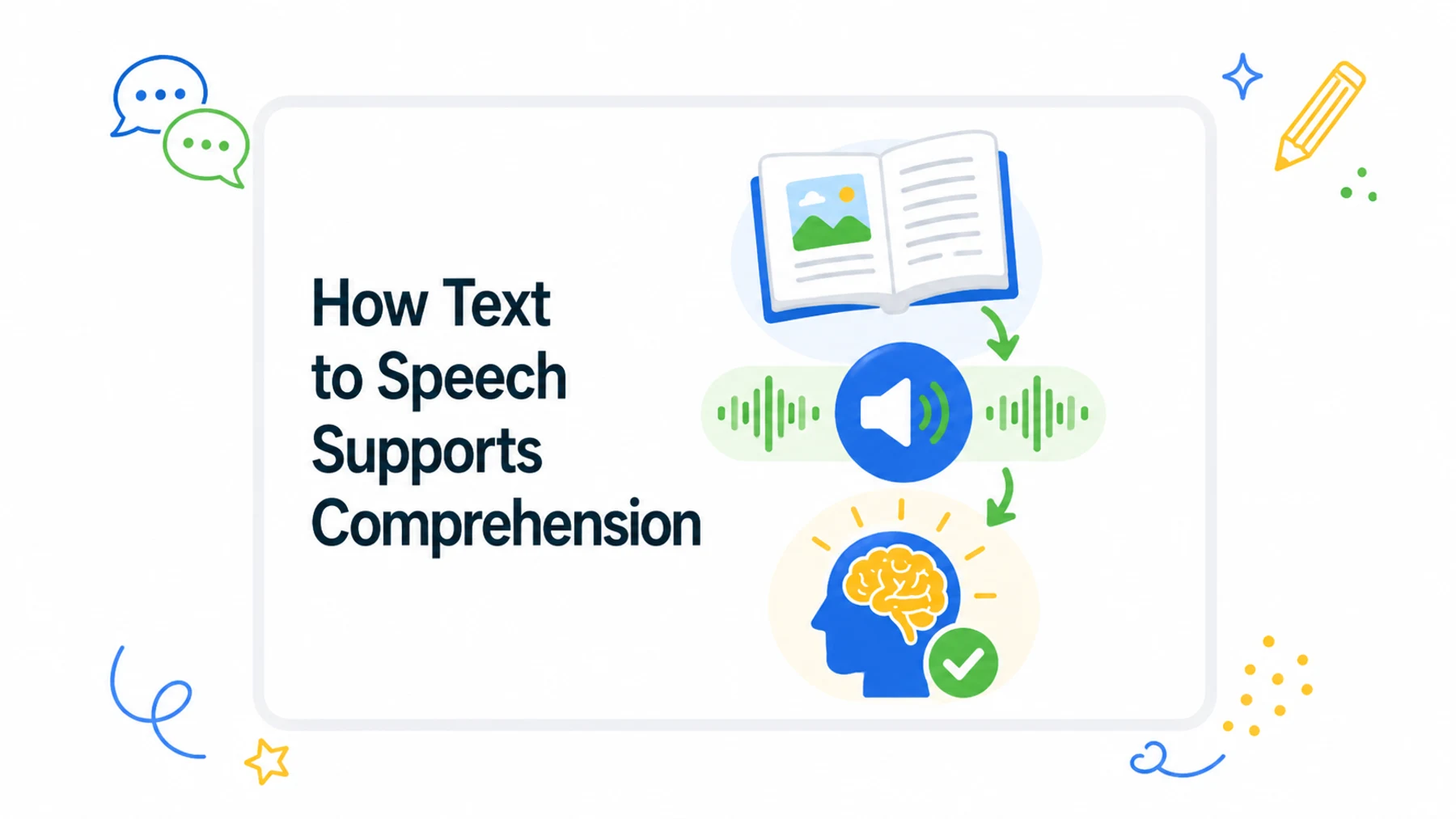
Some students understand a passage much better when they hear it read aloud. That does not mean they are not learning to read.
Often, it means that decoding is taking so much mental effort that there is very little attention left for understanding the meaning of the text.
Text-to-speech can help reduce that pressure. When students hear the words while following along with the passage, they can focus more on vocabulary, comprehension, fluency, and ideas.
For many students, text-to-speech is not a shortcut.
It is a support that helps make reading more accessible.
What is text-to-speech for reading comprehension?
Text-to-speech is a tool that reads written text aloud.
Students can listen to a passage while following along visually on the screen or page. Some students listen before reading independently. Others listen while reading or use text-to-speech during rereading.
The goal is not only hearing the words. The goal is helping students access the meaning of the passage.
For example, a student may struggle to independently decode a nonfiction passage about volcanoes, but understand the topic clearly when the passage is read aloud. Hearing the words can make vocabulary easier to recognize and sentences easier to follow.
This can help students stay connected to reading instead of becoming overwhelmed by decoding.

How text-to-speech supports comprehension
Reading comprehension depends on several skills working together.
Students need to decode words, recognize vocabulary, understand sentences, connect ideas, remember details, and think about meaning while reading.
For some students, decoding takes so much effort that comprehension begins to break down. Text-to-speech can reduce that pressure.
When students hear the words aloud, they may have more mental space available for understanding the passage. Instead of using all their energy to sound out words, they can pay more attention to the ideas, vocabulary, structure, and questions.
This is why some students answer comprehension questions more successfully after hearing a passage read aloud.
The support does not remove comprehension work. It helps students reach it.
Text-to-speech vs teacher read-aloud
Text-to-speech and teacher read-aloud can both support comprehension, but they are not exactly the same. A teacher read-aloud can include expression, explanation, pauses, discussion, and quick checks for understanding. It is interactive and responsive.
Text-to-speech gives students more independent access. Students can listen without waiting for an adult to read the passage aloud. They can replay the text, follow along, reread, and work at their own pace.
Both can be useful.
A teacher read-aloud may be best for whole class modeling, discussion, and shared vocabulary work. Text-to-speech may be useful when students need independent access, homework support, intervention practice, or a way to listen while following along. The tool should match the goal.
Why decoding can get in the way of meaning
Some students are strong thinkers but weak decoders.
A student may understand complex ideas during discussion, explain stories clearly, or answer questions accurately after listening, but struggle to access the same ideas through independent reading.
This often happens because decoding is slow, exhausting, or inconsistent.
When reading becomes too effortful, students may lose track of meaning, forget the beginning of a sentence before reaching the end, skip unfamiliar words, stop noticing punctuation, or become frustrated.
Text-to-speech does not remove the need for reading instruction. But it can help students continue building comprehension while decoding skills develop.
Who benefits from text-to-speech support?
Many different students can benefit from text-to-speech support.
Students with dyslexia may use text-to-speech to reduce decoding overload during longer or more demanding passages. Struggling readers may use it to build confidence and stay engaged with grade-level topics. Students with low fluency may benefit from hearing smoother, more expressive reading.
Text-to-speech can also help ESL and ELL students hear pronunciation, sentence rhythm, and vocabulary in context while following along with the written text.
Some students may only need text-to-speech occasionally. Others may benefit from it regularly during reading practice, homework, intervention, or content-area reading.
The goal is always the same: Help students access meaning more successfully.
When should students use text-to-speech?
Text-to-speech is useful when listening helps students reach the reading goal.
It can help when the passage is slightly difficult, the vocabulary is unfamiliar, the student loses meaning while decoding, or the goal is comprehension, fluency, vocabulary, confidence, or access to content.
It can also be useful with science and social studies passages because those texts often include new words, background knowledge, and more complex ideas.
Text-to-speech works best when students still do something with the passage afterward.
They might follow along, reread a section, answer questions, discuss vocabulary, or explain the main idea. Listening should lead into active thinking.
When should students read without text-to-speech?
Text-to-speech is not needed for every reading task.
Students should read without audio when the goal is independent decoding, reading stamina, or checking what they can read on their own.
If the passage is already at a comfortable independent level, students may benefit more from reading without support.
Text-to-speech can also become less helpful if students use it to avoid reading completely. In that case, listening can still be part of the routine, but it should lead into reading work.
For example, a student might listen to the passage first, then reread one paragraph independently.
Text-to-speech is strongest when it works as a bridge. Not as a replacement for every reading opportunity.
How to use text-to-speech without replacing reading
Text-to-speech works best when students stay actively connected to the passage.
Listening alone is usually not enough. Students should still follow along, reread, answer questions, and interact with the text.
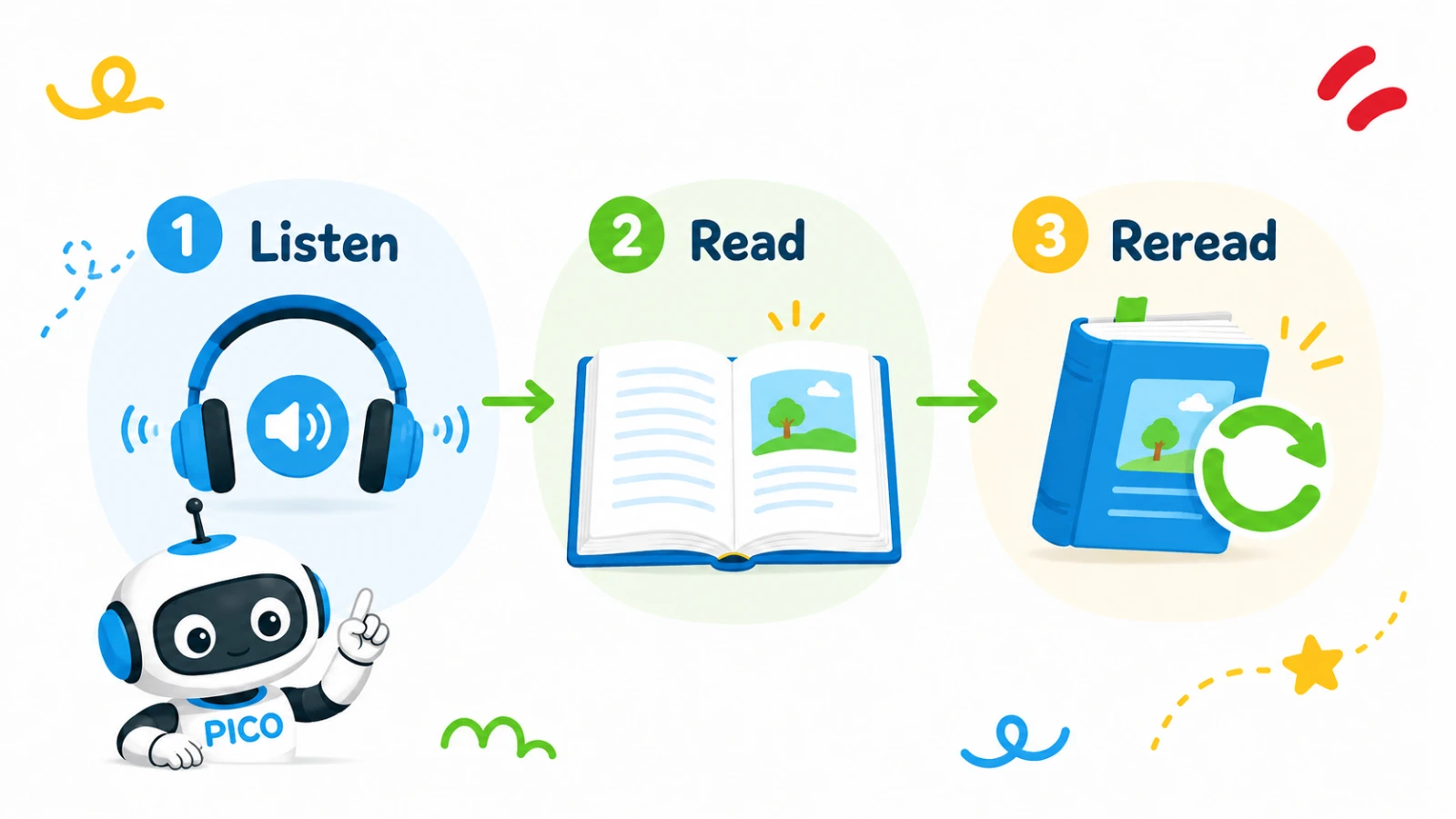
One simple routine is:
Listen, read, reread.
- Listen to the passage once.
- Follow along with the written text.
- Reread part of the passage independently.
- Answer a few comprehension questions.
- Discuss one important idea from the text.
This keeps text-to-speech connected to comprehension and reading growth instead of passive listening.
Students still need opportunities to practice decoding, fluency, and independent reading.
Text-to-speech is most effective when it supports those goals, not when it replaces them completely.
Text-to-speech for dyslexia support
Students with dyslexia often understand much more than they can comfortably decode independently.
A student may understand a science topic, follow a classroom discussion, and answer strong questions orally, but struggle to access the same information through printed text alone.
Text-to-speech can help reduce frustration and increase access to grade-level ideas.
For example, a student may listen to a passage while following along, reread one short section independently, answer comprehension questions, and discuss the meaning with a teacher or parent.
This allows comprehension work to continue while reading skills are still developing.
Text-to-speech should not replace structured literacy instruction, but it can make reading practice feel more manageable and less exhausting.
For more specific support, see Read Aloud Support for Dyslexia.
Text-to-speech for struggling readers
Struggling readers often avoid reading because every passage feels difficult.
Text-to-speech can help make reading feel more possible.
When students hear the words first, vocabulary may sound more familiar. The topic becomes easier to follow. Students may feel more willing to reread because the passage no longer feels completely unfamiliar.
This can support reading confidence, vocabulary growth, comprehension, participation, and stamina.
Short passages work especially well because students can listen, reread, and respond without becoming overwhelmed.
That rereading is where a lot of fluency and confidence growth happens.
Text-to-speech for ESL and ELL students
Text-to-speech can also support English learners.
Students who are learning English are not only learning vocabulary. They are also learning pronunciation, sentence rhythm, and how English sounds in connected text.
Hearing the passage while reading along can help students connect spoken and written language.
For example, an English learner may recognize a word visually but feel unsure how to pronounce it. Text-to-speech provides a model while keeping the student connected to the written text.
This can help reading feel more accessible and less intimidating. It can also support speaking, vocabulary development, fluency practice, and listening comprehension at the same time.
Best passages to use with text-to-speech
Not every passage works equally well with text-to-speech.
The best passages are usually short enough to revisit, clear in structure, manageable in difficulty, interesting to students, and connected to a clear reading goal.
A very long or highly difficult passage may still feel overwhelming, even with listening support. Short passages are often more effective because students can listen, reread, answer questions, and discuss the text in a manageable amount of time.
Topics also matter.
Students are often more engaged when passages connect to things they already enjoy, such as animals, sports, science, mysteries, space, or real-world topics.
The passage should fit the routine.
A fluency routine needs a passage students can reread. A comprehension routine needs a passage with clear ideas and useful questions. An ESL routine may need familiar context and manageable vocabulary.
Common mistakes to avoid
Text-to-speech works best when it is used intentionally.
One common mistake is using passages that are far too difficult. Even with listening support, students still need texts they can reasonably follow and understand.
Another mistake is treating listening as passive. Students should still interact with the text through rereading, discussion, vocabulary work, or comprehension questions.
It also helps not to rely on text-to-speech for every reading task. Students still need opportunities to build decoding, fluency, and independent reading skills.
A final mistake is assuming text-to-speech automatically improves comprehension.
The tool helps most when it is connected to a clear purpose. The goal is support. Not replacement.
Can PicoBuddy help with text-to-speech reading practice?
Yes. PicoBuddy helps teachers, parents, homeschool families, and intervention teams create reading passages that match the student’s level, interests, and learning goals.
This makes read-aloud and text-to-speech support more effective because the passage itself can be adjusted to fit the student.
With PicoBuddy, you can create shorter passages for fluency practice, easier versions for support, topic-based passages students actually want to read, and comprehension question sets that keep listening connected to meaning.
For example, you might create a nonfiction passage for listen, read, reread practice, a simplified science passage for intervention, or an ESL-friendly passage with manageable vocabulary.
Need a passage for text-to-speech reading practice? Browse PicoBuddy’s free reading passages or create a custom passage by grade, topic, and reading level.
Final thoughts
Text-to-speech can be a powerful support for reading comprehension.
For many students, hearing the text reduces decoding pressure and makes it easier to focus on meaning. Students can stay engaged with vocabulary, ideas, and comprehension while continuing to build reading skills.
Text-to-speech is not about avoiding reading. It is about helping students access reading more successfully. The best choice depends on the student, the passage, and the reading goal. Sometimes students do not need simpler ideas. They need better access to those ideas.

Frequently Asked Questions
Related Articles

Helping kids read better, together.
Like this article? Join 500+ educators using PicoBuddy to generate high-quality reading materials in seconds.