
fix the sentence
Sentences from the passage with the capitals and punctuation removed — rewrite each one correctly.
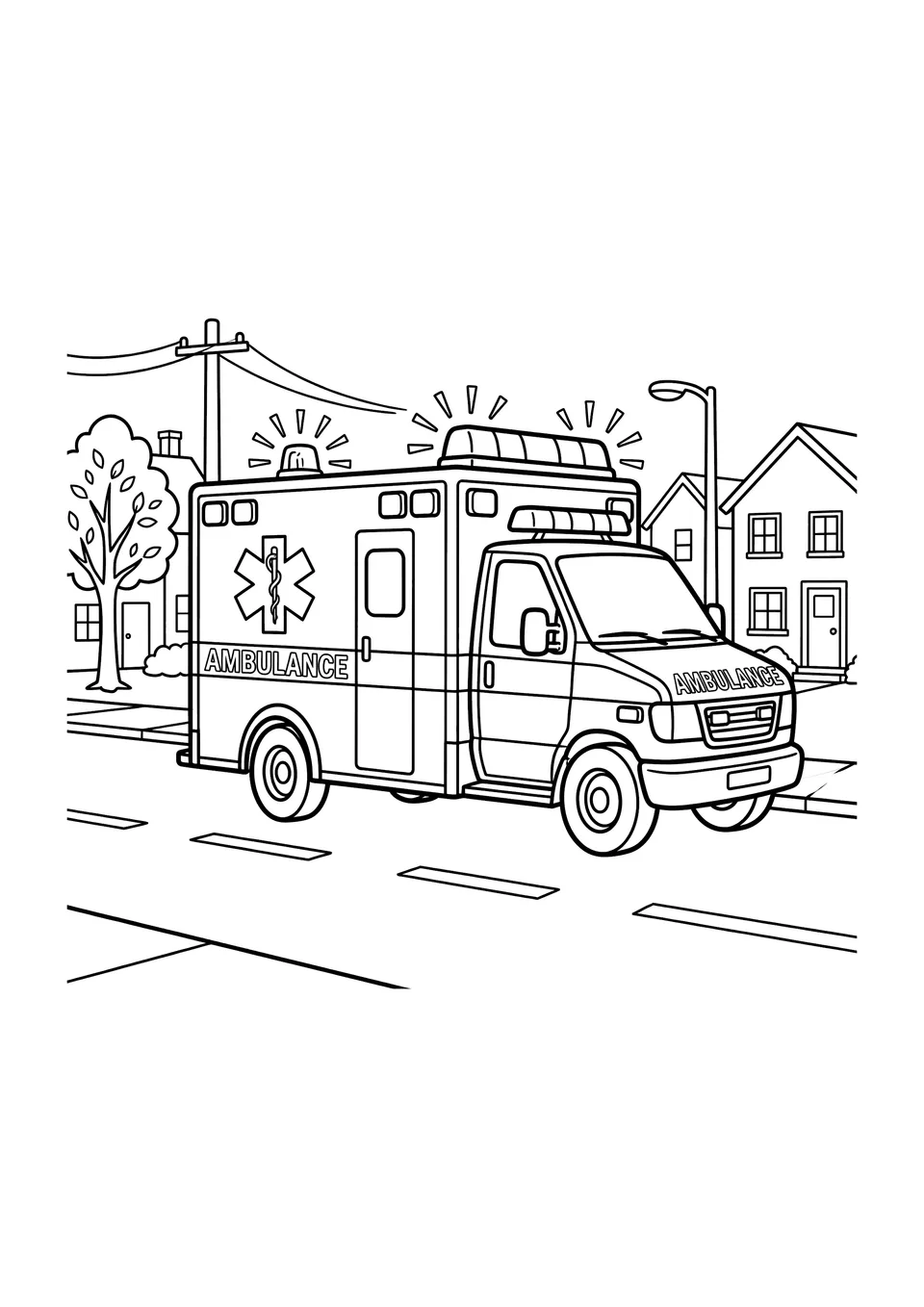
Web preview · Open larger preview (opens in a new tab)
Download and print free ambulance coloring pages for home, classroom or homeschool. Explore emergency vehicles, helpers and safety while building reading skills through fun passages and activities.
PDF · Your plan’s download limits apply
When you hear a loud wailing sound and see bright flashing lights, you know an ambulance is on its way. These special vehicles are designed to help people who are sick or injured and need to get to a hospital quickly. An ambulance is much more than just a fast van; it is essentially a mobile emergency room that brings medical help directly to where it is needed most.
Inside every ambulance is a team of highly trained professionals. These people are usually Emergency Medical Technicians (EMTs) and Paramedics. They work together to keep patients stable while traveling to the hospital. While the driver navigates through traffic using sirens and lights to clear a path, the medical team in the back monitors the patient’s breathing, heart rate, and temperature. They are trained to handle many different situations, from helping someone with a broken bone to treating serious illnesses.
To do their jobs, these medical teams use many specialized tools. An ambulance is packed with equipment that you might see in a doctor's office or a hospital. There are stretchers to carry people safely, oxygen tanks to help them breathe, and monitors that check their vital signs. They even carry bandages, splints, and medicine to start treatment immediately. This "hospital on wheels" allows doctors at the hospital to receive patients who have already been given life-saving care.
Communication is also a vital part of the ambulance’s job. The crew uses radios to talk to dispatchers, who tell them exactly where the emergency is located. They also call ahead to the hospital to describe the patient’s condition. This way, the doctors and nurses are ready to take over the moment the ambulance pulls into the emergency bay. Because of their speed, specialized equipment, and dedicated crews, ambulances play a hero’s role in keeping our communities safe.
What two signs tell you that an ambulance is approaching?
Why does the passage refer to an ambulance as a 'mobile emergency room'?
Who are the two types of highly trained professionals usually found in an ambulance?
What is the primary responsibility of the medical team while the ambulance is moving?
What role does the driver play during an emergency response?
What are three specific pieces of medical equipment mentioned that are found inside an ambulance?
How does the ambulance crew know the exact location of an emergency?
Why is it important for the crew to call the hospital while they are still on the road?
What are 'vital signs' that the medical team monitors?
According to the text, what three things help ambulances keep communities safe?
More ways to practice with this story — every sheet is built from the text itself, answer key included where it counts.
One PDF with a cover, a contents page and every answer key at the back — color the page in, then keep going on paper.
Sentences from the passage with the capitals and punctuation removed — rewrite each one correctly.
Two writing tasks that build on the passage, with plenty of lines to write on.
These free ambulance coloring pages give kids a fun way to learn about emergency vehicles and the people who help others in medical situations. Each printable coloring page can be downloaded as a PDF and used at home, in the classroom or during homeschool lessons.
Ambulance coloring pages are perfect for transportation units, community helpers lessons, safety topics and quiet learning time. Pair a coloring page with a short reading passage to build vocabulary, background knowledge and reading comprehension at the same time.
Make the activity more meaningful by combining coloring with reading practice:
Ambulances help paramedics and emergency medical workers reach people who need help quickly. Learning about ambulances helps children understand safety, responsibility and the important helpers in their communities.