
fix the sentence
Sentences from the passage with the capitals and punctuation removed — rewrite each one correctly.
Web preview · Open larger preview (opens in a new tab)
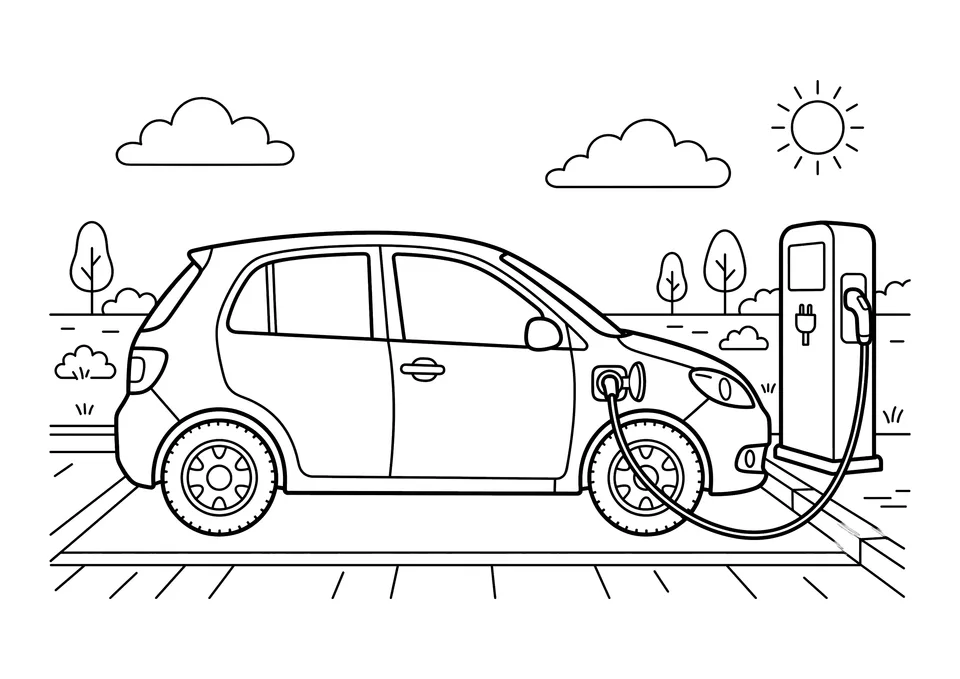
Color an electric car and read a fun passage about clean energy, batteries and the future of transportation. This printable coloring page helps kids explore modern vehicles while practicing reading.
PDF · Your plan’s download limits apply
When you think of a car, you might imagine the sound of a roaring engine or the smell of gasoline at a pump. However, a different kind of vehicle is becoming more common on our roads: the electric car. Unlike traditional cars that run on gasoline, electric vehicles, or EVs, use electricity stored in large batteries to power a motor.
Inside a gasoline-powered car, small explosions happen inside the engine to move the wheels. In an electric car, the process is much simpler and quieter. High-capacity batteries, usually located at the bottom of the car, send power to an electric motor. Because there are fewer moving parts, electric cars often require less maintenance than gas cars. They don't need oil changes, and their brakes even last longer because the motor helps slow the car down.
One of the biggest reasons people choose electric cars is for the environment. Traditional cars release gases through a tailpipe, which can contribute to air pollution and climate change. Electric cars have no tailpipes, so they don't release these "exhaust" gases while driving. If the electricity used to charge the car comes from clean sources like wind or solar power, the car is even better for the planet.
Of course, electric cars still face some challenges. While you can find a gas station on almost every corner, charging stations are still being built in many areas. It also takes longer to "fill up" a battery than it does to fill a gas tank. A gas car can be ready in five minutes, but an electric car might need thirty minutes or even several hours to fully charge.
As technology improves, engineers are finding ways to make batteries last longer and charge faster. More charging stations are appearing in parking lots and near highways every day. Electric cars are changing the way we think about travel, making our journeys quieter and cleaner for the future.
What is the primary difference between how a traditional car and an electric car are powered?
Where are the batteries in an electric car usually located?
Why do electric cars generally require less maintenance than gasoline-powered cars?
Name one specific maintenance task mentioned in the passage that electric cars do not need.
How do electric cars help reduce air pollution?
Under what condition is an electric car considered even better for the planet?
What are two main challenges that electric car owners currently face?
How does the time it takes to charge an electric car compare to filling a gas tank?
Why do the brakes on an electric car tend to last longer?
What improvements are engineers currently working on to help make electric cars better?
More ways to practice with this story — every sheet is built from the text itself, answer key included where it counts.
One PDF with a cover, a contents page and every answer key at the back — color the page in, then keep going on paper.
Sentences from the passage with the capitals and punctuation removed — rewrite each one correctly.
Two writing tasks that build on the passage, with plenty of lines to write on.
This free printable electric car coloring page gives children a fun way to learn about one of the fastest-growing types of vehicles in the world. The page is paired with a reading passage, so kids can color, read and discover how electric cars are changing transportation.
Electric car coloring pages are a great choice for children who enjoy vehicles, technology and science. This printable PDF can be used at home, in the classroom or during homeschool lessons as a creative and educational activity.
Children can color before or after reading, making the experience both engaging and meaningful. PicoBuddy combines coloring pages with reading practice to help children build vocabulary, background knowledge and comprehension skills while having fun.
Electric cars use batteries instead of gasoline and can help reduce pollution. Learning about electric vehicles helps children explore transportation, innovation and how new technology can shape the future.
After coloring, children can continue learning by reading about energy, transportation and engineering concepts connected to modern vehicles.