
fix the sentence
Sentences from the passage with the capitals and punctuation removed — rewrite each one correctly.
Web preview · Open larger preview (opens in a new tab)
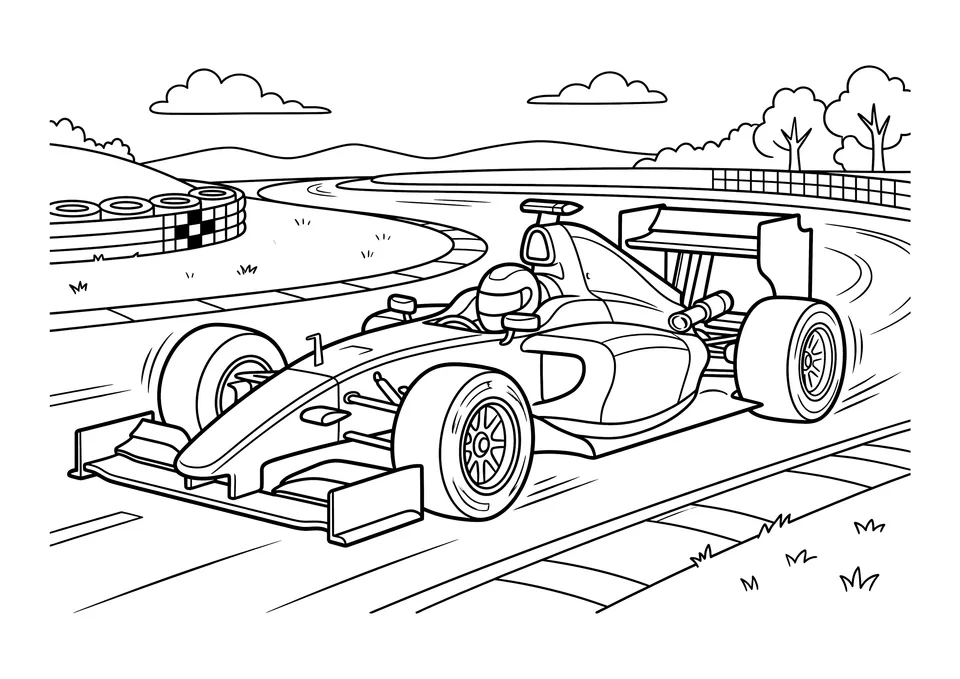
Buckle up and explore the engineering behind the world's fastest vehicles! This coloring page and reading passage teach students about aerodynamics, safety, and teamwork on the track.
PDF · Your plan’s download limits apply
Imagine standing near a track as a machine blurs past you at two hundred miles per hour. The engine roars so loudly you can feel the vibration in your chest. This is the world of professional auto racing. While race cars might look a bit like the vehicles we see on the street, they are built very differently. Every part of a race car is designed for one specific goal: speed.
One of the most important features of a race car is its shape, which relates to a science called aerodynamics. Engineers design the body of the car to slice through the air with as little resistance as possible. This resistance is called "drag." To keep the car from lifting off the track at high speeds, they also use "downforce." Large wings on the front and back of the car act like upside-down airplane wings. Instead of lifting the car into the sky, the wind pushes the car down against the pavement, giving the tires better grip.
Safety is just as important as speed. Because racing can be dangerous, these cars are built with a "roll cage" made of strong steel tubing. This protects the driver if the car flips over. Drivers also wear special suits made of fire-resistant material and use a five-point harness, which is a much stronger version of a regular seatbelt. This keeps them safely in their seat during sharp turns or sudden stops.
Racing is also a team sport. During a race, a driver must pull into the "pit stall" for a pit stop. In just a few seconds, a highly trained crew changes all four tires and refills the fuel tank. This requires incredible coordination and speed. Even though only one person sits behind the steering wheel, it takes dozens of mechanics and engineers to get that car to the finish line. Whether it is a Formula 1 car or a stock car, these machines are some of the most impressive examples of modern technology.
According to the passage, what is the single specific goal behind the design of every part of a race car?
What term is used to describe the air resistance that engineers try to minimize?
How do wings on a race car differ in function from wings on an airplane?
What is the purpose of 'downforce' during a high-speed race?
What safety structure is built into the car to protect the driver in case the vehicle flips over?
How is the material of a racing suit designed to keep the driver safe?
What is the function of a five-point harness inside a race car?
What specific tasks are performed by the crew during a pit stop?
Which two types of race cars are mentioned as examples of modern technology at the end of the text?
Why is professional auto racing described as a team sport rather than an individual sport?
More ways to practice with this story — every sheet is built from the text itself, answer key included where it counts.
One PDF with a cover, a contents page and every answer key at the back — color the page in, then keep going on paper.
Sentences from the passage with the capitals and punctuation removed — rewrite each one correctly.
Match the passage words to their meanings, then fill the missing words back into real sentences.
Two writing tasks that build on the passage, with plenty of lines to write on.
This educational resource combines the excitement of auto racing with fundamental physics and engineering concepts. Our free race car coloring page is designed for upper elementary students, offering a creative way to engage with the provided reading passage, 'The Science of Speed.' It is an ideal addition to a classroom unit on force and motion or a fun weekend activity for young car enthusiasts.
Each download includes a printable coloring page and a reading comprehension text that covers essential topics like aerodynamics, downforce, and pit crew coordination. By using these materials at home or in school, students can develop their literacy skills while learning how technology keeps drivers safe at two hundred miles per hour. Simply download, print, and start your engines for a hands-on learning experience.