
fix the sentence
Sentences from the passage with the capitals and punctuation removed — rewrite each one correctly.
Web preview · Open larger preview (opens in a new tab)
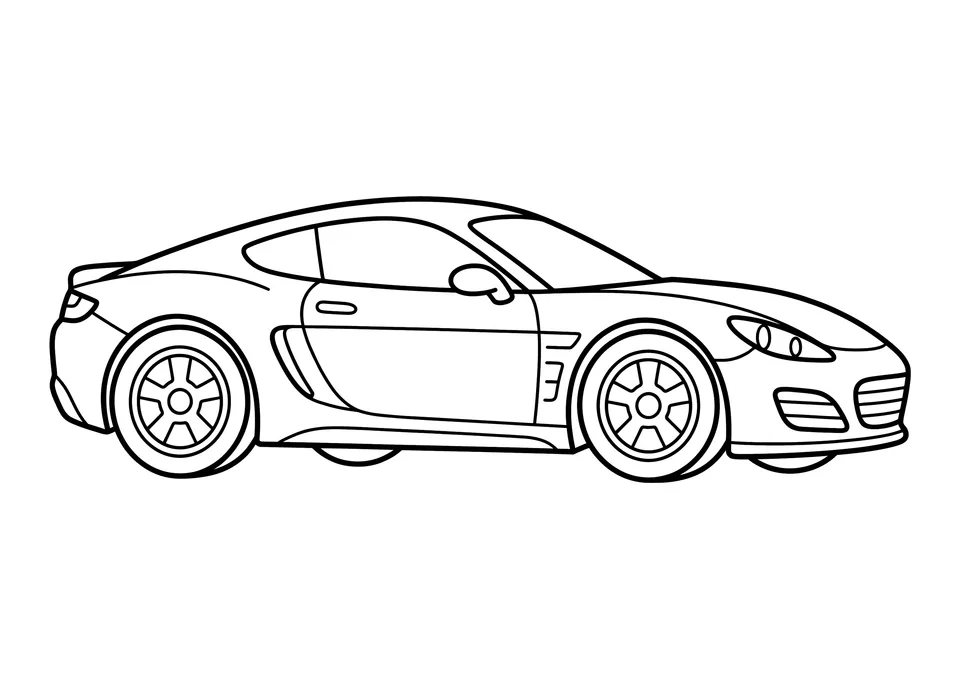
Color a sleek sports car and read a fun passage about speed, design and performance. This printable coloring page gives kids a creative way to explore exciting vehicles while practicing reading.
PDF · Your plan’s download limits apply
When you think of a sports car, you likely imagine a low, sleek vehicle painted in a bright color like fire-engine red or electric blue. These cars are not just designed to look cool; they are built for high performance and speed. Unlike a family minivan or a rugged pickup truck, a sports car focuses on how it handles the road and how quickly it can accelerate.
One of the most important features of a sports car is its aerodynamics. This is the study of how air moves around objects. Because sports cars are built to go fast, they need to cut through the air with as little resistance as possible. Designers make them low to the ground and give them smooth, curved shapes to reduce "drag," which is the force that pulls back on a moving object. Many sports cars also have a "spoiler" on the back. While it looks like a wing, its job is to create downforce, pushing the tires harder against the road so the car doesn't lift up at high speeds.
The engine is the heart of every sports car. These engines are much more powerful than the ones found in standard cars. They are designed to reach high speeds quickly, often going from zero to sixty miles per hour in just a few seconds. To help with this speed, sports cars are often made from lightweight materials like carbon fiber or aluminum. This allows the powerful engine to move the car forward without being weighed down by heavy steel parts.
Sports cars first became popular after World War II, especially in Europe. People wanted cars that were fun to drive on narrow, winding roads. Today, the world of sports cars is changing. While many still use loud gasoline engines, new electric sports cars are being built. These modern machines are quiet and even faster than some traditional models. Whether they run on gas or electricity, sports cars continue to represent the perfect mix of art and engineering.
What are two common colors for sports cars mentioned in the passage?
What is the primary focus of a sports car's design compared to a minivan?
How does the passage define the term aerodynamics?
Why do sports car designers give these vehicles smooth, curved shapes?
What is the specific purpose of a spoiler on the back of a sports car?
Which two lightweight materials are often used to build sports cars?
How quickly can many sports car engines accelerate from zero to sixty miles per hour?
When did sports cars first begin to gain popularity?
What kind of roads were sports cars originally designed to handle in Europe?
What is one major difference between traditional sports cars and the new electric models mentioned?
More ways to practice with this story — every sheet is built from the text itself, answer key included where it counts.
One PDF with a cover, a contents page and every answer key at the back — color the page in, then keep going on paper.
Sentences from the passage with the capitals and punctuation removed — rewrite each one correctly.
Match the passage words to their meanings, then fill the missing words back into real sentences.
Two writing tasks that build on the passage, with plenty of lines to write on.
This free printable sports car coloring page is the perfect activity for young car enthusiasts. Designed specifically for upper elementary students, the illustration highlights the sleek lines and aerodynamic features that define modern high-performance vehicles. Whether used in the classroom or at home, it provides a creative way for kids to engage with the world of automotive design.
Our accompanying reading passage, "Speed and Style: The World of Sports Cars," dives deeper into the mechanics of these machines. Students can learn about important scientific concepts such as drag, downforce, and power-to-weight ratios. This makes the coloring sheet a fantastic resource for teachers looking for a literacy-based STEM activity or parents wanting to combine reading comprehension with a fun art project.
Simply download and print this sports car coloring page to start your engine! It is a great way to explore the history and future of automotive engineering, from classic gasoline engines to modern electric models. Kids can experiment with different colors and patterns to create their own custom dream car while building their vocabulary and knowledge about performance vehicles.