
fix the sentence
Sentences from the passage with the capitals and punctuation removed — rewrite each one correctly.
Web preview · Open larger preview (opens in a new tab)
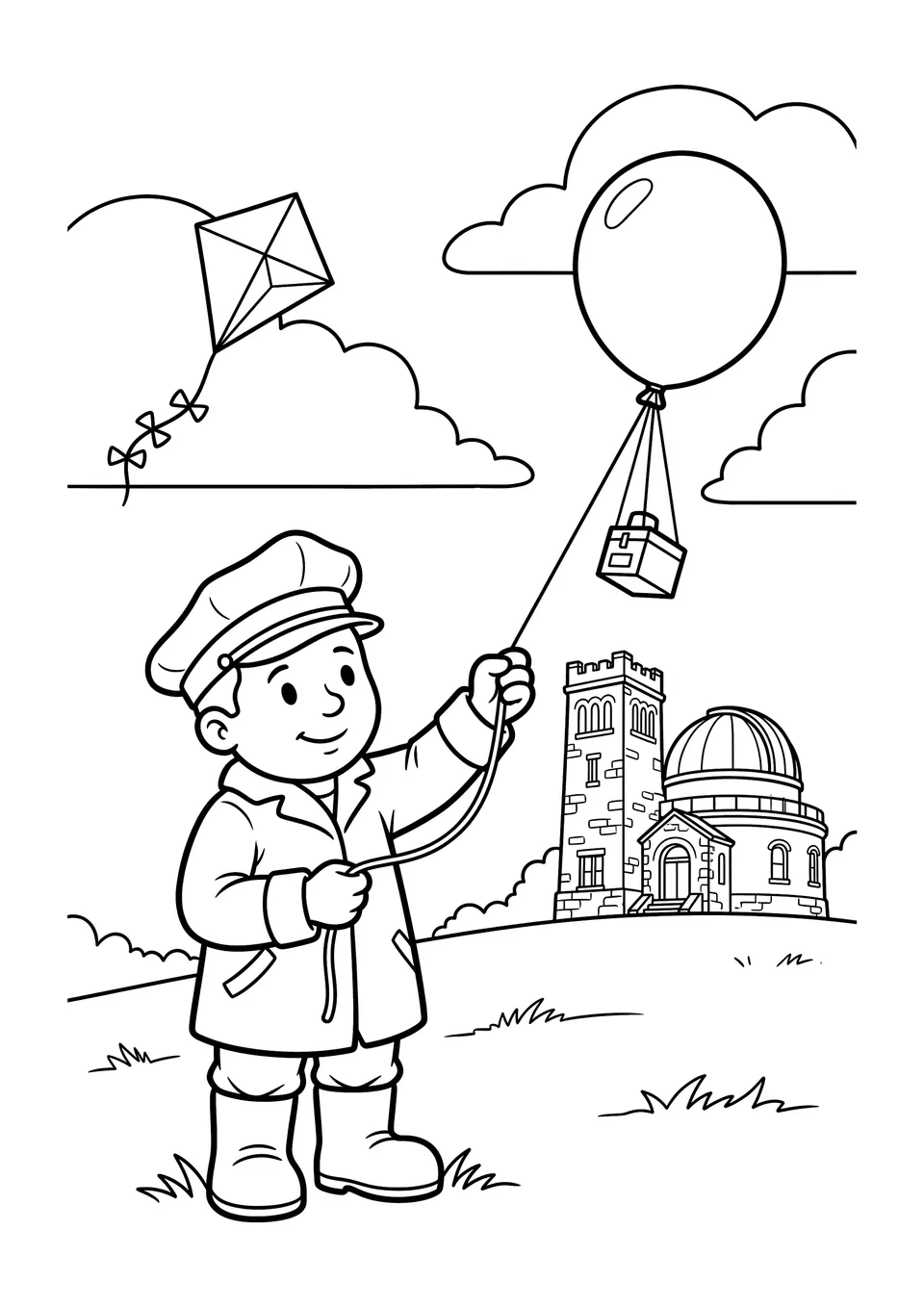
Explore the origins of modern meteorology with this printable coloring page featuring pioneer Abbott Lawrence Rotch. Middle school students can learn about early weather balloons and box kites while bringing atmospheric history to life.
PDF · Your plan’s download limits apply
Long before satellites orbited the Earth and radar beamed real-time weather maps to smartphones, understanding the atmosphere was a profound challenge. In the late nineteenth century, meteorologists could only gather data at ground level or from the peaks of mountains. This limitation left major gaps in their understanding of weather systems, which originate high above the Earth's surface. American meteorologist Abbott Lawrence Rotch recognized this critical shortfall and devoted his life and fortune to exploring the mysteries of the upper atmosphere.
In 1885, Rotch founded the Blue Hill Meteorological Observatory in Milton, Massachusetts. Driven by a desire to probe high-altitude air currents, he pioneered innovative methods to lift scientific instruments high into the sky. Rotch initially designed and flew sturdy box kites rigged with meteorographs—compact instruments capable of automatically recording air pressure, temperature, humidity, and wind speed. As these kites soared thousands of feet into the sky, they collected invaluable data that proved atmospheric conditions above were drastically different from those on the ground.
Seeking even greater altitudes, Rotch soon advanced to using sounding balloons, early predecessors of modern weather balloons. Made of rubber and filled with lightweight gas, these unmanned balloons carried recording devices into the troposphere and stratosphere, far beyond the reach of kites. Upon reaching extreme altitudes, the balloons would expand and burst, dropping the instruments back to Earth attached to small parachutes. Citizens who found these fallen instrument packages returned them to Rotch, providing scientists with rare readings from unprecedented heights.
Rotch’s systematic atmospheric soundings revolutionized the field of meteorology. By mapping upper-air temperatures and wind patterns, he helped transform weather prediction from educated guesswork into an exact science. His research proved vital not only for daily weather forecasting, but also for the early development of aviation, helping pilots understand high-altitude winds. Today, Abbott Lawrence Rotch is remembered as a visionary pioneer whose high-flying inventions forever changed how humanity views the sky.
What main limitation did late nineteenth-century meteorologists face when gathering weather data?
Where and when did Abbott Lawrence Rotch establish the Blue Hill Meteorological Observatory?
How did box kites assist Rotch in collecting scientific data from high above the ground?
What specific instruments were attached to Rotch's box kites, and what weather variables did they record?
Why did Rotch decide to use sounding balloons in addition to box kites?
What sequence of events occurred when a sounding balloon reached an extreme altitude?
How were the instrument packages retrieved after falling back to Earth?
In what way did Rotch's upper-atmosphere soundings transform the field of weather forecasting?
Which practical industry benefited from Rotch's research besides daily weather forecasting?
Why was gathering data from the upper atmosphere necessary for understanding weather systems overall?
More ways to practice with this story — every sheet is built from the text itself, answer key included where it counts.
One PDF with a cover, a contents page and every answer key at the back — color the page in, then keep going on paper.
Sentences from the passage with the capitals and punctuation removed — rewrite each one correctly.
Match the passage words to their meanings, then fill the missing words back into real sentences.
Two writing tasks that build on the passage, with plenty of lines to write on.
Take your science lessons to new heights with this free printable coloring page paired with an engaging reading passage about meteorology pioneer Abbott Lawrence Rotch. Middle school students will discover how early scientists used box kites and sounding balloons to measure upper-atmosphere conditions long before satellites and radar existed.
This educational download coloring page is ideal for both classroom learning and at-home study. Combining history, physics, and weather science, the included reading passage helps reinforce comprehension skills, vocabulary growth, and critical thinking while fostering a deeper appreciation for atmospheric inventions.
Download and print this activity today to supplement your STEM or weather unit study. Paired with comprehension questions and glossary terms, it offers a creative, hands-on learning experience for curious young scientists.