
fix the sentence
Sentences from the passage with the capitals and punctuation removed — rewrite each one correctly.
Web preview · Open larger preview (opens in a new tab)
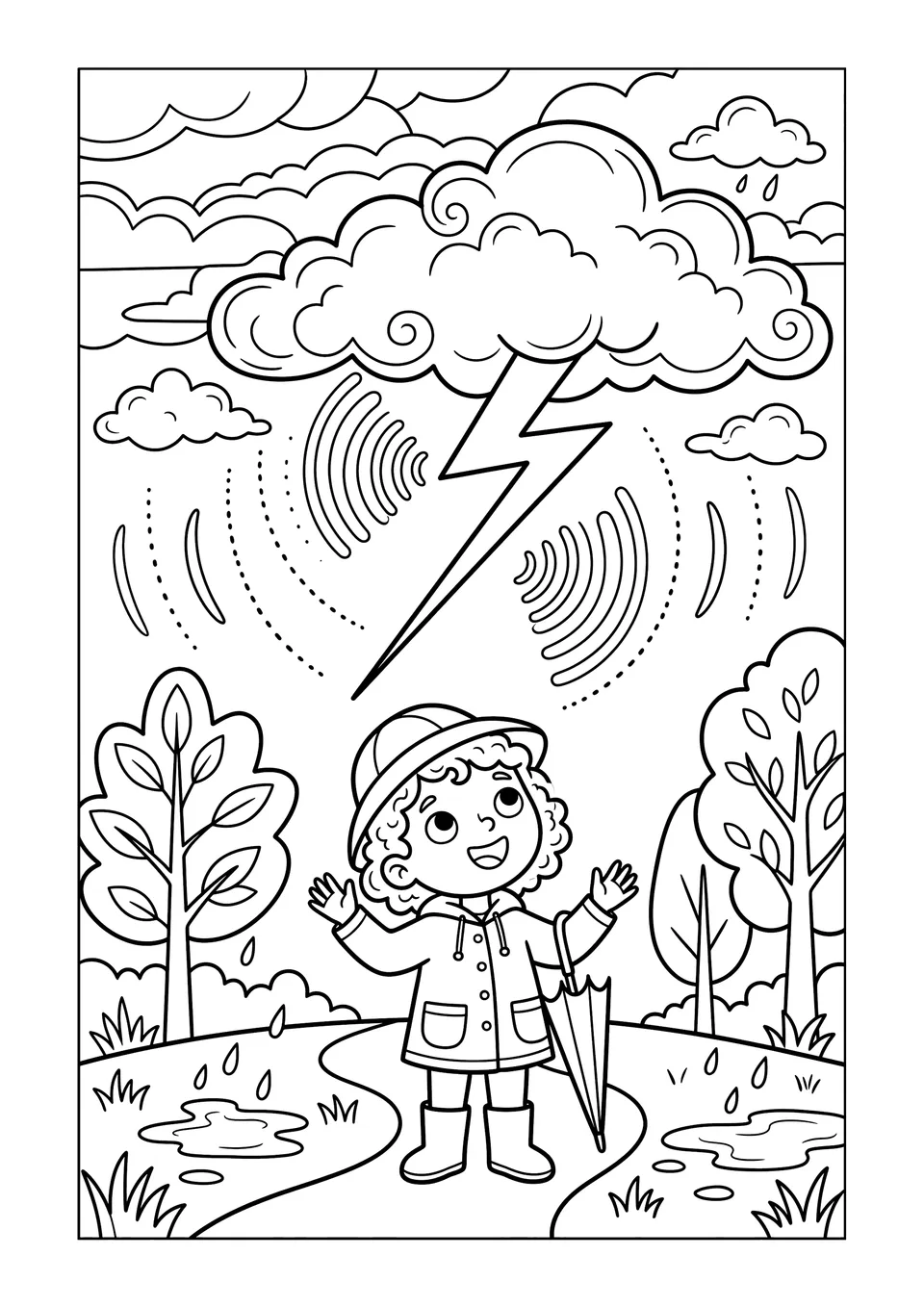
Explore how light and sound travel during a storm with this printable coloring page and science reading activity. Perfect for upper elementary students discovering why lightning flashes before thunder rumbles.
PDF · Your plan’s download limits apply
During a summer storm, you might see a bright flash of lightning streak across the dark sky. A few seconds later, a deep rumble of thunder shakes the ground. It seems like the flash and the sound are two separate events, but they actually happen at the exact same moment! So why do we always see lightning before we hear thunder?
The secret comes down to how light and sound travel through the air. Both light and sound move in waves, but they travel at vastly different speeds. Light travels at an incredible speed of about 186,000 miles per second. That is so fast that light can circle the entire Earth seven times in just one second! Because light moves so quickly, the flash of lightning reaches your eyes almost instantly the second it occurs in the cloud.
Sound waves, on the other hand, are much slower. Sound travels through air at about 1,100 feet per second, which is around 750 miles per hour. While that might sound fast compared to a car driving down a highway, it is a tiny fraction of the speed of light. Because sound takes much longer to travel across distances, the loud sound wave created by the lightning strike takes several seconds to reach your ears.
To figure out how far away a storm is, you can use a simple counting trick. The next time you see a flash of lightning, start counting seconds until you hear the thunder rumble. Every five seconds you count means the storm is about one mile away. If you count ten seconds between the flash and the rumble, the lightning struck about two miles from where you are standing.
Understanding the difference between the speed of light and the speed of sound helps explain why storms give us a double show: first a flash to light up the sky, and then a rumble to fill the air!
When do lightning and thunder actually occur relative to each other?
At what speed does light travel through the air?
How many times can light circle the Earth in just one second?
How fast does sound travel through the air in feet per second and miles per hour?
Why do we see lightning almost instantly when it occurs in a cloud?
Why does thunder take several seconds to reach your ears after a lightning strike?
What simple trick can you use to figure out how far away a storm is?
If you count ten seconds between seeing lightning and hearing thunder, how far away did the lightning strike?
In what form do both light and sound move through the air?
Why does a thunderstorm seem to give us a double show?
More ways to practice with this story — every sheet is built from the text itself, answer key included where it counts.
One PDF with a cover, a contents page and every answer key at the back — color the page in, then keep going on paper.
Sentences from the passage with the capitals and punctuation removed — rewrite each one correctly.
Match the passage words to their meanings, then fill the missing words back into real sentences.
Two writing tasks that build on the passage, with plenty of lines to write on.
This free printable coloring page combines creativity with elementary science lessons about light and sound. Students can color a dramatic thunderstorm scene while reading an informative passage explaining why we see lightning before hearing thunder.
Designed for upper elementary kids, this educational activity features a reading passage, comprehension practice, and vocabulary terms. It is ideal for classroom science units, weather lessons, or hands-on learning at home.
Download this high-quality coloring page with reading passage today to help students understand the speed of light versus sound in an engaging, visual way.