
fix the sentence
Sentences from the passage with the capitals and punctuation removed — rewrite each one correctly.
Web preview · Open larger preview (opens in a new tab)
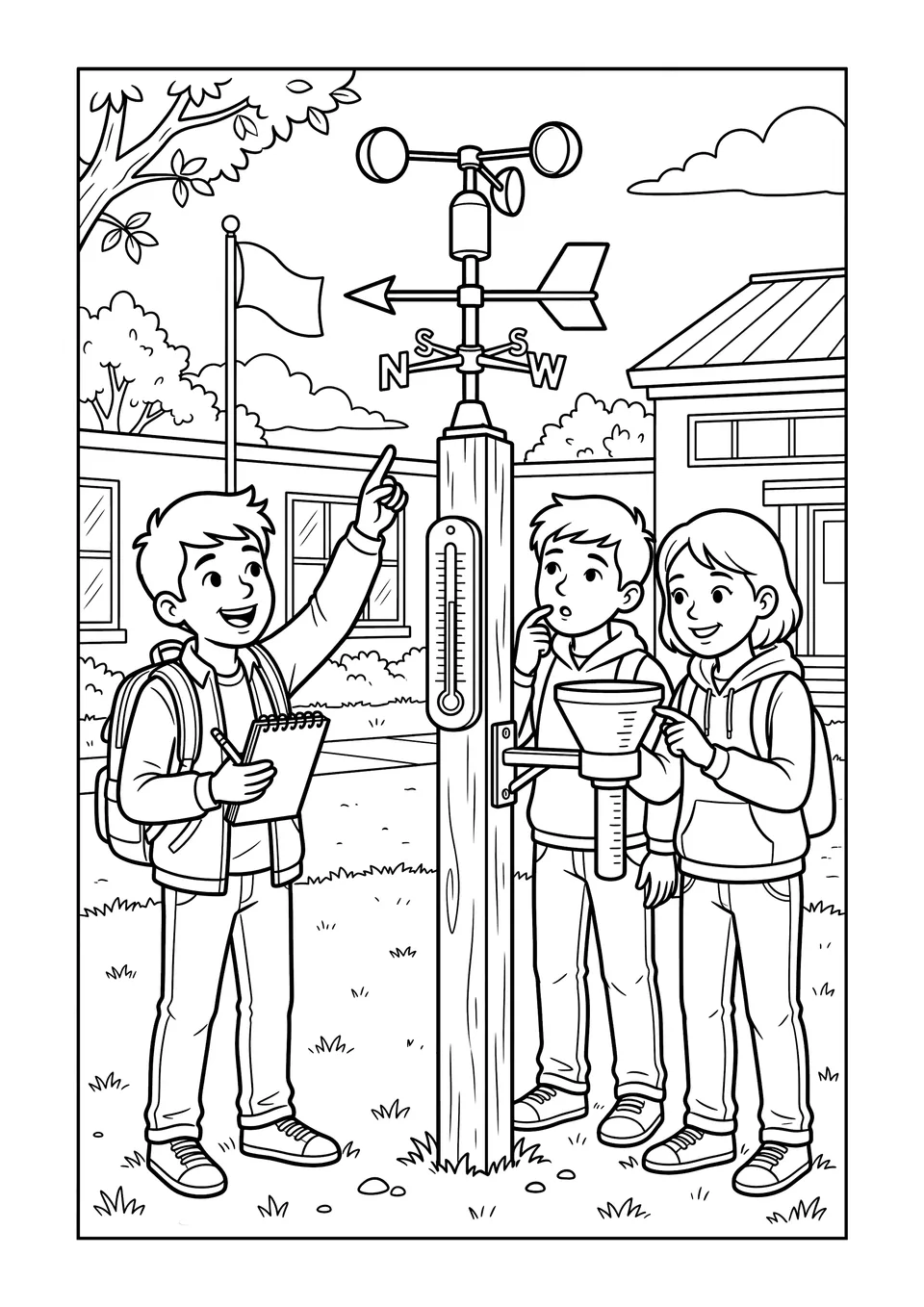
Engage your middle school students with this printable weather station coloring page and educational reading passage. It is a fantastic tool to explore meteorology, data literacy, and hands-on science directly from the classroom or home.
PDF · Your plan’s download limits apply
Every morning, millions of students check the weather on their smartphones or hear a quick forecast on television before heading to school. While these digital tools are convenient, they encourage passive consumption rather than active inquiry. To truly foster scientific curiosity and practical data literacy, every school should establish its own outdoor weather observation station. Bringing meteorology directly to the schoolyard turns abstract concepts into engaging, hands-on experiences.
A simple outdoor station equipped with a rain gauge, anemometer, barometer, and digital thermometer transforms standard science lessons into active research. Rather than analyzing weather patterns recorded miles away at a regional airport, students can track microclimates right outside their classroom doors. They learn to measure barometric pressure drops before a storm, record wind velocity changes, and calculate localized precipitation totals. This direct interaction with environmental data helps students grasp complex scientific principles—such as thermodynamics and atmospheric pressure—far more effectively than reading a textbook chapter ever could.
Moreover, the educational benefits of an on-site weather station extend beyond science class. Collecting daily weather measurements offers natural cross-curricular opportunities. In math, students can plot trends over time, calculate weekly mean temperatures, and analyze statistical variance. In computer technology units, they can learn to calibrate digital sensors or code automated reporting scripts. Many school weather stations even participate in citizen science networks, uploading real-time readings to national databases. Knowing that their data aids professional meteorologists gives students a sense of real-world responsibility and civic purpose.
Some might argue that purchasing and maintaining outdoor weather equipment imposes unnecessary costs on school budgets. However, basic digital weather stations have become remarkably affordable, durable, and user-friendly. Given the massive educational return on investment—fostering analytical thinking, technological fluency, and environmental awareness—an outdoor weather station is not a luxury. It is an essential tool for preparing curious, scientifically literate minds for the future.
Why does the author criticize relying solely on smartphones or television for daily weather forecasts?
What four basic tools are listed as equipment for a simple outdoor school weather station?
How does collecting local weather data benefit students compared to analyzing data from regional airports?
What specific atmospheric measurements can students take using an outdoor weather station?
Which complex scientific principles become easier for students to understand through hands-on weather tracking?
In what ways can outdoor weather station data be incorporated into mathematics instruction?
How can students apply computer technology skills when working with school weather station data?
How do school weather stations allow students to participate in citizen science networks?
What common objection regarding school budgets might critics raise against installing weather stations?
How does the author refute the argument that outdoor weather equipment is an unnecessary expense?
More ways to practice with this story — every sheet is built from the text itself, answer key included where it counts.
One PDF with a cover, a contents page and every answer key at the back — color the page in, then keep going on paper.
Sentences from the passage with the capitals and punctuation removed — rewrite each one correctly.
Match the passage words to their meanings, then fill the missing words back into real sentences.
Two writing tasks that build on the passage, with plenty of lines to write on.
Bring atmospheric science to life with this free printable coloring page paired with an informative middle school reading passage. Students will learn how collecting real-time microclimate data fosters scientific curiosity while coloring a detailed illustration of an outdoor observation station equipped with a rain gauge, anemometer, and barometer.
This educational resource combines reading comprehension with STEM learning, making it ideal for Earth science units, weather studies, and cross-curricular activities. The download includes the full passage, comprehension questions, and a vocabulary glossary to reinforce key scientific concepts and data literacy.
Whether you are looking for a classroom activity, home learning worksheet, or early finisher project, this printable coloring page offers an easy, low-prep way to connect daily weather observations with hands-on learning.