
fix the sentence
Sentences from the passage with the capitals and punctuation removed — rewrite each one correctly.
Web preview · Open larger preview (opens in a new tab)
Learn how to track weather patterns by crafting a simple rain gauge from a recycled plastic bottle! Download and print this educational coloring page featuring a full reading passage for elementary students.
PDF · Your plan’s download limits apply
Have you ever wondered how scientists measure the amount of rain that falls during a storm? Meteorologists use special tools called rain gauges to gather weather data. You do not need expensive laboratory equipment to track the weather, though! With a few simple household materials, you can craft your own working rain gauge out of a recycled plastic bottle.
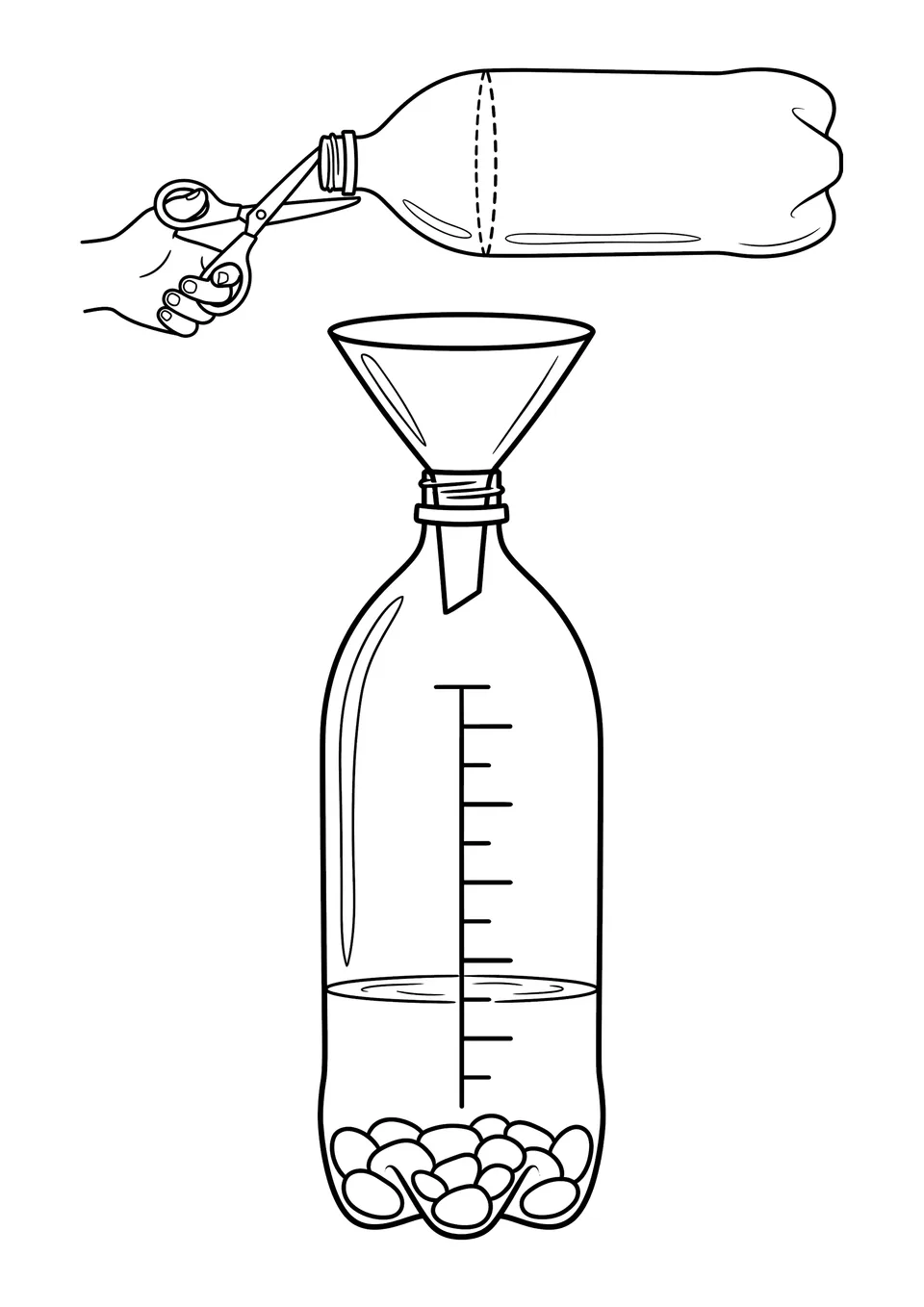
To build your rain gauge, gather a clear two-liter plastic bottle, a pair of scissors, a ruler, a permanent marker, some small rocks or pebbles, and some tape. First, ask an adult to help you cut the top section of the bottle off, right where the straight sides begin to curve toward the cap. Set the top piece aside for a moment.
Next, place a layer of small rocks or pebbles into the bottom of the bottle. Because plastic bottles are lightweight, the rocks provide weight so the wind does not blow your gauge over. Pour just enough water into the bottle to cover the rocks completely. This water line will be your starting point, or baseline, for measuring.
Now, place a ruler against the side of the bottle, aligning the zero mark with the baseline water level. Use your permanent marker to draw line marks every quarter-inch or half-centimeter up the side of the bottle. After marking your scale, turn the top cut-off piece upside down and insert it into the bottle opening like a funnel. This funnel shape helps direct falling raindrops straight into the container while preventing water from evaporating quickly. Tape the edges to hold it securely.
Finally, place your finished rain gauge outside in an open area away from tall trees or building overhangs that might block the rain. Check your gauge at the same time each day to record how much rain collected above your baseline. Once you record the measurement, empty the extra water down to the baseline mark so your gauge is ready for the next downpour!
What special tool do meteorologists use to gather rain data?
What type of bottle is used to build the rain gauge described in the text?
Why are small rocks or pebbles placed in the bottom of the plastic bottle?
What creates the starting point, or baseline, for taking measurements in the rain gauge?
Where should you align the zero mark of the ruler when creating your measurement scale?
What measurement intervals should be marked up the side of the bottle?
How is the cut-off top section of the bottle placed back onto the container?
What are two reasons the top section is turned upside down like a funnel?
Why should the finished rain gauge be placed away from tall trees and building overhangs?
What must you do after recording your daily rain measurement to prepare for the next rain storm?
More ways to practice with this story — every sheet is built from the text itself, answer key included where it counts.
One PDF with a cover, a contents page and every answer key at the back — color the page in, then keep going on paper.
Sentences from the passage with the capitals and punctuation removed — rewrite each one correctly.
Match the passage words to their meanings, then fill the missing words back into real sentences.
Two writing tasks that build on the passage, with plenty of lines to write on.
Combine hands-on science learning with creative arts using this printable rain gauge coloring page! Designed for upper elementary students, this educational resource includes a reading passage that guides kids through building their own weather observation tool out of simple household materials. It is a fantastic addition to Earth science units, weather tracking lessons, and eco-friendly STEM projects.
This free download coloring page with reading passage also comes with comprehension questions and a glossary to reinforce learning. Perfect for classroom science centers, homeschool activities, or rainy-day learning, children can color the clear line art while discovering how meteorologists measure rainfall.