
city
5 readings
Tokyo
Explore Tokyo through city-connected fiction, informational readings, and biography. Compare text types and plan a focused discussion or written response.
Explore all readingsFind English readings connected to Japan, including Nara Park instructions, an informational text about Tokyo, and fiction set in Harajuku and other places.
These places include every published city, landmark, and natural feature nested anywhere inside Japan.
Explore Japan through Nara Park instructions, an informational article about Tokyo, and a fictional diary set in Harajuku. Compare the practical purpose of directions with the information in the Tokyo reading and the imagined perspective of a diary narrator.
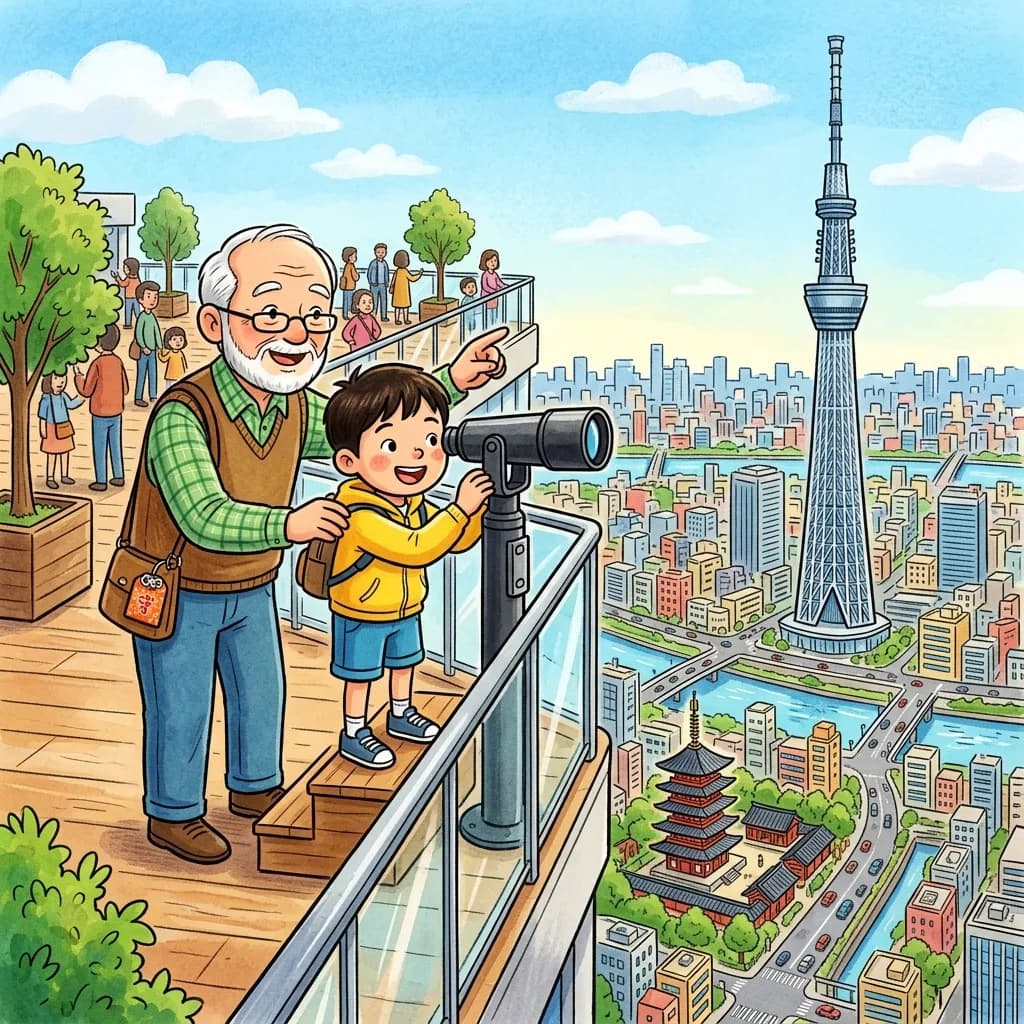
 How to Feed the Deer at Nara ParkLower Elementary · How-To / Procedural • Functional TextsJapanOld Temples and Tall TowersLower Elementary · Short Story • FictionTokyo
 The Song of the SanshinLower Elementary · Short Story • FictionJapan
 The Wise Monkeys of NikkoLower Elementary · InformationalJapan
 Tora's Tasty SecretLower Elementary · FictionJapan
 Cranes of Hope: A Tribute at the Children's Peace MonumentUpper Elementary · Reader's TheaterJapan
 Dancing with the Giants of AomoriUpper Elementary · Diary Entry • FictionJapan
 From Fishing Village to Megacity: The Story of TokyoUpper Elementary · Explanatory Article • InformationalTokyo
 Princess Senhime and the White Heron CastleUpper Elementary · BiographyJapan
 Rolling Into Fun: How to Make Banana SushiUpper Elementary · How-To / Procedural • Functional TextsJapan
 The Kind Gardener and the Magic AshUpper Elementary · FictionJapan
 The Rain-Soaked Giants of YakushimaUpper Elementary · Explanatory Article • InformationalJapan
 Where the Past Meets the Future: Exploring Tokyo's LandmarksUpper Elementary · Explanatory Article • InformationalTokyo
 A Tale of Two Harajukus: Noise, Neon, and Sacred SilenceMiddle School · Diary Entry • FictionJapan
 Guardian on the Horizon: Tokyo's Geography and Mount FujiMiddle School · InformationalTokyo
 Master of the Digital Symphony: The Life and Music of Nobuo UematsuMiddle School · BiographyTokyo
 Shiretoko: Where the Ice Meets the WildMiddle School · Report • InformationalJapan
 The Ancient Wilderness of Shirakami-SanchiMiddle School · Explanatory Article • InformationalJapan
 The Sacred Peak: Why We Must Leave No Trace on Mount FujiMiddle School · Opinion Piece • Opinion / ArgumentativeJapan
 The Track to Tomorrow: Why High-Speed Rail Must Replace Short-Haul FlightsMiddle School · Opinion Piece • Opinion / ArgumentativeJapan
 Tiger's Sushi SurpriseMiddle School · FictionJapan
Compare what the Nara instructions ask a reader to do with details in the Tokyo informational article; use a story map for the fiction.
One PDF with the reading passages, puzzles and worksheets you pick — start from a grade level and adjust from there, with the answer keys at the back.
Research Japan: where it is, what it is known for, three interesting facts, and a drawing.
Browse all fact fileWrite what you already know about Japan, what you want to find out, and what you learned.
Browse all kwl chartPlan a story set in Japan: characters, setting, problem, what happens first, next, and last, and how it ends.
Browse all story mapPut Japan in the middle and collect words and ideas connected to it.
Browse all word webUse a Venn diagram to compare two places, landmarks, animals, traditions, or other features from Japan.
Browse all compare two things from japanWrite an acrostic poem using the letters in the name Japan.
Browse all acrostic poemPrintable word puzzles built from Japan words — download as PDF, answer key included.
8×8 grid · 6 words across and down · answer key included
10×10 grid · 8 words with diagonals · answer key included
12×12 grid · 10 words with backwards words · answer key included
No printer at hand? Play the Japan word search right here on screen — free.
Japan is an island nation, or archipelago, consisting of over 6,000 islands in the Pacific Ocean.
Mount Fuji, an active stratovolcano, is the highest mountain in Japan and a famous cultural symbol.
Tokyo, the capital city of Japan, is one of the most populous metropolitan areas in the world.
The Japan collection ranges from functional instructions to informational writing and fiction. Two readings focus on Tokyo and Harajuku. Have students connect details to each named setting and compare what an informational article and fictional diary reveal about place.
How to Feed the Deer at Nara Park is a Lower Elementary procedural text. Invite readers to sequence the instructions and identify the details that guide an action. The Upper Elementary explanatory article From Fishing Village to Megacity: The Story of Tokyo is informational. Readers can collect what it says about Tokyo and explain how an explanatory article differs from directions for a specific activity.
The Middle School diary A Tale of Two Harajukus: Noise, Neon, and Sacred Silence is fiction. Old Temples and Tall Towers is a Lower Elementary fictional short story connected to Tokyo. Compare its narrative with the diary’s form, using details from each. A story map can organize fictional events; a fact file can hold information from the Tokyo article. Compare how the city and neighborhood settings shape the two texts. Invite students to cite one detail from each text and explain how the place shaped that detail. Explore Asia for more place-based readings. For broader geography topics, browse the geography reading collection.