
Loading articles…
Loading articles…
Find a text that fits your lesson, then plan how students will use it. Explore guides to passage choice, reading levels and support for mixed-level groups.
Showing 1–12 of 12 articles
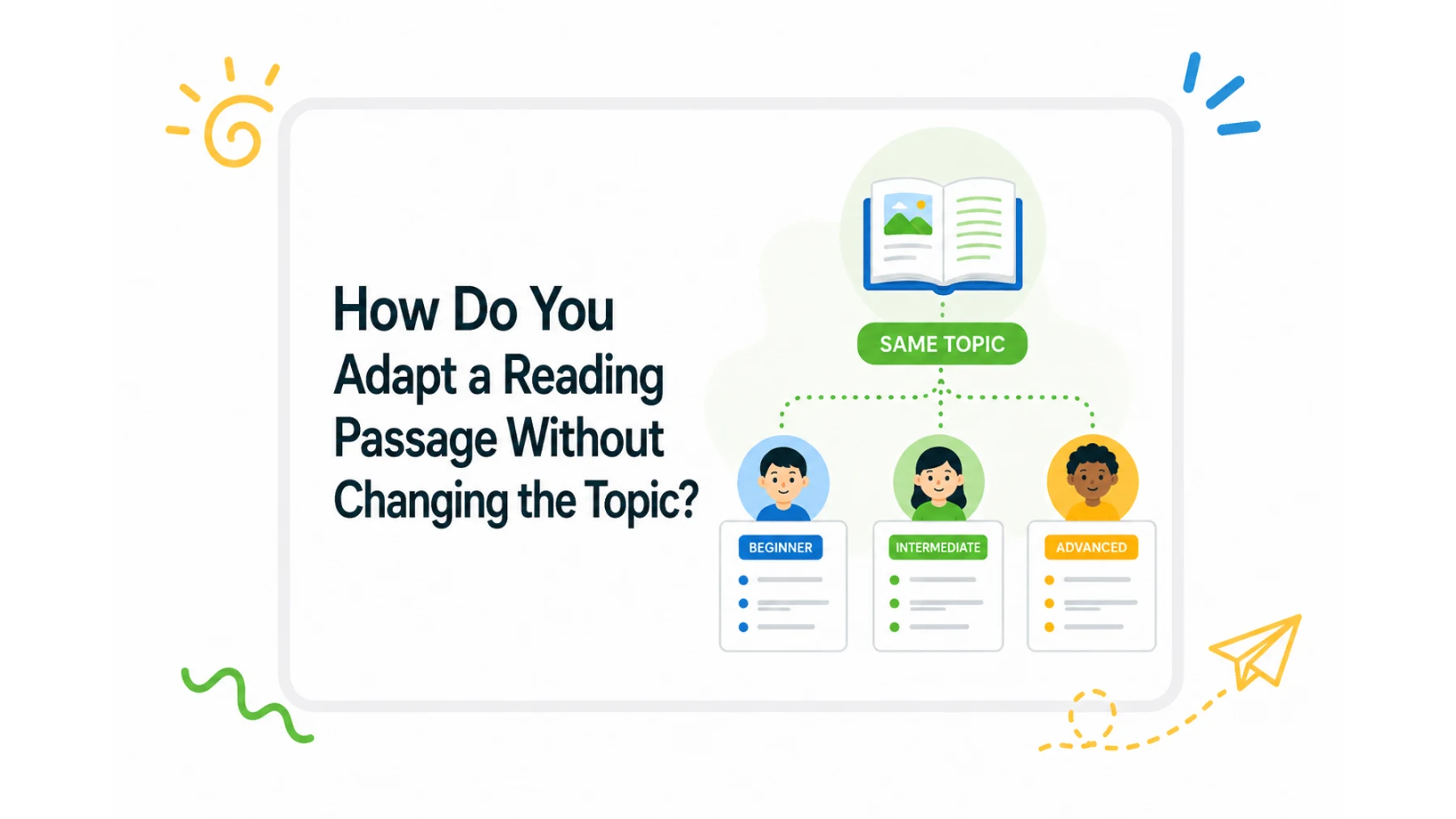
Keep a passage’s topic and core idea connected while adjusting text, questions, and support to fit a lesson and its readers.
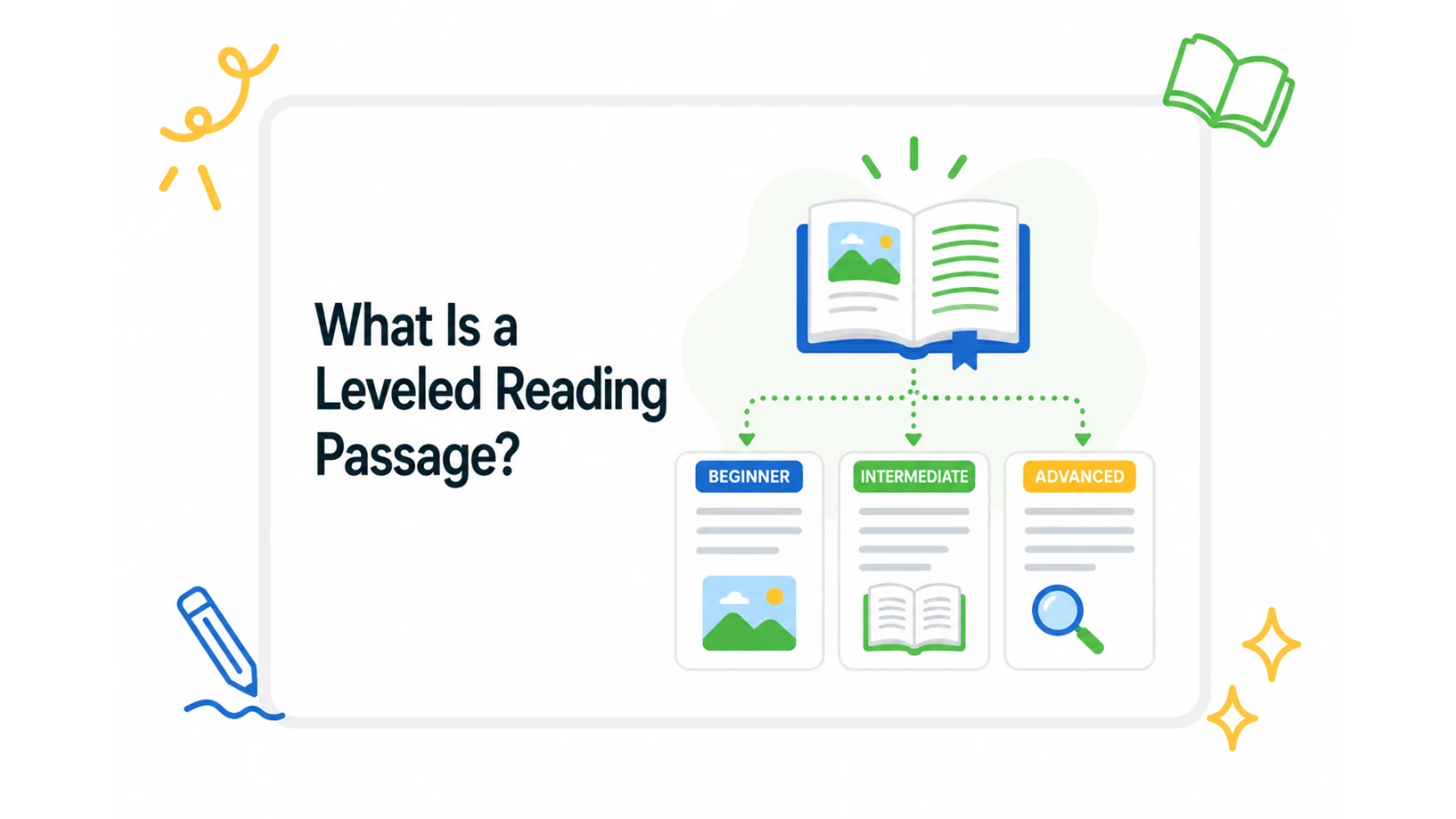
A leveled passage is selected or adapted for an intended reading task or level. Its label is a starting point, not a measure of an individual student.
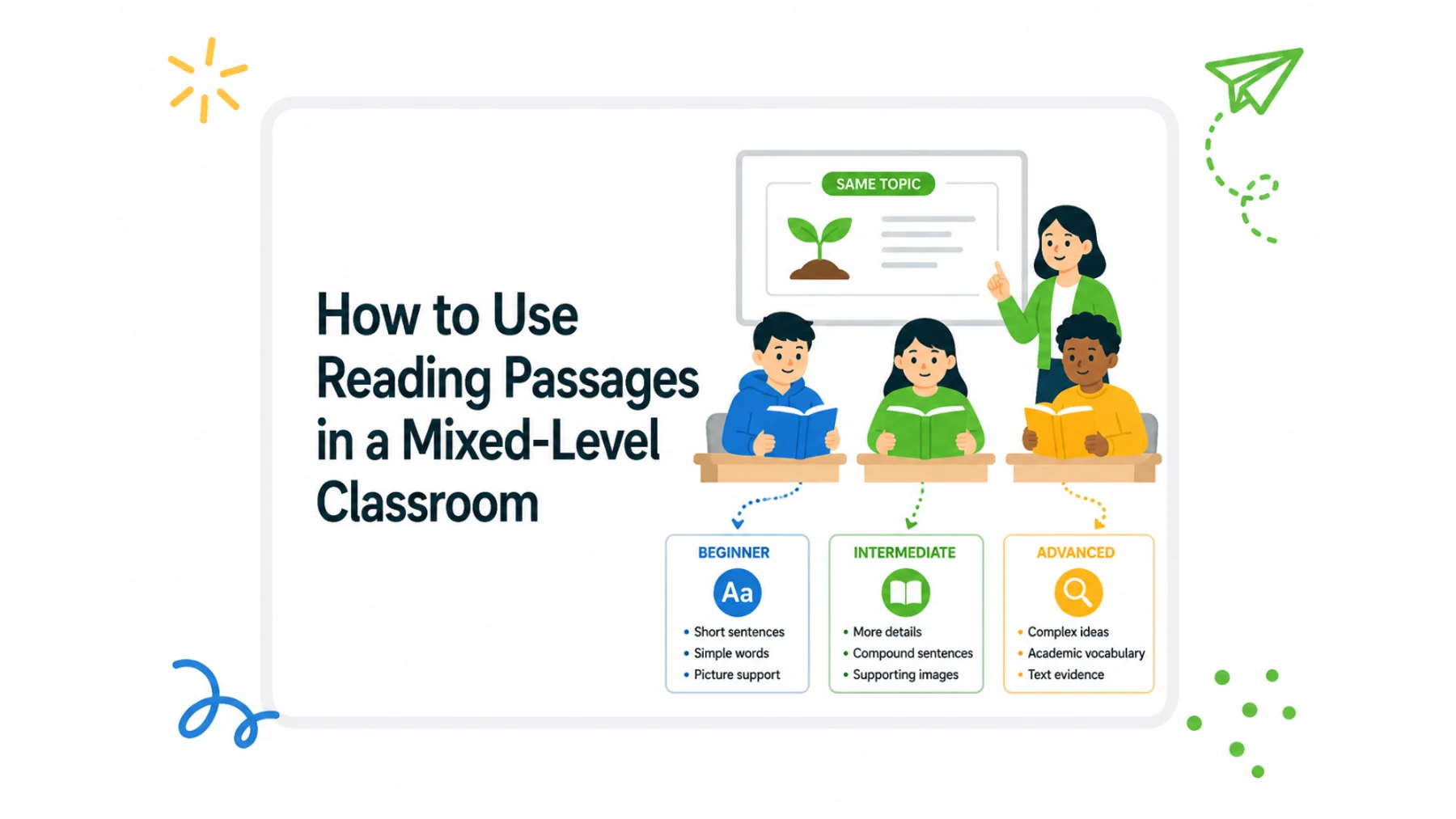
Learn practical ways to use reading passages in a mixed-level classroom with shared topics, small groups, partner reading, questions, print and online practice.
Challenge advanced readers with richer ideas, useful evidence questions, and connected extensions instead of simply adding more work.
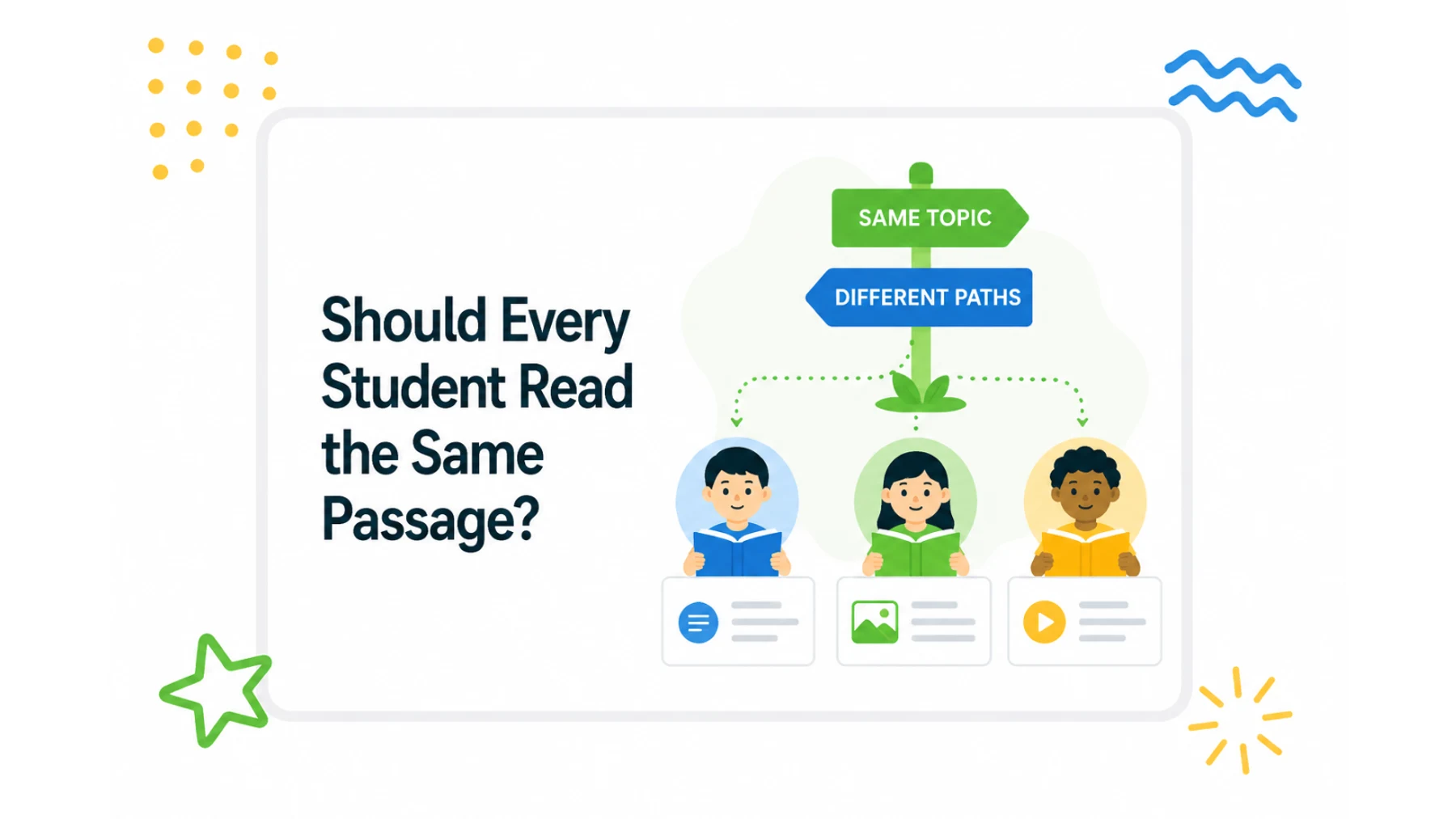
The same passage can support shared reading and modeling. Mixed-level lessons can also use different texts on one shared topic, skill, or question.
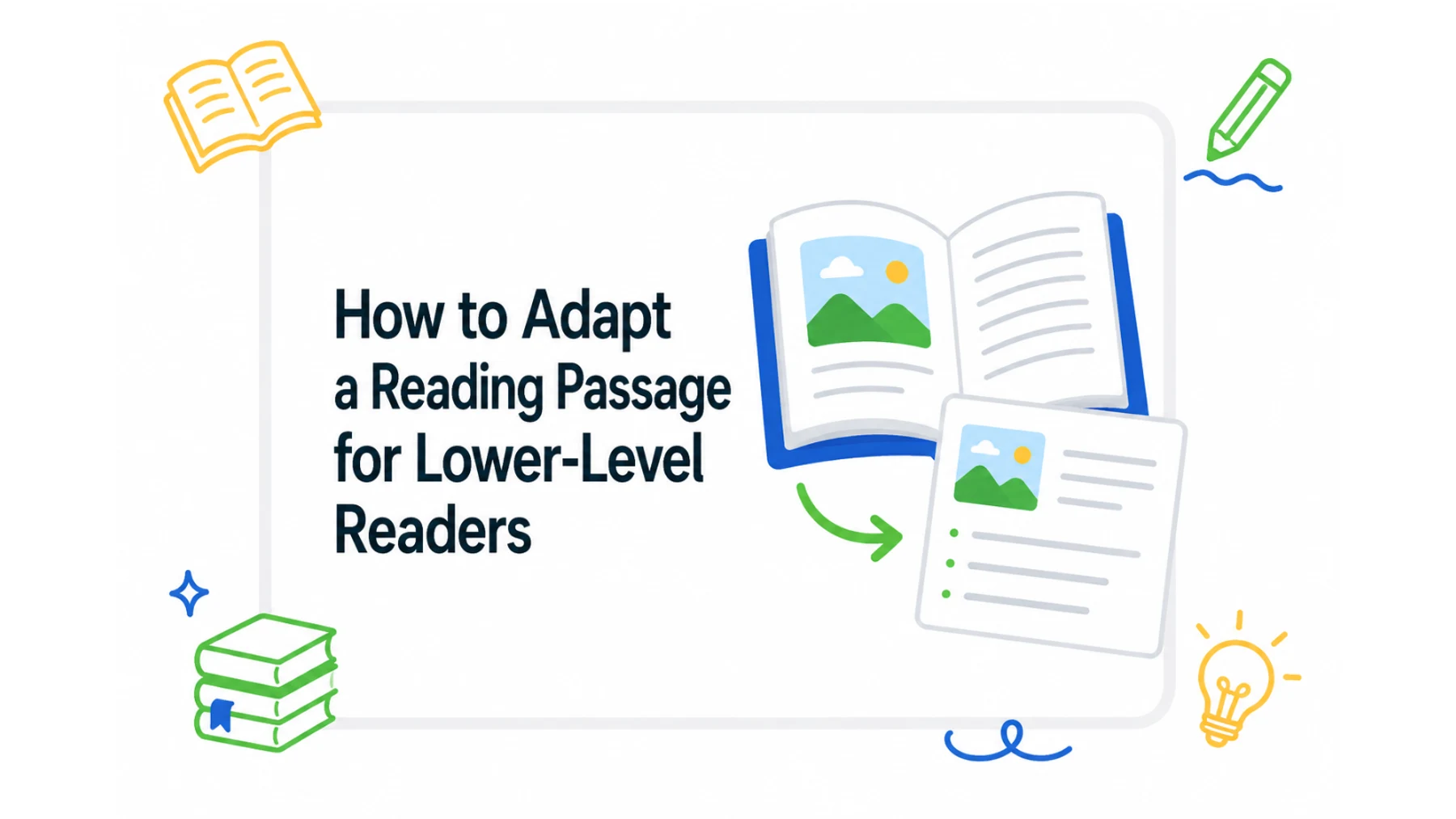
Keep a meaningful topic while making its reading path clearer. Learn how to adjust a passage’s length, sentences, vocabulary, structure, and questions.
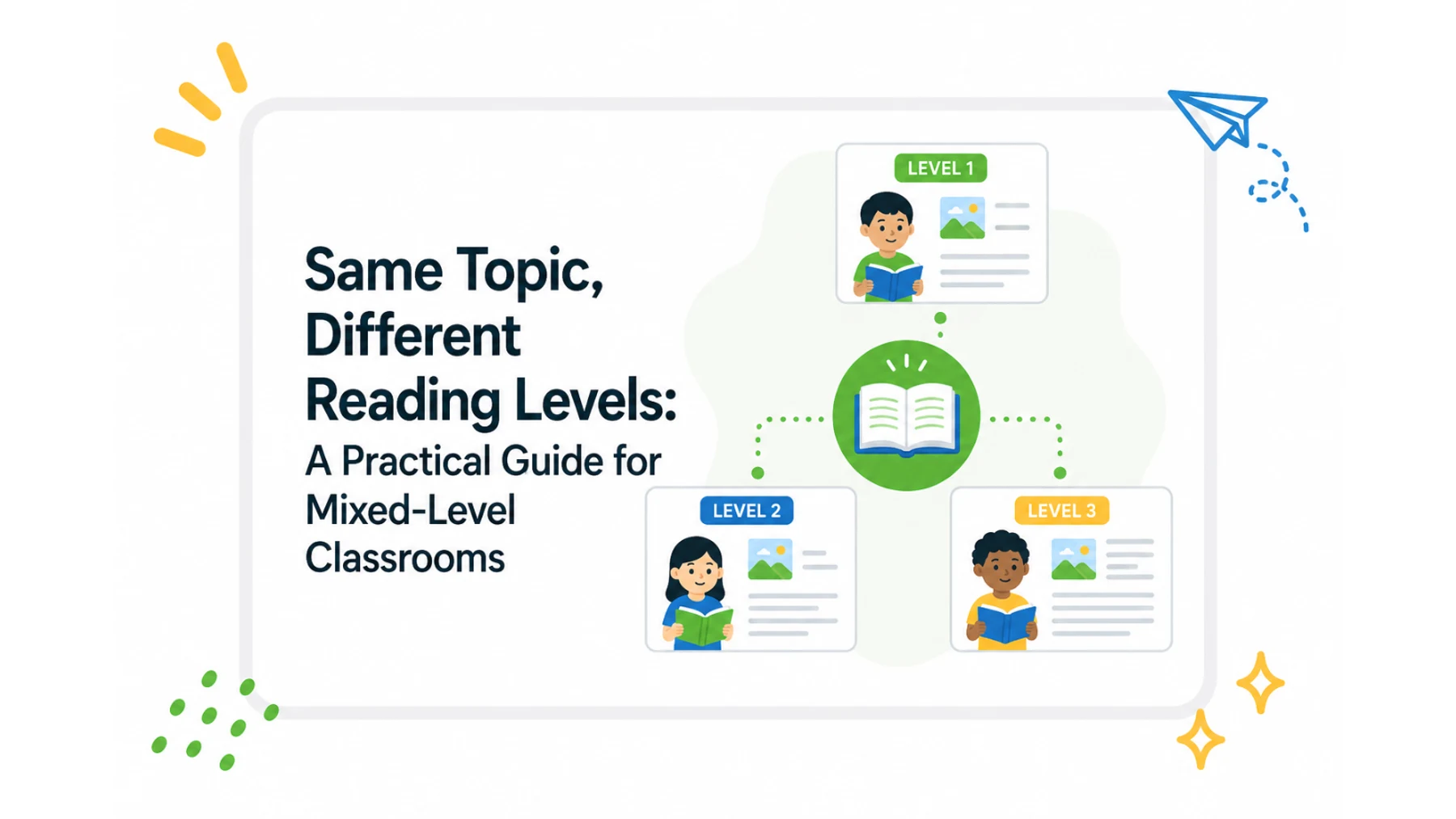
Plan a mixed-level lesson around one topic, then adjust the text, questions, or supports only where the lesson and learners call for it.
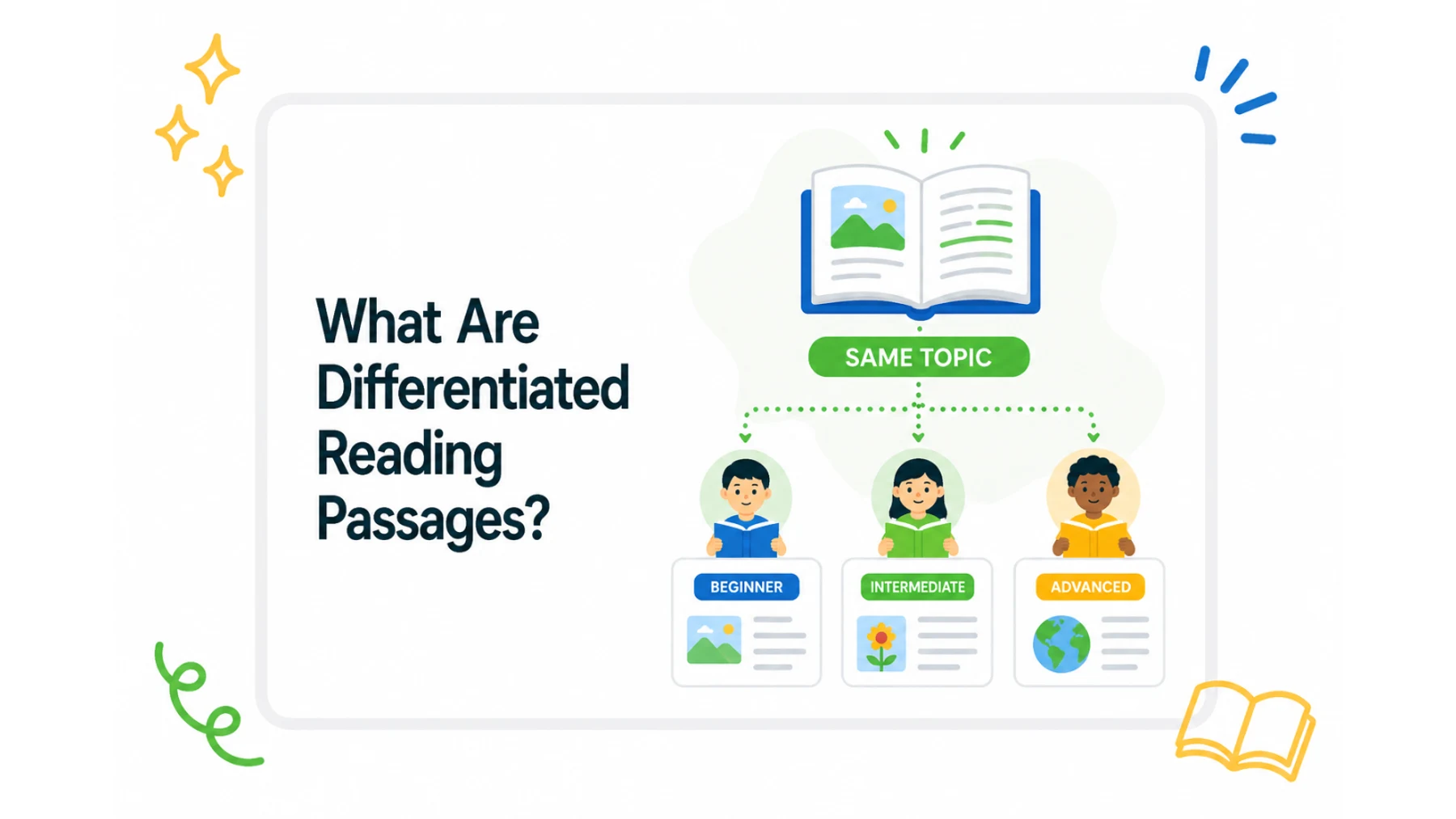
Learn how to use differentiated reading passages so students can work with the same topic at the right level, with the right support and meaningful comprehension practice.
A reading passage is a text selected for a reading task. It may be fiction, nonfiction, poetry, or another form, with or without questions.
There is no required question count for every passage. Choose questions that fit the text, lesson goal, response demands, and time available.
Choose a reading passage by starting with the lesson goal, then checking the text, reader, topic, vocabulary, questions, and available support.
Use a brief passage when it fits the reading goal and lesson time. Ideas include focused practice, rereading, vocabulary work, and discussion.